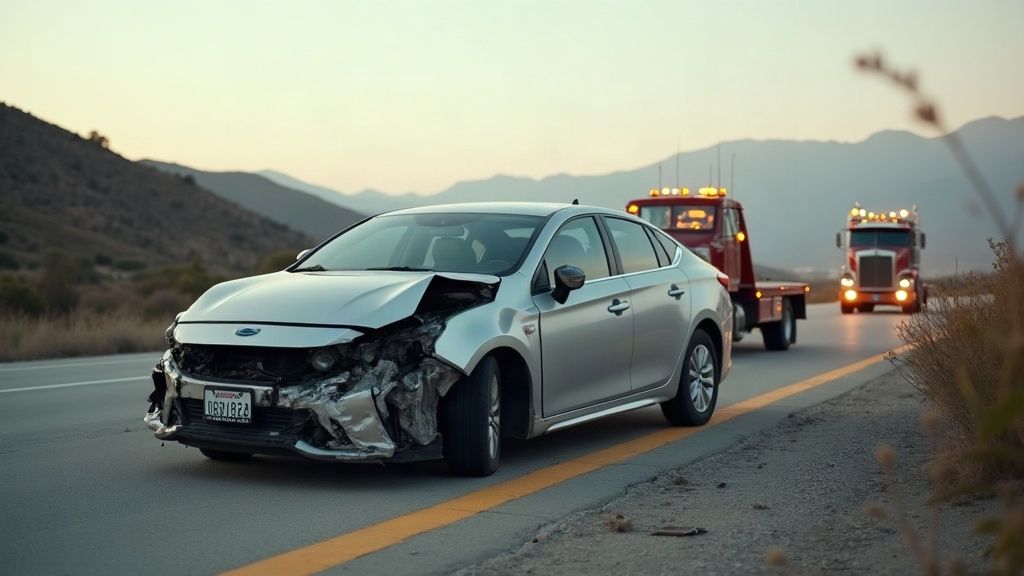
If your car was just declared a total loss and you still owe money on the loan, you are facing one of the most frustrating situations in California auto insurance: a check that does not cover what you owe. GAP insurance exists to close that gap, but it only works if you understand the rules, the exclusions, and the deadlines. Here are nine things every California driver should know.
Quick summary:
- GAP pays the difference between your car's actual cash value and your remaining loan or lease balance.
- California insurers must use verifiable comparable sales to set actual cash value, and you can dispute that number.
- You are most likely underwater if you financed long-term, made a small down payment, or rolled in negative equity.
- Your GAP policy details are in your original loan or lease contract, often labeled as a "waiver" or "debt cancellation" addendum.
- Exclusions for past-due payments, rolled-over negative equity, and unrelated charges are common and can shrink your payout.
- When another driver caused the crash, their liability policy pays first; GAP covers only what remains.
- Filing correctly requires a total-loss letter, a 10-day payoff quote, the police report, and your original contract.
- Accepting a low actual cash value without disputing it is the single costliest mistake after a total loss.
- An attorney can challenge a denied or underpaid GAP claim, dispute an insurer's valuation, and escalate to regulators.
1. What GAP Insurance Actually Covers Versus a Standard Total-Loss Payout
GAP insurance pays the difference between what your insurer says your car is worth and what you still owe on your loan or lease, so you are not left paying for a car you no longer have.
A standard collision or comprehensive policy pays actual cash value (ACV) when your car is totaled: the market value of the vehicle at the moment of the loss, not what you paid for it and not what you owe. Because vehicles depreciate the moment they leave the lot, most drivers with a loan owe more than the car is worth within the first one to three years of ownership.
GAP insurance, short for Guaranteed Asset Protection, is a separate product that covers the shortfall. If your car's ACV is $22,000 but you owe $27,000, your standard policy pays the lender $22,000. GAP pays the remaining $5,000.
GAP does not pay your deductible, any overdue penalties, or amounts beyond your loan or lease balance. It is a targeted bridge product, not a replacement for robust primary coverage.
Takeaway: Before you assume GAP will make you whole, confirm you understand what your loan balance is and what your insurer says the car is worth. The gap between those two numbers is exactly what this product covers.
2. How California Insurers Calculate Actual Cash Value on a Totaled Car
California law requires insurers to calculate actual cash value using verifiable comparable vehicle sales, and you have the right to request the data they used and dispute the figure if it is too low.
California's total-loss regulations, administered by the California Department of Insurance (CDI), require insurers to base ACV on the cost to purchase a comparable vehicle in the local market. Insurers typically use one of three methods:
- Comparable sales: recent private or dealer sales of vehicles of the same year, make, model, trim, and condition within your geographic area.
- Computerized valuation tools: third-party services like CCC ONE or Mitchell that compile regional sales data.
- A market survey of dealers in the area.
California regulations under Cal. Ins. Code §758.5 require the insurer to provide you with a written explanation of how the ACV was determined, including the specific comparable vehicles used. You can and should request that report.
If the comparables are from outside your market, include vehicles in worse condition, or exclude recent sales that show higher values, you have grounds to challenge the number. A higher ACV reduces the amount your GAP policy needs to cover, which matters if your GAP policy has a cap.
Takeaway: Ask for the valuation report in writing within the first week. If the comparables look wrong, dispute them before accepting the settlement.
3. Signs Your Loan or Lease Balance Exceeds the Insurance Payout
You are likely "underwater" on your loan if any of these apply to your situation:
- You financed the vehicle over 60 months or longer. Depreciation outruns principal paydown in long-term auto loans, especially in the first three years.
- You made a down payment of less than 20 percent, meaning you started with little equity.
- You rolled negative equity from a prior loan into the current one, inflating the starting balance beyond the car's value from day one.
- You are leasing a vehicle with a high residual liability or a low capitalized cost reduction.
- You purchased add-ons or extended warranties that were financed into the loan rather than paid upfront.
The quickest way to check: call your lender today and ask for a 10-day payoff quote. Compare that number to any early ACV estimate from your insurer. If the payoff exceeds the estimate by more than your deductible, you are likely underwater and GAP becomes directly relevant.
Takeaway: A 10-day payoff quote from your lender and an early ACV estimate from your insurer will tell you within 24 hours whether you have a GAP situation.
4. Where to Find Your GAP Policy Details in Your Loan or Lease Paperwork
Your GAP coverage is not a separate insurance card in most cases. It is typically buried in your loan or lease contract as an add-on product. Look for any of these labels in your paperwork:
- GAP waiver or GAP addendum
- Debt cancellation agreement
- Deficiency waiver
- Loan/lease payoff coverage
The dealership finance office sells most GAP products at the time of purchase. They are funded into the loan, which means you are paying interest on the GAP premium itself. If you purchased GAP through your own auto insurer, it appears as a line item on your declarations page.
Once you locate the addendum, note three things: (1) the maximum coverage cap, which some policies set at a fixed dollar amount or a percentage of ACV; (2) the exclusions list; and (3) the claim filing deadline, which some contracts limit to 30 or 60 days after the primary settlement.
Takeaway: Find the GAP addendum tonight. Missing the filing deadline in that document can void coverage entirely.
5. Common Exclusions That Can Shrink or Void a GAP Payout
The most common mistake after a total loss is accepting the insurer's actual cash value without checking comparable sales, which can lower your primary payout and leave a larger gap than necessary.
Most GAP policies contain exclusions that reduce the final payout. The most common:
- Past-due or deferred payments. If you were behind on your loan at the time of the loss, the past-due amount is typically excluded from GAP coverage.
- Negative equity rolled from a prior loan. The portion of your current balance that traces back to a previous car loan is often excluded.
- Extended warranties and add-on products financed into the loan. The price of a service contract, tire protection, or paint protection rolled into your loan balance is usually not a "gap" the product is designed to cover.
- Excess mileage charges on a lease that accrue as a liability separate from the vehicle's depreciation.
- Losses not covered by your primary policy. If your collision policy lapsed or you only had liability coverage, most GAP policies will not pay because there is no primary settlement to build from.
Review each exclusion against your loan history before you file. If you deferred a payment during a hardship program, that deferral may show up as excluded under the policy even though your lender approved it.
Takeaway: Read the exclusion list before filing. Knowing which portions of your balance are excluded lets you calculate the realistic GAP benefit and plan accordingly.
6. How a Liability Claim Against an At-Fault Driver Interacts with GAP Coverage
When another driver caused the crash, their property damage liability coverage pays first, and your GAP policy covers only the remaining difference between that payout and your loan balance.
California follows a fault-based auto insurance system. When another driver caused the crash, the proper order of payment is:
- At-fault driver's property damage liability (PDL) policy pays up to its limit toward your car's ACV.
- If the PDL limit is insufficient to cover the full ACV, your own underinsured motorist property damage (UMPD) coverage or collision coverage steps in to cover the remaining ACV shortfall (minus your deductible).
- After all primary sources have paid what they will pay, GAP covers the remaining difference between the total collected and your loan balance.
California requires minimum PDL coverage of $15,000 per Cal. Ins. Code §11580.1(b). That minimum may be far below the ACV of your vehicle, leaving a larger gap than expected even before GAP kicks in.
If the at-fault driver is uninsured, your own uninsured motorist property damage (UMPD) coverage, if you carry it, triggers first. California drivers are not required to carry UMPD under Cal. Ins. Code §11580.2, but it is available and highly recommended.
Takeaway: A low PDL limit from an at-fault driver does not automatically mean GAP covers the entire difference. Know your UMPD and collision limits before assuming GAP will close all of it.
7. Steps to File a GAP Claim After a California Crash
Filing a GAP claim requires more documentation than most drivers expect. Missing even one item delays the process by weeks. Gather these in order:
- Total-loss settlement letter from your primary insurer. This document confirms the ACV and that the vehicle has been declared a total loss.
- 10-day payoff quote from your lender. Not a standard account balance. A 10-day payoff quote accounts for interest accrual and gives the GAP provider the exact figure it needs to calculate the coverage amount.
- Copy of your original loan or lease agreement including the GAP addendum.
- Police or traffic collision report from the California Highway Patrol (CHP) or local law enforcement.
- Proof of insurance for your primary policy at the time of loss.
- Odometer or mileage documentation if required by your GAP provider.
Submit all documents together. GAP providers use missing documents as a reason to extend the review period. Send everything certified mail or through a trackable digital portal so you have a timestamp.
California insurers generally must acknowledge receipt of a claim within 10 business days under Cal. Ins. Code §790.03(h), and must accept or deny within 40 days after receiving proof of claim under Cal. Ins. Code §10111.17 for certain products. Keep those deadlines in mind if the provider goes silent.
Takeaway: Submit a complete package on the first attempt. Every missing document is a delay, and delays give providers grounds to push past contractual deadlines.
8. Mistakes That Delay or Reduce Your GAP Payout
The drivers who end up with less than they expected from GAP almost always made one or more of these mistakes:
Accepting the ACV without disputing it. Your primary insurer's first ACV offer is not final. If it is below comparable market sales, dispute it in writing before accepting. A higher ACV reduces the gap, which matters if your GAP policy has a maximum cap, but it also ensures the primary payout is as large as possible before GAP calculates its share.
Using a standard balance statement instead of a 10-day payoff quote. A standard statement does not include accrued interest. Submitting a standard balance can result in a GAP payout that falls short of what your lender actually demands to close the account.
Missing the GAP filing deadline. Some dealer-sold GAP contracts require you to file within 30 to 60 days of the primary settlement. The clock starts the moment you receive the total-loss letter, not when you feel ready to file.
Not reading the exclusion list before filing. Filing a claim that includes excluded amounts (past-due payments, rolled-over negative equity) without noting them separately invites a denial or reduction. Know what is excluded before you file.
Letting the primary insurer's deadline pressure you into a quick settlement. Under Cal. Ins. Code §790.03(h)(5), insurers cannot pressure you to accept a settlement through unreasonable deadline tactics. If you need time to dispute the ACV, you have that right.
Takeaway: Slow down on the primary settlement, dispute the ACV if the comparables are wrong, and then file a complete GAP package within the contract deadline.
9. When to Ask an Attorney for Help Resolving a GAP Dispute
If your GAP provider denies or significantly underpays your claim, you can file a complaint with the California Department of Insurance and may have grounds for a bad faith insurance claim under California law.
Most GAP claims resolve without legal help. But there are situations where the dispute is significant enough that an attorney's involvement changes the outcome:
The GAP provider denied your claim. A denial is not the end. If the reason cited does not match the exclusions in your contract, that denial may be improper. An attorney can send a demand letter, request the full claim file under Cal. Ins. Code §790.03, and document the basis for a bad faith claim if the denial cannot be justified.
The primary insurer's ACV is significantly below market. When the gap between the ACV and your loan balance exists largely because the insurer undervalued your vehicle, the right first step is challenging the ACV. An attorney can retain an independent appraiser and submit a formal dispute. California insurance regulations give the California Department of Insurance (CDI) authority to investigate unfair settlement practices.
The at-fault driver's insurer is not paying property damage promptly. If the third-party insurer is slow-walking the property damage settlement, the loan balance continues to accrue interest in the meantime, widening the gap you owe. That delay may constitute an unfair claims practice under California law.
You were injured in the same crash. A total-loss situation that also involved a personal injury claim is a situation where both a personal injury claim and an insurance dispute are running simultaneously. Coordinating a liability claim, a property damage dispute, and a GAP filing without counsel is difficult, and an error in one track can affect the others.
If any of these describe your situation, call (818) 794-9947 for a free case review. We fight for injured workers and accident victims across Southern California. No fee unless we win.
Frequently Asked Questions
Does GAP insurance cover a car accident in California?
Yes, GAP insurance covers total-loss events including collisions, provided your primary policy (collision or comprehensive) also covers the loss. GAP does not pay if the primary policy does not trigger. It covers the difference between the primary payout and your remaining loan or lease balance.
What happens if my car is totaled and I still owe money on it?
Your primary insurer pays the actual cash value of the vehicle to your lender. If that amount is less than what you owe, you are responsible for the difference. GAP insurance, if you have it, covers that difference minus any excluded amounts listed in your contract. Without GAP, you must pay the remaining loan balance out of pocket even though you no longer have the car.
Is GAP insurance required in California?
No. California law does not require drivers to purchase GAP insurance. However, a lender or lessor may require it as a condition of approving your financing or lease agreement. If your lender requires it, that requirement will appear in your loan or lease contract.
Who pays first, GAP insurance or the at-fault driver's insurer?
The at-fault driver's property damage liability insurer pays first, up to that policy's limit. If the at-fault driver is uninsured or underinsured, your own collision or uninsured motorist property damage coverage pays next. GAP pays last, covering only the remaining difference between all primary payouts and your loan balance.
Can I dispute the actual cash value my insurer set?
Yes. California regulations require your insurer to provide written documentation of how the ACV was calculated, including the comparable vehicles used. If those comparables are inaccurate, out of market, or reflect lower-condition vehicles than yours, you can submit a written dispute with your own comparable sales data before accepting the settlement.
What if my GAP claim is denied?
Request the denial in writing and ask for the full basis of the decision. Compare the stated reason against the exclusions in your contract. If the denial is not supported by a clear exclusion, you can file a complaint with the California Department of Insurance and consult an attorney about a potential bad faith insurance claim under California law.
How long does a GAP claim take in California?
California law requires insurers to acknowledge receipt of a claim within 10 business days. The full acceptance or denial timeline depends on your specific GAP contract and the complexity of the documentation. Submitting a complete package on the first attempt is the most reliable way to avoid delays beyond those minimum regulatory periods.
Does GAP insurance cover my deductible?
Most GAP policies do not cover your collision or comprehensive deductible. Some GAP products sold by auto insurers include a deductible waiver, but dealer-sold GAP waivers typically do not. Check your contract addendum for language about deductible coverage.
If your car was totaled and the insurance payout does not cover what you owe, you have options. Disputing the ACV, reviewing your GAP contract for exclusions, and filing a complete, timely claim are the steps that protect you. When the dispute is significant or involves an injury from the same crash, call (818) 794-9947. Free consultation. No fee unless we win.