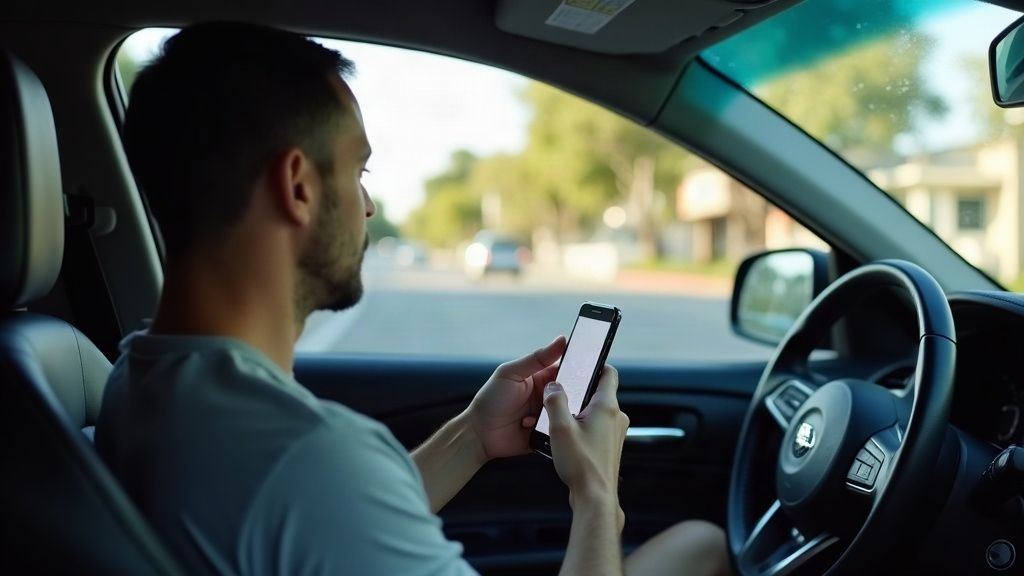
If you've been in a car crash in California, your phone may ring within hours. The caller introduces themselves as an adjuster from your own insurance company and asks to record a statement while the details are still fresh. It sounds routine. It is not.
What you say in that recorded statement can follow you for the entire life of your claim. Adjusters are trained to listen for language that shifts fault, suggests pre-existing conditions, or minimizes your injuries. You deserve to know exactly what you are walking into before you agree to anything.
We've recovered over $150,000,000 for injured people across Southern California. Here is what our team tells every client about recorded statements before they pick up that call.
Quick answers to the 8 things you need to know:
- Your insurer asks quickly because early statements are easier to use against you.
- Your own insurer is different from the other driver's insurer, and the rules differ for each.
- You must report the crash, but you typically do not have to record a statement.
- Casual language becomes a permanent record adjusters can use to minimize your claim.
- Adjusters use specific leading questions designed to reduce your payout.
- You have the right to consult an attorney before recording anything.
- You can ask for a written statement instead of a recorded one.
- Minor, clear-liability crashes may be fine to discuss; injury crashes warrant attorney review first.
1. Why Insurers Request Recorded Statements Soon After a Crash
Insurance companies request recorded statements quickly after a crash because memories are fresh, adrenaline is still circulating, and injured people are more likely to minimize their own pain in those early hours.
Adjusters are not neutral fact-finders. They work for the insurance company, and their job, at least in part, is to document anything that could reduce what the company pays out. A statement taken 24 to 48 hours after a collision captures you at your most vulnerable: you may not yet know the full extent of your injuries, you are likely stressed, and you have not had time to organize your account of what happened.
Soft tissue injuries, like whiplash and ligament damage, notoriously take days to fully surface. A concussion can produce increasing symptoms over 72 hours. When you tell an adjuster "I'm a little sore but I think I'm okay" the morning after a crash, that quote becomes part of your permanent claim file. Six days later, when an MRI reveals a herniated disc, the insurer will point to your own words.
The timing of the request is not accidental. It is a business strategy.
Takeaway: Never mistake speed for urgency on your part. You are entitled to take time to understand your injuries and your rights before recording anything.
2. The Difference Between Your Insurer and the At-Fault Driver's Insurer
You have no obligation whatsoever to give a recorded statement to the at-fault driver's insurance company in California.
This is one of the most important distinctions in any post-crash situation, and it is one most people do not know. There are two insurance companies involved in a typical California crash: yours and the other driver's.
Your own insurer: You have a contract with them, called your auto policy. That policy almost certainly contains a cooperation clause requiring you to assist in the investigation of a claim. Under California Insurance Code principles and standard ISO policy language, this means you must report the accident and provide basic information. Whether it requires a recorded, oral statement is a separate question discussed in item 3 below.
The at-fault driver's insurer: You have no contract with them. You owe them nothing beyond the basic information needed to submit a third-party claim. Their adjuster may call you and make the request sound mandatory. It is not. Politely decline, note the call, and contact a personal injury attorney before any further communication.
Takeaway: Treat the two calls differently. Your insurer has a contractual relationship with you; the other driver's insurer does not.
3. What You Are Legally Required to Share vs. What You Can Decline
In California, your own auto policy likely requires you to cooperate with your insurer, but cooperation does not automatically mean giving a recorded statement.
California law does not contain a statute that compels you to provide a recorded, oral statement to your own insurance company after a crash. Your obligation runs through your policy's cooperation clause, not through a specific statutory command.
Most standard California auto policies require you to:
- Promptly notify the insurer of the accident.
- Provide written proof of loss when requested.
- Cooperate with the investigation, which can include answering questions about the crash.
- Submit to an examination under oath (EUO) if the insurer formally requests one.
An EUO is a formal, sworn proceeding. A recorded phone call with an adjuster is not. If your insurer formally requests an EUO, that is a different situation requiring immediate attorney involvement.
For routine recorded statement requests, read your specific policy language. Many policies say you must "cooperate" or "assist" without specifying that cooperation takes the form of a recorded phone call. If the adjuster insists the recording is mandatory, ask them to point you to the exact policy language that requires it.
California Insurance Code §790.03 prohibits unfair claims practices, including misrepresenting your obligations under your policy. An adjuster who tells you a recorded statement is legally required when your policy does not say that is sailing close to that line.
Takeaway: Know your policy. "Cooperate" and "record a statement" are not automatically the same thing.
4. How Casual Language Can Be Used to Minimize Your Claim
Offhand phrases like 'I'm fine' or 'it wasn't that bad' become part of a permanent record and can be used to lower your payout.
Adjusters are trained communicators. They are not having a casual conversation with you. Every word you speak is being recorded, timestamped, and added to a file that an attorney or a claims supervisor may review months later.
Common examples of casual language that cause problems:
- "I feel okay, just a little stiff." Used later to argue your injuries are minor.
- "It wasn't that bad of a hit." Used to suggest the collision lacked sufficient force to cause serious injury.
- "I may have been a little distracted." Used to assign partial fault to you under California's comparative fault rules.
- "I've had back issues before." Used to attribute your injuries to a pre-existing condition rather than the crash.
California follows a pure comparative fault system under Civil Code §1714. That means your recovery is reduced by your percentage of fault. A single casual admission of distraction can shift percentage points of fault to you, reducing every dollar you recover.
Your injuries may also be evolving. Soft tissue damage, disc injuries, and concussion symptoms often worsen over days. A statement given on day one may contradict the medical evidence gathered on day ten.
Takeaway: Speak precisely and only about facts you are certain of. Never speculate, minimize, or guess.
5. Common Trick Questions Adjusters Ask in Recorded Statements
Adjusters follow scripts. Knowing the standard questions helps you recognize them before they land.
"Were you watching the road at all times?" A yes-or-no question where any hesitation or hedged answer suggests inattention.
"Do you have any pre-existing injuries or conditions affecting your back, neck, or shoulders?" Designed to tie your current injuries to conditions that predate the crash, which shifts liability away from the accident.
"Would you say the impact was minor, moderate, or severe?" Your lay characterization of the impact force will be compared to the vehicle damage photos. If the adjuster can argue the damage was minor, they will use your "moderate" as an anchor against a high settlement.
"On a scale of 1 to 10, what is your pain level right now?" Captures your pain level at its most unpredictable point. If you say 4, that number becomes the baseline the insurer argues your injuries never exceeded.
"Is there anything else you want to add?" A closing invitation to volunteer information you were not asked for. The answer is almost always no.
"So you're saying [paraphrase]?" A summary question that subtly reframes what you said. If the paraphrase is not perfectly accurate, clarify it immediately.
Takeaway: You are not required to answer every question the way it is framed. You can say "I'd like to think about that before answering" or "I'd prefer to provide that in writing."
6. Whether You Can Have a Lawyer Present or Review Answers First
You have the right to consult with a personal injury attorney before agreeing to any recorded statement, including one requested by your own insurer.
California law does not prohibit attorney involvement in the recorded statement process. You can:
- Consult with an attorney before agreeing to record anything.
- Ask the adjuster to reschedule the call to give you time to speak with counsel.
- Have your attorney present on the call or review a list of planned questions in advance.
- Have your attorney respond to the insurer in writing on your behalf.
A firm handling your case on contingency charges you nothing upfront for this consultation. At Nordanyan Law, we handle personal injury cases on a $0 upfront basis, so speaking with us before your recorded statement costs you nothing out of pocket. Call (818) 794-9947 for a free case review.
If an adjuster tells you that you cannot delay the call or involve an attorney, that statement is designed to pressure you. There is no California law or standard policy provision that requires you to record a statement on the adjuster's preferred timeline. A legitimate insurer will accommodate a short delay for you to obtain counsel.
The one exception: if your insurer has formally scheduled an examination under oath (EUO) with advance written notice, that proceeding has specific rules and timelines. Attorney representation in an EUO is not optional. Get one immediately.
Takeaway: You have time. Use it. A free 15-minute call with an attorney before your recorded statement can protect months of claim value.
7. How to Request a Written Statement Instead
You do not have to agree to a recorded oral call. You can ask your insurer to accept a written statement instead, and many will.
Here is how to make that request:
- When the adjuster calls, tell them you prefer to provide your account in writing.
- Ask them to email or mail you a list of specific questions they need answered.
- Draft your responses carefully, reviewing each answer before you submit.
- Keep a copy of everything you send and note the date.
A written statement gives you several advantages a recorded call does not:
- You can review and correct your language before it becomes a permanent record.
- You can verify dates, times, and facts rather than guessing under pressure.
- You can have an attorney review your answers before submission.
- There is no tone of voice, no hesitation, and no verbal stumble to interpret.
Some policies and some insurers will push back and insist on a recorded call. If that happens, return to items 3 and 6: review your policy language and get an attorney involved. The DWC and DIR handle workers' compensation claims with separate processes, but for standard auto insurance disputes, the California Department of Insurance is the regulatory body you can contact if you believe an insurer is misrepresenting your obligations.
Takeaway: Written statements are not unusual. Request one and give yourself the time to get it right.
8. When It Is Safe to Speak Informally vs. When to Get Help First
If your crash involved injuries, disputed fault, an uninsured driver, or happened while you were working, speak with an attorney before you say a single recorded word.
Not every crash requires the same level of caution. Here is a plain-language breakdown.
You may be able to speak with your insurer directly if:
- The crash was a minor fender-bender with no injuries to anyone.
- Fault is completely clear and undisputed.
- There is no medical treatment involved or anticipated.
- The property damage is the only claim.
Even in these cases, providing a written statement rather than a recorded one is still the safer choice.
Get attorney guidance before any recorded statement if:
- Anyone in any vehicle was injured, including you.
- Fault is disputed or unclear.
- The other driver was uninsured or underinsured (UM/UIM claim, your own insurer is now on the other side of an adversarial claim).
- The crash happened while you were working, driving for an employer, or making a delivery. In that situation, a workers' compensation claim may run alongside your personal injury claim, and the two interact in ways that require specialist guidance.
- You have any pre-existing injury to the same body part now affected by the crash.
- The crash involved a commercial vehicle, rideshare driver, or government vehicle.
The UM/UIM scenario deserves special attention. When you make an uninsured motorist claim, your own insurance company is directly adverse to you on the money at issue. The cooperative relationship of a routine collision claim shifts into something closer to a dispute. Giving a relaxed, unguided recorded statement in that context is among the highest-risk things an injured driver can do.
Takeaway: When in doubt, a free consultation with a personal injury attorney is always the lower-risk choice.
The Bottom Line
Insurance adjusters are professionals. Recorded statements are tools they use every day. You are doing this for the first, and hopefully only, time in your life. That asymmetry is real, and it matters.
Your rights in California are clear. You must report the accident. You must cooperate in good faith. You are not required to give a recorded oral statement on the adjuster's timeline, and you are absolutely entitled to have an attorney review your situation before you say a word on record.
If you have been injured in a crash anywhere in Southern California, call (818) 794-9947 for a free case review. No fee unless we win. We'll tell you exactly what to say, what to skip, and how to protect the full value of your claim from the first call forward.
Frequently Asked Questions
Do I have to give a recorded statement to my own insurance company in California?
Most standard California auto policies require you to cooperate with your insurer and report the accident, but they do not explicitly require a recorded oral statement. Read your specific policy's cooperation clause carefully. If the adjuster insists a recording is mandatory, ask them to cite the exact policy language that says so. If you are unsure, speaking with a personal injury attorney before agreeing to record anything is the safest step.
Can I refuse a recorded statement after a car accident in California?
You can decline to give a recorded statement to the at-fault driver's insurance company entirely, because you have no contract with them. For your own insurer, outright refusal may complicate your claim if your policy contains a cooperation clause. The better approach is to ask for a written statement instead, or request time to consult an attorney. An outright refusal without any cooperation is different from a reasonable request to delay or provide your account in writing.
What happens if I say the wrong thing in a recorded statement?
A recorded statement becomes a permanent part of your claim file. Adjusters and defense attorneys can use anything you said to challenge your account, suggest comparative fault, or argue your injuries are less severe than claimed. California's pure comparative fault rule under Cal. Civ. Code §1714 means even a small admission of partial responsibility reduces your recovery dollar for dollar. Statements about pain levels, pre-existing conditions, or how bad the impact felt are common sources of problems.
Should I get a lawyer before giving a recorded statement?
Yes, in most cases involving injuries. A personal injury attorney can review your situation, advise you on what questions to answer and how to frame your responses, and in many cases handle communications with the insurer on your behalf. Firms that work on contingency charge nothing upfront for an initial consultation, so there is no financial barrier to getting advice before you record anything.
What is the difference between a recorded statement and an examination under oath?
A recorded statement is an informal phone call initiated by an adjuster. An examination under oath (EUO) is a formal, sworn proceeding your insurer can require under the policy, conducted more like a deposition. If your insurer schedules an EUO, you must attend, but you have every right to have an attorney present. An EUO is far more legally significant than a routine adjuster call, and it requires immediate attorney involvement.
What should I say if an adjuster calls me right after a crash?
You can politely confirm your name and that you were involved in the accident, then tell the adjuster you would like time to review your policy and speak with an attorney before providing any further statement. Ask for their direct contact information and tell them you will follow up. This is not a refusal to cooperate. It is a reasonable request that any legitimate insurer should accommodate.
Can the at-fault driver's insurance company require me to give a recorded statement?
No. You have no contract with the other driver's insurance company. They cannot compel you to give a recorded statement. Their adjuster may make the request sound routine or mandatory, but you are not legally obligated to comply. Personal injury attorneys universally advise against giving recorded statements to the adverse party's insurer without counsel involved.
What if my crash happened while I was working?
If you were injured in a crash while performing work duties, you may have both a personal injury claim against the at-fault driver and a workers' compensation claim under California law. Cal. Lab. Code §3600 governs workers' compensation liability for work-related injuries. The two claims interact in specific ways that affect your recovery, and giving a recorded statement to any insurer without understanding that interaction can harm both claims. Contact an attorney who handles both personal injury and workers' compensation before speaking with anyone.