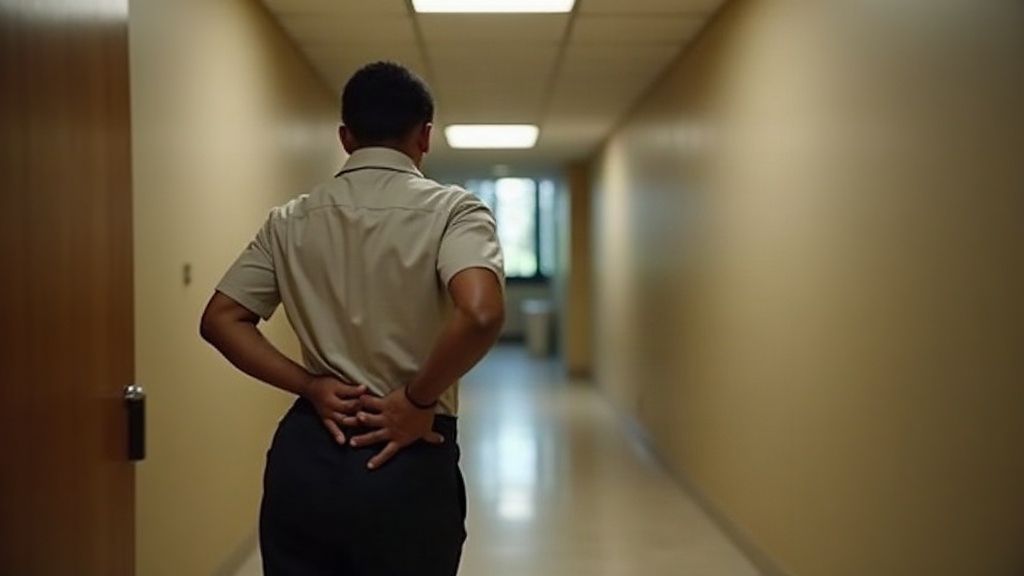
If you work in a retail store, a restaurant kitchen, or a hotel housekeeping department, you already know the physical toll a shift takes. You stand for hours, lift heavy loads, handle hot equipment and cleaning chemicals, and move fast under pressure. When something goes wrong, whether it is a sudden slip on a wet kitchen floor or a back that finally gives out after years of pushing linen carts, you have rights under California law.
This article explains those rights in plain terms: who is covered, what injuries qualify, how cumulative damage is treated, and what to do when a manager makes the process harder than it needs to be.
If you've been hurt at work in a retail, restaurant, or hotel job, call (818) 794-9947 for a free consultation. No fee unless we win.
Quick Answer: What California Retail, Restaurant, and Hotel Workers Need to Know
- Part-time, seasonal, and temp workers are covered by California workers' comp from day one.
- Back pain, burns, cuts, slips, and repetitive strain injuries all qualify if the cause is work-related.
- Cumulative injuries from years of standing and lifting are compensable, but the filing deadline works differently than for a sudden accident.
- If a staffing agency placed you in the job, the agency is typically your employer for workers' comp purposes.
- You must notify your employer within 30 days of a sudden injury. Cumulative trauma claims follow a separate deadline.
- A supervisor offering cash to skip a claim is not a favor. It is a way to cut off your future rights.
- Retaliation for filing is illegal under Cal. Lab. Code §132a.
Who Is Covered: Part-Time, Seasonal, and Staffing-Agency Workers
In California, part-time, seasonal, and temporary retail, restaurant, and hotel workers are covered by workers' compensation from their very first day on the job, under Cal. Lab. Code §3600.
The coverage rule in California is broad on purpose. Cal. Lab. Code §3600 makes workers' compensation benefits available to any employee who suffers an injury arising out of and occurring in the course of employment. That phrase covers a lot of ground.
There is no minimum-hours threshold. There is no waiting period. There is no requirement that you work full-time, have a written contract, or have a permanent position. A seasonal stock clerk hired for the holiday rush has the same rights as a full-time store manager.
Undocumented workers are also covered. The California Labor Code does not condition workers' comp eligibility on immigration status. If you were employed and injured in California, the law protects you.
What About Staffing Agency Workers?
Many retail stores, restaurants, and hotels use staffing agencies to fill shifts. If an agency placed you at the worksite, the agency is generally your employer of record for workers' comp purposes and is required to carry a policy covering you. The business where you physically work may also share liability in some circumstances, particularly if their premises caused the injury.
The key point: the fact that you work at a store or hotel you do not have a direct employment agreement with does not knock you out of the workers' comp system. You still qualify. The question of which party the claim runs against is a legal determination, not a reason to avoid filing.
The Injuries That Dominate This Sector
Retail, restaurant, and hotel work produces a predictable set of injuries. Knowing what is covered helps you recognize when you have a claim.
Slips and falls. Wet floors are everywhere in this industry. Mopped grocery aisles, polished hotel lobbies, grease near a restaurant prep line. A slip that causes a knee injury, a wrist fracture from breaking a fall, or a head injury from landing on a hard floor is a work injury under California law. These are specific injuries with a clear date and mechanism.
Lifting and back injuries. Stock clerks, warehouse associates, room attendants, and line cooks all lift heavy loads repeatedly. A single lift that tears a disc is a specific injury. Years of lifting that gradually destroy a lumbar vertebra is a cumulative injury, and that distinction matters for how the claim deadline works.
Burns and lacerations. Kitchen workers face hot equipment, scalding liquids, open flames, and sharp knives daily. A burn or a laceration suffered on the job is compensable. The treatment, the time off, and any lasting scarring or reduced function are all part of the claim.
Chemical exposure. Hotel housekeepers, janitorial staff, and restaurant cleaning crews handle industrial-grade cleaning chemicals. Skin reactions, respiratory problems from inhaling fumes, and occupational dermatitis from repeated contact with harsh solutions are all covered injuries under Cal. Lab. Code §3208.1 as cumulative or occupational injuries.
Carpal tunnel and repetitive motion. Cashiers scan items thousands of times a shift. Prep cooks make the same cutting motion for hours. Hotel front-desk staff type all day. Repetitive motion injuries that develop over time are covered as cumulative trauma.
Standing and Lifting Damage That Builds Over Years: Cumulative Injury Claims
Cumulative injuries from years of standing, lifting, and repetitive motion are compensable under Cal. Lab. Code §3208.1, and the date of injury is set by §5412, not the first day you felt pain.
This is the area of workers' comp law that most retail and hospitality workers do not know about, and that gap costs people real money.
California Cal. Lab. Code §3208.1 defines a cumulative injury as one occurring as repetitive mentally or physically traumatic activities extending over a period of time. You do not need to point to one shift where everything went wrong. The law recognizes that years of demanding physical work cause injury just as surely as a single accident.
The deadline rule for these claims is different. For a specific injury, like a fall on a wet floor, you must notify your employer within 30 days under Cal. Lab. Code §5400, and you generally have one year to file with the WCAB (Workers' Compensation Appeals Board). For a cumulative injury, the one-year filing clock under Cal. Lab. Code §5412 does not start until two things happen together: you become disabled and you know or should know the disability is work-related. That might be the day a doctor tells you that your degenerating discs are consistent with years of manual labor, not the day you first felt soreness after a long shift.
This distinction matters because many workers assume they waited too long after their back pain "started." In a cumulative trauma case, the clock may not have started when they think. If a doctor has recently connected your physical condition to your years of work, call us before you decide you are out of time.
Housekeeping and Janitorial Work: The Claims That Go Unfiled
Hotel room attendants and janitorial workers have among the highest rates of musculoskeletal injury in any industry. They push heavy carts, bend and kneel hundreds of times per shift, lift mattresses, and work with chemical cleaning products for hours on end.
These workers file workers' comp claims at a far lower rate than their injury rates suggest they should. A few reasons account for this:
- Many are afraid that filing will cost them their job or their scheduled hours.
- Many do not know that cumulative back and shoulder injuries are compensable, not just sudden accidents.
- Many work through staffing agencies and are not sure who their employer is for claim purposes.
- Some are told informally that the job is just physically demanding and everyone hurts.
None of those reasons is a legal bar to filing. Cal. Lab. Code §132a makes it illegal for an employer to retaliate against a worker for filing a workers' comp claim, reduce hours to punish a filer, or discriminate in any employment decision because a claim was filed. Violations carry additional compensation and penalties for the employer.
If you work housekeeping or janitorial in California and your body is showing the wear of that work, the claim you think is too small or too complicated may be more straightforward than you realize.
Staffing Agency vs. the Business You Work Inside: Who the Claim Runs Against
If you work for a staffing agency placed inside a hotel, restaurant, or retail store, the staffing agency is typically your employer for workers' comp purposes and must carry coverage for you.
When you are injured at work and a staffing agency placed you there, the workers' comp claim generally runs against the staffing agency because that is typically your direct employer. The agency is required by law to carry workers' comp insurance for all workers it places.
In some situations, the host business, meaning the store, restaurant, or hotel, may also bear legal responsibility. This can happen when the condition that caused your injury, like a broken floor tile or a malfunctioning piece of kitchen equipment, was on the host business's premises and under their control. Whether a third-party claim against the host business is available alongside a workers' comp claim is a fact-specific question, but it is one worth asking.
For now, the practical answer if you are injured is: report the injury promptly to both the staffing agency contact you know and the supervisor at the worksite. Document both reports. The agency is legally responsible for providing you a claim form, but getting your report into the hands of both parties protects you in case there is any dispute about who received notice.
Reporting an Injury When No Manager Is On Duty
Retail, restaurant, and hotel shifts often run overnight, on weekends, and during holidays, exactly the times when no manager is easily available. That does not change your reporting obligation, but it does require some practical steps.
Under Cal. Lab. Code §5400, you must give your employer written notice of a work injury within 30 days. For a sudden injury, that clock starts on the date of the injury. Here is how to handle reporting when management is not immediately present:
- Report to whoever is in charge. If no manager is on site, tell the shift lead, the security supervisor, or whoever holds authority in the moment. Ask them to document it.
- Follow up in writing. Text or email your manager or HR contact as soon as possible after the shift. Keep a copy of every message you send.
- Ask for a claim form. Your employer is required under Cal. Lab. Code §5401 to provide a DWC-1 claim form within one working day of learning about your injury. If they do not, ask for it in writing.
- Seek medical attention. If the injury is serious, go to an emergency room or urgent care. Document the date and time.
- Write down everything. Names of coworkers who saw what happened, the exact location in the store or kitchen, the time, and what you were doing when you were hurt.
The 30-day reporting window is real. Missing it can, under certain circumstances, limit your ability to claim benefits. Do not wait to report just because you are not sure whether to file a full claim.
What to Do When a Supervisor Discourages the Claim or Offers Cash
If a supervisor offers to pay cash for your medical visit instead of filing a workers' comp claim, accepting that offer may cut off your right to future benefits for the same injury.
This situation comes up more often than it should, particularly in small restaurants, independent retail operations, and hospitality businesses that want to keep their workers' comp insurance premiums low.
A supervisor might say the injury is not that bad. They might offer to pay out of pocket for the urgent care visit. They might suggest that filing would create problems for everyone. Some well-meaning supervisors genuinely believe a small cash payment is helping the worker by avoiding complexity.
Here is what that cash payment actually does. Workers' comp benefits include not just immediate medical care but also temporary disability payments if you miss work, permanent disability if the injury leaves a lasting impairment, and future medical care if the condition worsens. A cash payment for one clinic visit covers none of that. If your back strain becomes a herniated disc that requires surgery two years later, the one-time cash payment your supervisor gave you covers zero of that surgical cost.
More importantly, accepting an informal payment in exchange for not filing may be characterized later as a waiver of your right to bring a formal claim for the same injury.
If a supervisor is discouraging you from filing, tell them you are reporting the injury and you need a claim form. You do not need their permission to file. If they refuse to provide the form, that is a separate violation of Cal. Lab. Code §5401. Document the refusal and contact the DWC (Division of Workers' Compensation) or an attorney.
Under Cal. Lab. Code §132a, an employer who retaliates against a worker for filing a workers' comp claim can face additional compensation and penalties.
If your employer cuts your hours, changes your schedule unfavorably, or takes any adverse action against you because you reported an injury or filed a claim, that is retaliation. Cal. Lab. Code §132a provides a legal remedy for exactly this situation. You do not have to accept it silently.
When to Call a Workers' Comp Attorney
Not every work injury requires a lawyer. A minor cut that heals after one visit with no time off, a claim the employer accepts immediately, and a clear path to treatment can often move forward without legal representation.
But the cases where legal help makes a meaningful difference include:
- Your claim was denied or the employer is disputing whether the injury happened at work.
- You are dealing with a cumulative injury claim and you are unsure whether the filing deadline has passed.
- The injury caused you to miss significant work time or may leave a permanent impairment.
- You work through a staffing agency and there is a dispute about whose insurance covers you.
- A supervisor has discouraged you from filing or offered cash to drop the matter.
- You were let go or had hours reduced after reporting your injury.
We have recovered more than $150,000,000 for injured California workers across more than 7,500 cases. Every injured worker deserves the same quality of legal representation as any corporation, and that is the principle this firm was built on.
If you work in retail, restaurants, or hospitality and you were hurt on the job, call (818) 794-9947 for a free consultation. No fee unless we win. We handle cases throughout Southern California and we come to you if you cannot travel.
FAQ: Retail, Restaurant, and Hotel Worker Injuries in California
Are part-time retail and restaurant workers covered by workers' comp in California?
Yes. California workers' comp covers part-time, seasonal, and temporary employees from their first day of work. There is no minimum-hours requirement. Coverage is based on the employment relationship, not the number of hours worked per week.
Can I file a workers' comp claim for back pain from standing all shift?
Yes, if the back pain is caused or aggravated by your work. A single shift that causes an acute injury is a specific injury. Back deterioration that develops over months or years of physically demanding work is a cumulative injury under Cal. Lab. Code §3208.1. Both are compensable. The filing deadline works differently for cumulative injuries, so contact an attorney if you are not sure whether your deadline has passed.
Does workers' comp cover a burn or a cut in a restaurant kitchen?
Yes. Burns and lacerations suffered in the course of employment are work injuries. Workers' comp covers the medical treatment, any temporary disability payments if you cannot work during recovery, and any permanent impairment if the injury leaves lasting damage.
What if I work through a staffing agency and not for the store directly?
The staffing agency is generally your employer for workers' comp purposes and is required to carry a policy covering you. Report your injury to both the staffing agency and the worksite supervisor. In some situations, the host business may also bear responsibility, particularly if a hazardous condition on their premises caused the injury.
What if there is no manager on duty when I get hurt?
Report the injury to whoever is in charge at the time, such as a shift lead or security supervisor, and document it in writing as soon as possible afterward. Follow up with your manager or HR by text or email and keep copies. Ask for a DWC-1 claim form, which your employer is required to provide within one working day of learning about your injury under Cal. Lab. Code §5401.
Can my employer fire me for filing a workers' comp claim?
Retaliation for filing a workers' comp claim is illegal under Cal. Lab. Code §132a. That includes firing, cutting hours, changing a schedule unfavorably, or any other adverse employment action taken because you reported an injury or filed a claim. Violations carry additional compensation and penalties.
Should I accept cash from my supervisor instead of filing a claim?
No. A cash payment covers only the immediate visit. Workers' comp benefits include ongoing medical care, temporary disability payments, and permanent disability benefits if you are permanently impaired. Accepting an informal payment may be characterized as a waiver of your right to bring a formal claim for that injury. Report the injury formally and ask for a claim form.
What is the deadline to file a workers' comp claim in California?
For a specific injury, you must notify your employer within 30 days under Cal. Lab. Code §5400 and generally have one year to file a formal claim. For a cumulative injury, the one-year deadline under Cal. Lab. Code §5412 starts when you are disabled and know or should know the disability is work-related, which may be much later than the first day you felt symptoms. If you are unsure whether your deadline has passed, call us before you assume it has.
What if my employer says my back pain is just from getting older, not from work?
An employer or their insurance carrier may dispute the cause of an injury. That is a determination made through the workers' comp system, including medical evaluations, not by the employer unilaterally. A QME (qualified medical evaluator) may be assigned to give an independent medical opinion. Having an attorney helps make sure the evaluation process is conducted fairly.
Do I have to see a specific doctor chosen by my employer?
Your employer may have a Medical Provider Network (MPN), which is a list of approved doctors. If your employer has properly established an MPN and given you the required notice, you will generally be required to treat within that network. If you pre-designated your personal physician before the injury, different rules apply. Questions about MPN requirements and physician choice come up often in retail and hospitality claims, and an attorney can walk you through your specific situation.
Reviewed by Minas Nordanyan, CA Bar No. 296806. This article is for general educational purposes only and does not constitute legal advice. Workers' comp rules depend on your specific facts, employment relationship, and injury date. Call (818) 794-9947 for a free case evaluation.