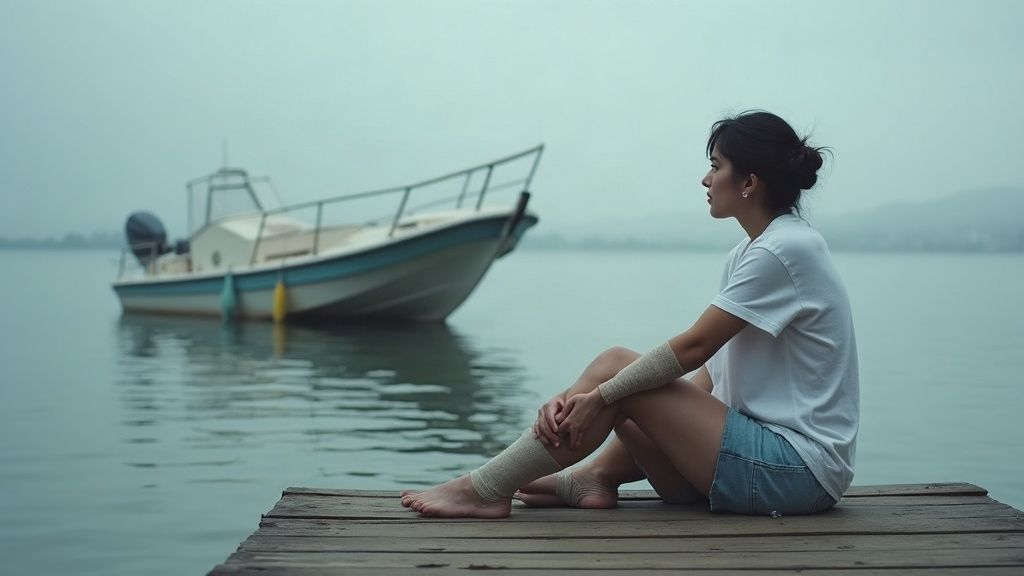
If you were hurt on a California lake, river, or bay during a boating or jet ski accident, you have legal rights, and a two-year deadline to act on them. This page explains who is liable, what California law requires, and exactly what you should do next to protect your claim.
Quick Answers (TL;DR)
- Who is liable: the negligent operator, the vessel owner, or a rental company, depending on the facts.
- Governing law: Cal. Harbors and Navigation Code §655 prohibits negligent or reckless operation of a vessel.
- Filing deadline: two years from the date of injury under Cal. Code of Civil Procedure §335.1.
- Reporting duty: accident must be reported to the California State Parks Division of Boating and Waterways when there is a death, injury, or property damage above the statutory threshold.
- BUI: boating under the influence is a crime in California and creates strong evidence of civil negligence.
- Insurance: recreational boat policies are separate from auto and homeowners policies and often have gaps that affect your recovery.
- Cost to you: Nordanyan Law handles boating accident injury claims on contingency, meaning $0 upfront and no fee unless we win.
California's Popular Waterways and Common Boating Accident Causes
California has more registered vessels than almost any other state. Lake Tahoe, the Sacramento Delta, Clear Lake, Lake Havasu, Mission Bay in San Diego, Newport Harbor, the Russian River, and the San Francisco Bay all see heavy recreational traffic every spring and summer. That traffic produces a steady number of serious injuries each year.
The most common causes of boating accidents in California include:
- Operator inattention or inexperience. California does not require a traditional boating license for most recreational vessels, but operators are still required to follow the rules of navigation and operate with reasonable care.
- Excessive speed. High speeds in crowded anchorages or near swimmers create a significant risk of collision and propeller strikes.
- Boating under the influence (BUI). Alcohol impairs balance, judgment, and reaction time, and the motion of a vessel amplifies those effects.
- Wake violations. Operators who travel at speed in no-wake zones can swamp smaller vessels or throw passengers overboard.
- Improper lookout. Failing to keep a proper lookout is a leading contributor to vessel collisions.
- Equipment failure. Defective life jackets, steering mechanisms, or fuel systems can form the basis of a product liability claim separate from the operator's negligence.
- Carbon monoxide accumulation. Enclosed cabin areas and swim platforms on motorized vessels can accumulate lethal levels of CO if ventilation is inadequate.
Knowing what caused your accident helps identify who is legally responsible, which is the foundation of any successful injury claim.
Who Can Be Held Liable: Operators, Owners, and Rental Companies
In California, a boat operator can be held liable for injuries caused by negligent operation under Cal. Harbors and Navigation Code §655, which prohibits operating a vessel in a negligent or reckless manner.
The Operator
Any person at the helm owes a duty of reasonable care to passengers, other boaters, and swimmers in the water. If that person operated the vessel carelessly, recklessly, or while impaired, they can be held personally liable for your medical bills, lost wages, pain and suffering, and other damages.
The Owner
A vessel owner may be held liable for injuries caused by a person operating the boat with the owner's permission, similar to how vehicle owner liability works under California law.
This is significant when the negligent operator is a friend who borrowed the owner's boat, a family member, or an employee. You do not have to limit your claim to the person who was physically at the wheel.
Rental Companies
If you were injured on a rented vessel, or injured by a vessel operated by a renter, the rental company may share liability if it:
- Rented a vessel it knew or should have known was mechanically defective.
- Failed to provide adequate safety briefings required under California law.
- Rented to an operator it knew was impaired or clearly incompetent.
Rental company liability is a fact-specific analysis, but it often opens a path to a commercial insurance policy with higher coverage limits than a private boat owner's policy would provide.
Product Manufacturers
If a defective component caused or contributed to the accident, such as a faulty steering system, an exploding fuel tank, or a life jacket that failed to inflate, the manufacturer can be held liable under California product liability law. This is a separate claim from the negligence claim against the operator or owner and can run at the same time.
Boating Under the Influence and Its Impact on Liability
Boating under the influence of alcohol or drugs is illegal in California under Cal. Harbors and Navigation Code §655, and a BUI conviction creates strong evidence of negligence in a civil injury claim.
California law sets a blood alcohol limit of 0.08% for recreational boat operators, mirroring the standard for motor vehicle drivers. For operators of vessels carrying passengers for hire, the limit is 0.04%. The California Department of Boating and Waterways and law enforcement agencies, including the California Highway Patrol and county sheriffs, actively enforce BUI on California waterways.
If the operator who injured you was arrested for BUI, or if blood tests taken after the accident show alcohol or drug impairment, that evidence is highly valuable in your civil claim. A BUI citation or conviction does not automatically win your lawsuit, but it removes the defendant's ability to argue they operated reasonably. In practice, it often accelerates a settlement.
Even without a formal BUI charge, evidence of drinking before or during the boating trip, such as witness accounts, photos, or receipts from a marina bar, can support an inference of negligence. An attorney who handles these cases knows how to preserve and present that evidence.
Insurance Coverage Gaps for Recreational Watercraft
Most homeowners and renters insurance policies either exclude watercraft entirely or cap coverage at a low dollar amount for small, low-horsepower boats. Auto insurance never covers watercraft. That means the person who injured you may have been operating a vessel worth hundreds of thousands of dollars with no insurance, or with a policy whose limits are far below what your injuries cost.
Here is how coverage typically works:
- Standalone boat insurance. Covers the hull, liability for injuries to others, and sometimes uninsured boater coverage. Policies vary widely. The liability limits on many recreational boat policies are lower than what a serious injury demands.
- Personal watercraft (PWC) insurance. Jet skis, WaveRunners, and similar personal watercraft (PWC) often require their own separate policy. A PWC under a homeowners policy rider may have a liability cap as low as $25,000.
- Rental company insurance. Commercial operators who rent vessels are typically required to carry higher liability limits, but policies vary. The rental contract may attempt to limit your rights, and those waivers are sometimes enforceable and sometimes not, depending on the circumstances.
- Uninsured/underinsured boater coverage. If the at-fault operator has no insurance or inadequate coverage, your own boat policy's uninsured boater provision may provide some recovery. This coverage is not required in California, so not everyone has it.
An attorney who handles California watercraft injury claims can identify every available insurance policy, including umbrella policies the defendant may hold, and build a demand that accounts for all of them.
Injuries Unique to Boating and Jet Ski Accidents
Boating accidents produce injuries that are different from car accidents in several important ways:
- Propeller strikes. Rotating propeller blades cause catastrophic lacerations, amputations, and fractures. Victims who fall overboard near a moving vessel are at high risk. These injuries often require multiple surgeries and extensive rehabilitation.
- Ejection injuries. Being thrown from a high-speed jet ski or boat onto the water surface at speed produces blunt-force trauma comparable to hitting pavement. Spinal fractures, traumatic brain injuries, and internal organ damage are common.
- Near-drowning. Even a brief submersion can cause hypoxic brain injury. Symptoms may not appear immediately, making early medical evaluation critical.
- Carbon monoxide poisoning. Victims exposed to CO exhaust on or near a vessel can suffer neurological damage that is not always visible on initial examination. This injury is frequently misdiagnosed at the emergency room.
- Hypothermia. Cold water accelerates hypothermia rapidly. Immersion in Northern California waters, including Lake Tahoe, can incapacitate a person in minutes.
- Sun and dehydration-related medical emergencies. A long day on the water in California's summer heat can produce heat stroke, which becomes a medical emergency compounded by delayed rescue.
These injuries are expensive. Emergency transport from the water (Coast Guard, helicopter, or marine rescue) is billed separately from hospital care. Hyperbaric oxygen therapy for CO poisoning is a specialized expense. Prosthetics for propeller-related amputations involve decades of costs. A boating accident claim must account for all of it, not only the bills you have already received.
Reporting Requirements After a California Boating Accident
California law requires the operator of a vessel involved in an accident causing death, injury, or property damage above a set threshold to file a written accident report with the California State Parks Division of Boating and Waterways.
Under Cal. Harbors and Navigation Code §656, the operator of a vessel involved in an accident must:
- Stop immediately and render assistance to anyone injured, to the extent they can do so safely.
- Provide their name, address, and vessel identification to injured parties and other operators involved.
- File a written accident report with the California State Parks Division of Boating and Waterways (DBW) if the accident results in death, disappearance, injury requiring medical attention beyond first aid, or property damage above the threshold set by the California Department of Boating and Waterways.
Deadlines matter here. When a death or disappearance occurs, the report must be filed within 48 hours. For injury and property damage accidents, the report must be filed within 10 days.
If the operator who injured you failed to file the required report, or filed a false one, that failure is itself relevant evidence in your civil claim. California law does not allow a hit-and-run on the water any more than on the highway.
For victims: The reporting duty falls on the operator, not on you. But you should contact law enforcement, including the county sheriff's marine patrol, the California Highway Patrol's marine unit, or the U.S. Coast Guard, as soon as possible after the accident. Their investigation report is a foundational document in your injury claim.
Steps to Protect Your Claim After a Watercraft Injury
The actions you take in the hours and days after a boating accident have a direct impact on the strength of your claim. Here is what we tell every client:
1. Get medical attention immediately, even if you feel fine.
Propeller injuries, near-drowning, and carbon monoxide poisoning can develop complications over hours or days. A same-day ER or urgent care visit creates a medical record that connects your injuries to the accident.
2. Call law enforcement.
California's marine law enforcement agencies investigate boating accidents much like traffic collisions. An official incident report is critical evidence. Do not let the other operator convince you that an informal agreement on the water is sufficient.
3. Document the scene.
If you or someone with you is able to, photograph the vessels involved, the location on the water, any visible injuries, any alcohol containers present, and weather and visibility conditions. Video from your phone is admissible and often persuasive.
4. Collect contact information.
Get the name, address, phone number, vessel registration number, and insurance information for every operator involved. Get names and contact information for witnesses on the water or on shore.
5. Do not give a recorded statement to any insurance company before speaking to an attorney.
Insurance adjusters for boat owners are trained to ask questions that minimize the operator's liability and your damages. A recorded statement made while you are injured, shaken, and without legal counsel can limit your recovery significantly.
6. Preserve all evidence.
Keep your clothing, life jacket, and any personal property damaged in the accident. Do not discard anything. If your own vessel was involved, do not repair it until it has been documented and inspected.
7. Contact a California boating accident attorney.
The statute of limitations for a personal injury claim arising from a boating accident in California is generally two years from the date of injury under Cal. Code of Civil Procedure §335.1.
Two years sounds like a long time. It is not, once you factor in the time needed to identify all defendants, secure expert witnesses, obtain insurance policy information, and build a demand. And certain claims, such as those against government entities responsible for maintaining navigational hazards, have a notice requirement as short as six months under the California Government Claims Act.
Jet Ski and Personal Watercraft (PWC) Accidents
Jet ski and personal watercraft accidents are governed by the same California Harbors and Navigation Code provisions as larger vessels, meaning the same liability rules apply to PWC operators and owners.
California imposes additional rules on PWC operation beyond what applies to traditional boats:
- Operators must be at least 16 years old to operate a PWC without adult supervision.
- Operators born on or after January 1, 1988 must complete a California-approved boater safety course and carry their course completion card.
- PWC may not be operated within 200 feet of a beach, pier, dock, or swimming area unless accessing the open water.
- Operating a PWC at speed in the immediate vicinity of other vessels or swimmers at a distance that creates a collision hazard is prohibited.
When a jet ski operator violates any of these rules and injures someone, the violation is evidence of negligence per se, meaning the court may presume the conduct was negligent without requiring the victim to prove it separately. That is a significant legal advantage for the injured party.
How Workers' Compensation Intersects With Boating Accidents
If you were injured in a boating accident while performing work duties, for example as a commercial fisherman, a marine tour operator, a harbor maintenance worker, or a delivery boat operator, your injury may be covered by California workers' compensation in addition to any third-party personal injury claim against the at-fault vessel operator.
California workers' compensation through the DWC (Division of Workers' Compensation) covers medical treatment and a portion of lost wages regardless of fault. A third-party personal injury claim runs separately and can recover damages workers' comp does not pay, including pain and suffering. Handling both claims correctly, and managing the workers' comp insurer's right to reimbursement from any third-party recovery, requires an attorney who handles both practice areas.
Nordanyan Law handles California personal injury cases and workers' compensation cases. If your boating accident happened on the job, call us. We will make sure every claim is filed correctly and that you are not shortchanged on either one. Learn more about our personal injury practice and our workers' compensation practice.
What a Boating Accident Claim Can Recover
A successful boating accident injury claim in California can recover:
- Medical expenses: all past and reasonably anticipated future costs, including surgery, hospitalization, physical therapy, prosthetics, and specialized care.
- Lost wages: income you lost while recovering, and earning capacity you may have permanently lost.
- Pain and suffering: physical pain, emotional distress, and loss of enjoyment of life.
- Property damage: repair or replacement of your vessel, safety equipment, and personal property.
- Wrongful death damages: if a family member was killed in the accident, surviving family members may have a wrongful death claim for loss of financial support, companionship, and funeral expenses.
California does not cap compensatory damages in personal injury cases outside of medical malpractice. The amount you can recover depends on the severity of your injuries, the strength of the liability evidence, and the available insurance coverage. We will give you an honest assessment of your case, not a number designed to get you to sign a retainer.
FAQ: Boating Accident Injury Claims in California
Who is liable in a boating accident in California?
Liability falls on the person or entity whose negligence caused the accident. That can be the vessel operator, the vessel owner, a boat rental company, or a product manufacturer. In many cases, more than one party shares liability. California's pure comparative fault system means you can recover even if you were partly at fault, though your damages are reduced by your percentage of responsibility.
Do you need a boating license to be held liable for an accident?
No. California does not require a traditional boating license for most recreational vessel operators. Operators born before January 1, 1988 are not required to have a boater education card. But the absence of a license does not protect anyone from civil liability. Every operator, licensed or not, has a legal duty to operate their vessel with reasonable care under Cal. Harbors and Navigation Code §655. Violating that duty and causing an injury creates liability regardless of licensing status.
Can you sue for injuries from a jet ski accident in California?
Yes. Jet ski and personal watercraft operators are held to the same standard of care as boat operators under the California Harbors and Navigation Code. If a PWC operator's negligent or reckless operation injured you, you have the same right to file a personal injury claim as you would for any other boating accident. Rental companies that rent PWC may also be liable if they rented defective equipment or failed to provide required safety briefings.
What agency investigates boating accidents in California?
California boating accidents are investigated by the California State Parks Division of Boating and Waterways, county sheriff's marine units (in counties with navigable waterways), the California Highway Patrol Marine Unit on certain waterways, and the U.S. Coast Guard for accidents on federal waters. If there is a fatality, multiple agencies may have concurrent jurisdiction. Contact law enforcement immediately after an accident and request a copy of the incident report.
How long do I have to file a boating accident claim in California?
For most personal injury claims, the statute of limitations is two years from the date of injury under Cal. Code of Civil Procedure §335.1. However, if a government entity is responsible, for example a public marina or a government vessel, you must file a government claim with the responsible agency within six months of the incident under the California Government Claims Act before you can file a lawsuit. Missing either deadline bars your claim entirely. Call an attorney promptly.
What if the boat operator had no insurance?
California does not require recreational vessel operators to carry liability insurance. If the operator who injured you has no insurance, your options may include: a claim against the vessel owner if different from the operator, a claim under any uninsured boater coverage on your own policy, or a direct lawsuit against the at-fault operator personally. An attorney can run an asset search and help you evaluate whether a judgment against an uninsured individual is likely to result in any actual recovery.
Does comparative fault reduce my recovery in a California boating accident claim?
California follows a pure comparative fault rule, meaning your damages are reduced by the percentage of fault attributed to you, but you can still recover something even if you were 50% or more at fault. For example, if you were not wearing a life jacket that was available to you, the defense may argue that contributed to your injuries. Whether that argument succeeds, and to what extent, depends on the specific facts of the accident.
What if my loved one was killed in a boating accident?
If a family member was killed, California's wrongful death statute (Cal. Code of Civil Procedure §377.60) allows surviving spouses, children, and certain other family members to sue for damages including loss of financial support, loss of companionship, and funeral expenses. A separate survival claim can also be filed on behalf of the decedent's estate for pain and suffering experienced before death. These claims have the same two-year statute of limitations and are highly fact-sensitive. Speak to an attorney as soon as possible.
Talk to a California Boating Accident Attorney
We've recovered over $150,000,000 for injured Californians since 2014. If you or someone you love was hurt in a boating or jet ski accident on California waters, we want to hear what happened.
There is no fee to talk to us, no obligation, and no fee at all unless we win. We represent boating accident victims on a full contingency basis, meaning we take the financial risk, not you.
Call (818) 794-9947 for a free consultation. Available in English and Spanish. No fee unless we win.
Reviewed by Minas Nordanyan, CA Bar No. 296806. Last updated 2026.