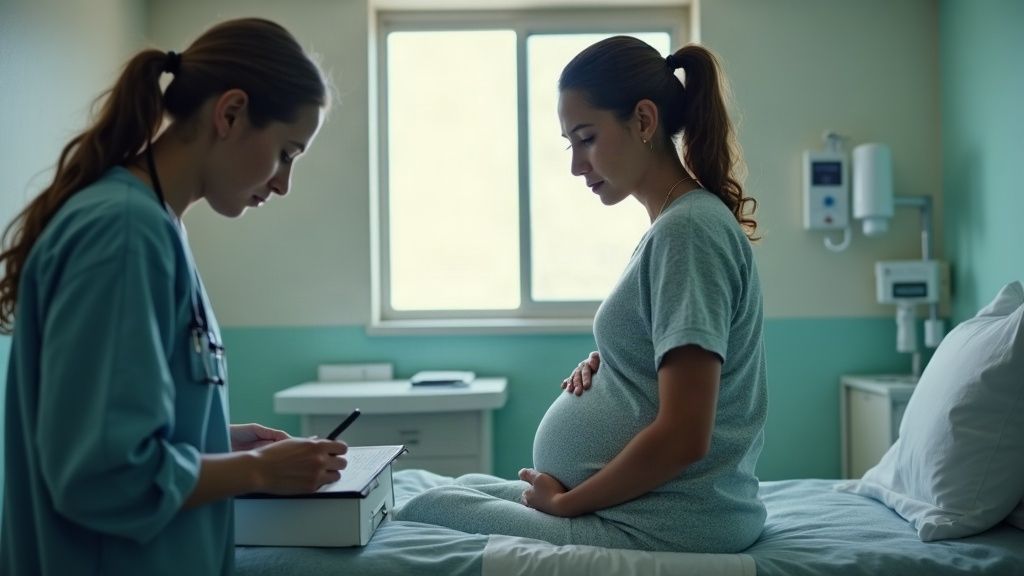
If you were in a car accident while pregnant in California, your first instinct is right: get evaluated immediately. Not tomorrow. Not after you see whether anything hurts. Right now. What makes pregnancy car accident cases different from every other collision claim is the gap between how you feel and what is actually happening inside your body. That gap can last hours or days, and it can have permanent consequences.
This article explains the real medical risks, the California law that governs your claim, and the documentation steps that determine how much compensation you can recover.
Quick-Answer Summary
- Even a low-speed impact can trigger placental abruption, preterm labor, or fetal distress with zero obvious symptoms.
- Call 911 or go directly to an emergency room, and tell every provider you are pregnant and were in a crash.
- California law allows you to pursue damages for your injuries and for harm to your unborn child.
- You generally have two years to file a personal injury lawsuit under Cal. Code Civ. Proc. §335.1, but some circumstances shorten that window.
- Prenatal records, OB-GYN notes, and high-risk obstetric consults are as important to your claim as the police report.
- A free consultation with a personal injury attorney costs you nothing upfront. No fee unless we win.
Why Even "Minor" Impacts Warrant Immediate Medical Evaluation During Pregnancy
Most car accident advice applies to the general adult body. Pregnancy changes the physics and the stakes.
Your uterus, placenta, and amniotic sac are not protected by bone the way your heart and lungs are. During the second and third trimesters especially, the uterus extends well beyond the natural shield of your pelvis, making it directly vulnerable to the forces of a collision. At the same time, the placenta, which has no significant elasticity, is attached to the uterine wall. In a sudden stop or impact, your body decelerates rapidly, but the placenta can shear slightly away from the wall. That is placental abruption, and it can begin with nothing more than mild cramping or back pain.
Forces that seem minor to you are not minor to the pregnancy. A rear-end hit at 10-15 miles per hour, the kind that leaves barely a scratch on both bumpers, still involves a rapid change in velocity that the uterine contents absorb. Trauma studies consistently report placental abruption in crashes most drivers would describe as fender-benders.
Beyond the physical forces, the stress response triggered by a crash, the adrenaline surge, elevated cortisol, and increased blood pressure, can itself affect fetal heart rate and uterine activity. Neither you nor a bystander can assess any of this from the outside.
What to do at the scene:
- Call 911 and tell the dispatcher you are pregnant.
- Stay seated and do not remove your seatbelt until EMS arrives, unless you are in immediate danger.
- Tell responding paramedics your gestational age (how far along you are).
- Accept transport to the hospital, even if you feel fine. Declining creates a documentation gap that insurers will use against you.
Seatbelt placement matters during pregnancy: the lap belt should cross the hip bones below the belly, never across the abdomen, and the shoulder strap should rest across the chest between the breasts.
Hidden Risks: Placental Abruption, Preterm Labor, and Delayed Symptoms
Understanding the medical risks helps you communicate clearly with your care team and protects your legal claim. An insurer's first response to a pregnancy complication that appears 48 hours after a crash is to argue it was not caused by the crash. Knowing the recognized medical timeline makes that argument harder to sustain.
Placental Abruption
Placental abruption is the partial or complete separation of the placenta from the uterine wall before delivery. It ranges from mild (small separation, manageable with monitoring) to severe (complete separation, life-threatening emergency for mother and baby). Symptoms can include vaginal bleeding, abdominal pain, back pain, uterine tenderness, or contractions, but in some cases there are no external symptoms at all. A fetal monitor and ultrasound are the only reliable tools. This is why hospital evaluation is non-negotiable even when you feel fine.
Preterm Labor
Blunt force or severe emotional stress can trigger uterine contractions. Preterm labor, before 37 weeks, is a documented complication of motor vehicle trauma. Depending on gestational age at the time of the crash, early delivery can mean weeks in a neonatal intensive care unit (NICU), long-term developmental concerns, or, in the most severe cases, fetal death.
Fetal-Maternal Hemorrhage
In some crashes, fetal red blood cells enter the mother's circulation. This is called fetal-maternal hemorrhage. It is diagnosed with a test called a Kleihauer-Betke test and is standard care after abdominal trauma during pregnancy. Rh-negative mothers face an additional risk, because the mother's immune system may develop antibodies that attack fetal blood cells in future pregnancies if anti-Rh immunoglobulin (Rhogam) is not administered promptly.
Delayed Symptom Onset
None of the above conditions necessarily announces itself at the scene. Symptoms can appear 24 to 72 hours after the crash. If you were evaluated in the emergency room and discharged with reassurance but then develop cramping, decreased fetal movement, back pain, or bleeding in the days following the accident, return to the emergency room immediately and tell them about the crash. Document everything. Every visit, every provider's name, every symptom you reported and when.
Placental abruption can develop with no outward symptoms for hours or even days after an impact, which is why emergency evaluation is critical even after a minor crash during pregnancy.
Documenting Pregnancy-Related Injuries for an Insurance Claim
Documentation is where most pregnancy car accident claims are won or lost. The medical evidence you generate in the first 72 hours after a crash anchors every damage calculation that follows.
At the hospital:
- Make sure your treating physician notes in the record that you were in a motor vehicle accident and the approximate mechanism of injury (rear-end, T-bone, speed if known).
- Ask for copies of all fetal monitoring strips. These are time-stamped records that show fetal heart rate before and after the crash evaluation. They become important evidence.
- If a Kleihauer-Betke test was ordered, make note of the result.
With your OB-GYN:
- Schedule a follow-up with your OB-GYN within 24-48 hours of the ER visit, even if the ER cleared you.
- Tell your OB explicitly that you were in a car accident. The crash needs to be in every prenatal record from this point forward so that any developing complication is connected to the event.
- If your OB refers you to a maternal-fetal medicine specialist (high-risk OB), keep every appointment and document every finding.
Photography and records:
- Photograph any visible injuries: bruising from the seatbelt across the abdomen or chest, airbag burns, lacerations.
- Preserve the police report, photos of the vehicles, and any witness contact information.
- Keep a daily symptom journal. Write down every symptom, every night, including days when you feel relatively fine. This contemporaneous record is far more persuasive than memory reconstructed months later.
Do not give a recorded statement to the other driver's insurance carrier before speaking with an attorney. Adjusters are trained to elicit statements that minimize the connection between the crash and your symptoms. You have no legal obligation to give them a recorded statement.
Coordinating your OB-GYN and high-risk obstetric records with your personal injury file is one of the most important documentation steps in a pregnancy car accident claim.
How Damages Are Calculated When a Pregnancy Is Affected
California is a fault-based state for car accidents. Under Cal. Civ. Code §1714, every person is responsible for the consequences of their own negligence. When a negligent driver injures you and your pregnancy, the damages available to you are broader than in a standard collision claim.
Economic Damages (Your Out-of-Pocket Losses)
- Emergency room, hospital, and specialist bills related to the crash
- Ongoing prenatal care made necessary or increased in intensity by the crash (high-risk OB, additional ultrasounds, non-stress tests, biophysical profiles)
- NICU costs if preterm delivery occurred
- Future pediatric care for any developmental complications linked to the birth
- Lost wages during pregnancy if the crash or a resulting complication prevented you from working
- Future lost earning capacity if your injuries produce lasting impairment
Non-Economic Damages (What Numbers Cannot Fully Capture)
- Pain and suffering for your physical injuries
- Emotional distress, which in a pregnancy case can be severe and well-documented through therapist and psychiatric records
- Loss of consortium for your partner if your injuries affected your relationship
- Grief and psychological trauma if the pregnancy was lost
Claims for Harm to the Unborn Child
California recognizes that harm to a viable fetus is compensable. If the crash caused fetal injury, a stillbirth, or a neonatal death, the claim framework becomes more complex and typically involves both a personal injury claim and potentially a wrongful death claim under Cal. Code Civ. Proc. §377.60. The specific legal theories that apply depend on gestational age, viability, and the nature of the loss. These claims require careful analysis by an attorney, and the timing rules differ from a standard personal injury claim.
What we do not do: we will not give you a settlement range for a pregnancy car accident claim in a general article, because honest counsel does not invent averages. Every case depends on the specific injuries, the medical costs incurred, the gestational age at the time of the crash, the severity of any fetal harm, the defendant's insurance limits, and the strength of the causation evidence. What we can tell you is that cases involving NICU care, preterm delivery, or fetal loss carry damages far beyond what an adjuster's first offer will reflect.
In California, a pregnant car accident victim may recover damages for harm to her unborn child, including placental abruption, preterm labor, and fetal loss, in addition to her own personal injuries.
Coordinating Prenatal Care Records With Your Personal Injury Case
One of the most common mistakes in pregnancy car accident claims is treating the medical case and the legal case as two separate tracks. They are the same track.
Every prenatal appointment from the crash date forward is a potential piece of evidence. If your OB escalates your care from routine to high-risk after the crash, that change in clinical management is evidence of causation. If your non-stress test results worsen in the weeks after the crash, that progression is evidence. If you deliver early or your baby spends time in the NICU, those records establish damages.
Your attorney needs to obtain all of these records, not just the ER visit. That includes:
- All prenatal visit notes from before and after the crash (the pre-crash baseline matters)
- Ultrasound reports and biophysical profile scores
- Fetal monitoring strips from the ER and from subsequent high-risk visits
- NICU admission records and discharge summaries if applicable
- Pediatric records for any complications attributed to the premature birth or fetal trauma
Authorization for release of your medical records is something you control. An attorney working your case will handle the collection and organization of these records as part of building the case.
There is also a timing dimension. California's standard personal injury statute of limitations is two years from the date of injury under Cal. Code Civ. Proc. §335.1. But claims involving a government entity, such as a crash caused by a city or county vehicle or a road defect on a public roadway, require a government tort claim to be filed within six months of the incident under the California Government Claims Act (Cal. Gov. Code §911.2). Missing that shorter deadline can bar the claim entirely, regardless of how severe the injuries are.
Under California Code of Civil Procedure §335.1, injured victims generally have two years from the date of an accident to file a personal injury lawsuit.
Emotional and Financial Impact: What Compensation Can Cover
The aftermath of a car accident during pregnancy involves more than physical recovery. It can include weeks of bedrest, restrictions on activity during the remainder of the pregnancy, anxiety about fetal wellbeing, repeated hospital visits, and, in the worst cases, grief.
All of this is compensable under California law, and none of it is automatically included in an insurance settlement offer.
Emotional distress is one of the most under-recovered categories of damages in car accident claims. Adjusters do not volunteer to calculate it, and unrepresented claimants rarely know to document it. If you have experienced anxiety, depression, panic attacks, sleep disruption, or PTSD symptoms following the crash, see a therapist or psychologist. The treatment records establish the diagnosis, the connection to the crash, and the severity. This is not manipulation of the system. It is accurate documentation of real harm that California law explicitly allows you to recover.
Financial stress during a pregnancy complication is also real and often overlooked. If you were placed on bedrest or medical leave before you planned to stop working, the wages you did not earn during that period are economic damages. If your partner took unpaid leave to care for you or to be present during high-risk monitoring appointments, that loss can be documented and considered. If your maternity leave was consumed by hospitalization rather than bonding with a healthy newborn, that is harm with both economic and non-economic dimensions.
The DWC (Division of Workers' Compensation) handles cases where the crash occurred during the course of employment. If you were driving for work purposes when the accident happened, both a personal injury claim against the at-fault driver and a workers' compensation claim through your employer may be available simultaneously. These two tracks can coexist and should be evaluated together.
For a complete overview of your rights after any car accident in California, including how fault is determined and what insurance coverage applies, see our personal injury practice area page.
FAQ
Can a car accident hurt my baby even if I feel fine?
Yes. The forces involved in even a low-speed collision can cause placental abruption or uterine trauma without producing any symptoms you can perceive from the outside. Fetal distress, changes in placental attachment, and the beginning of preterm labor can all be invisible to you while being measurable on a fetal monitor. This is the single most important reason to seek emergency evaluation after any crash during pregnancy, regardless of how you feel.
Should I go to the hospital after a minor accident while pregnant?
Yes, every time. There is no collision minor enough to skip evaluation during pregnancy. A rear-end hit at parking-lot speed still involves a sudden change in velocity that your uterus absorbs. Go to the emergency room, tell them you are pregnant and were in a crash, and allow fetal monitoring to take place. Declining evaluation and then developing complications days later creates a gap in your medical records that an insurance adjuster will use to argue the complication was not caused by the crash.
Can you file a claim for pregnancy complications after a car accident?
Yes. In California, you can file a personal injury claim against the at-fault driver for both your own injuries and for harm to your unborn child resulting from the crash. The claim can include medical bills, lost wages, future care costs, and non-economic damages including pain and suffering and emotional distress. If a fetal death occurred, additional legal claims may be available under California wrongful death law. Consult a personal injury attorney to understand which claims apply to your specific circumstances.
How does a car accident during pregnancy affect a settlement?
A pregnancy complication generally increases the value of a personal injury claim because it adds categories of damages that would not exist in a standard collision: high-risk prenatal care, NICU costs, emotional distress specific to fetal wellbeing, and in serious cases, damages for fetal loss. At the same time, the insurer for the at-fault driver will scrutinize the causation question closely, which is why thorough medical documentation connecting the crash to every complication is so important. The quality of that documentation, combined with the attorney's ability to present it persuasively, is what drives the outcome.
What if the crash was partly my fault?
California follows a "pure comparative fault" rule under Cal. Civ. Code §1714 and established case law. Your recovery is reduced by your percentage of fault, but it is not eliminated. Even if you were found 30% at fault for the crash, you can still recover 70% of your damages. Talk to an attorney before accepting any determination of fault from an insurance carrier.
How long do I have to file a personal injury claim in California after a pregnancy car accident?
The standard statute of limitations for personal injury in California is two years from the date of injury under Cal. Code Civ. Proc. §335.1. If the at-fault driver was operating a government vehicle or if a road defect on a public road contributed to the crash, a government tort claim must typically be filed within six months under the California Government Claims Act. Do not wait to find out which deadline applies. Consult an attorney promptly after the crash.
Is a seatbelt required during pregnancy in California?
Yes. California requires all vehicle occupants to wear a seatbelt, and no medical exemption exists for pregnancy. The correct placement during pregnancy is lap belt below the belly across the hip bones, and shoulder strap across the chest and off the belly. Correct belt use reduces injury severity in crashes. An improperly worn seatbelt, such as placing the lap portion across the abdomen, can itself cause injury. If you received a bruise or internal injury from the belt, document it photographically and report it to your treating physician as part of the crash evaluation.
What if my unborn baby was injured but survived?
If your baby was born with injuries or complications linked to the crash, the damages extend beyond your own recovery. Future pediatric and therapeutic care costs, developmental intervention expenses, and the child's pain and suffering are all potentially compensable elements. California law allows a parent to bring claims on behalf of a minor child. An attorney should review the medical records from both the crash evaluation and the child's post-birth care to identify all recoverable damages.
Every pregnancy is different, and every crash produces a different set of medical facts. What does not change is that you have rights under California law, and those rights extend to your unborn child.
If you were in a car accident while pregnant in California, call us at (818) 794-9947 for a free consultation. We review the facts of your case, explain what claims are available, and handle the fight with the insurance carrier so you can focus on your health and your baby's health. No fee unless we win.
Reviewed by Minas Nordanyan, CA Bar #296806. Last reviewed 2026-08-29. This article is for general informational purposes and does not constitute legal advice. For advice specific to your situation, contact a licensed California personal injury attorney.