Quick-Answer Summary
- Call 911 first. A police report is not optional — it is a hard requirement before your own insurance company will pay a hit-and-run claim in California.
- Your uninsured motorist (UM) coverage steps in when the driver who hit you is unknown or uninsured, but only if your car or body made physical contact with the other vehicle.
- California law requires every auto policy to offer UM coverage under Cal. Ins. Code §11580.2 — but you have to have accepted it.
- Fleeing the scene is a crime. A hit-and-run involving injury is a felony in California; property damage alone is a misdemeanor.
- You have two years to file a personal injury lawsuit under Cal. Code Civ. Proc. §335.1, but insurance deadlines come sooner.
- If you were working when you were hit, you may have both a workers' comp claim and a personal injury claim running at the same time.
- Questions about your specific situation? Call (818) 794-9947 for a free consultation. No fee unless we win.
Immediate Steps After a Hit-and-Run in California
The first five minutes after a hit-and-run shape everything that comes later — medically, legally, and financially. Here is exactly what to do.
1. Stop and stay safe
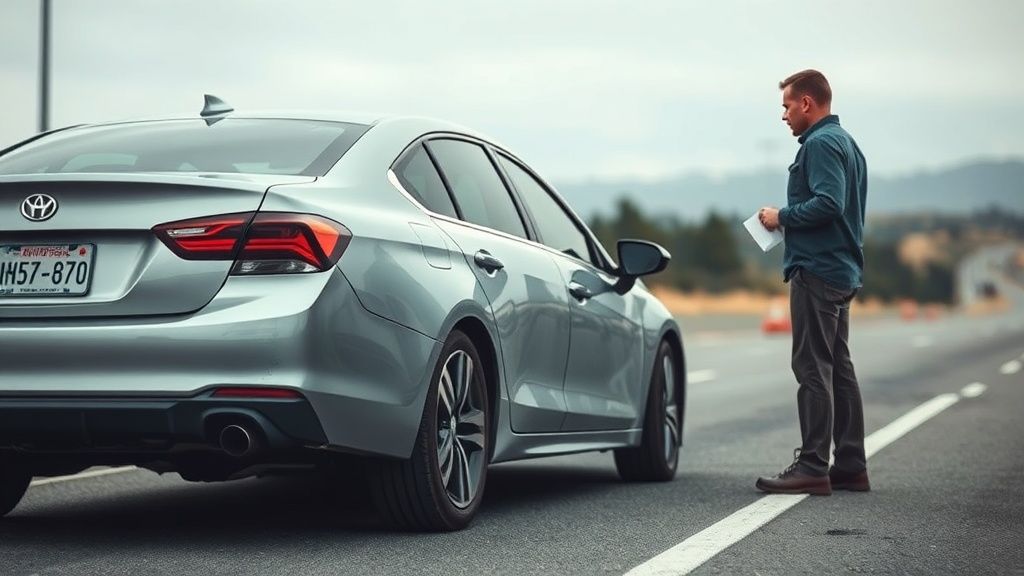
Pull your vehicle out of traffic if you can do so safely. Turn on your hazard lights. Do not chase the fleeing driver.
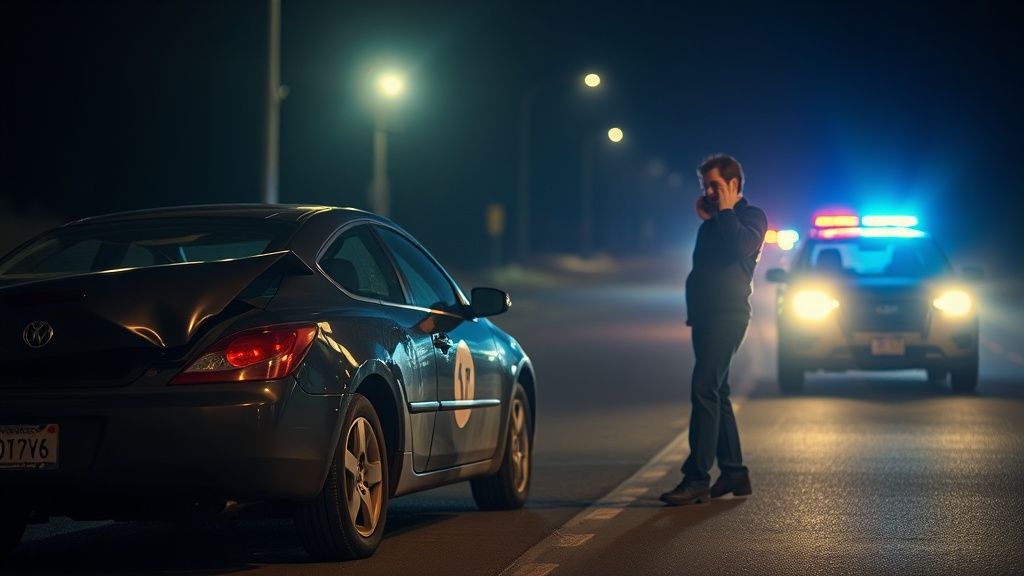
2. Call 911
In California, you must report a hit-and-run accident to law enforcement immediately — a police report is required before your own insurance company will pay an uninsured motorist claim.
Even if your injuries feel minor, get an officer on scene. The police report is the foundational document for every insurance and legal step that follows. If local police cannot respond, go to the nearest California Highway Patrol (CHP) office and file a report there. You can also file a collision report directly with the DIR if an officer is unavailable, but a law-enforcement report carries far more weight with insurers.
3. Document everything you can
While you wait for police, collect:
- The make, model, color, and as many digits of the license plate as you can remember
- The direction the driver fled
- Witness names and phone numbers
- Photos of your vehicle damage, skid marks, debris, and the surrounding intersection
- Traffic or business surveillance camera locations nearby
4. Seek medical attention — the same day
Adrenaline masks pain. Injuries like whiplash, traumatic brain injury, and internal bleeding are not always obvious at the scene. Go to an emergency room or urgent care the same day. Your medical records, timestamped to the day of the accident, become the cornerstone of your injury claim.
5. Report to your own insurance company
Notify your carrier as soon as possible. Most policies impose a "prompt notice" requirement. Waiting days or weeks can give the insurer grounds to reduce or deny your UM claim, even when the hit-and-run driver is entirely at fault.
How Uninsured Motorist Coverage Pays When the Driver Is Unknown
When a hit-and-run driver disappears, there is no liability policy for you to make a claim against. That is exactly what uninsured motorist (UM) coverage is designed for.
Under California Insurance Code §11580.2, every auto policy sold in California must offer uninsured motorist coverage, which can pay your medical bills and lost wages even if the driver who hit you is never identified.
What UM bodily injury coverage pays:
- Emergency room and hospital bills
- Follow-up medical treatment and physical therapy
- Lost wages during your recovery
- Pain and suffering
- Future medical expenses if your injury is permanent
What uninsured motorist property damage (UMPD) coverage pays:
- Repairs to your vehicle or its actual cash value if it is totaled
UMPD for a hit-and-run typically carries a $250 or $500 deductible under California law and only applies if you can identify the vehicle that hit you. If the fleeing driver is identified later and carries liability insurance, that policy becomes primary and you pursue the at-fault driver directly.
If you rejected UM coverage in writing: California law required your insurer to offer it; if you declined, you signed a written waiver. Pull out your declarations page now and confirm whether you have UM coverage and at what limits. If you are unsure, call your agent or call us at (818) 794-9947 — we can help you read the policy.
The Physical-Contact Requirement and Other UM Gotchas in California
California UM coverage for hit-and-run has one requirement that trips up a surprising number of claimants.
California's uninsured motorist bodily injury coverage requires physical contact between the hit-and-run vehicle and your car or your body — a "phantom vehicle" that never touches you generally does not trigger UM coverage under California law.
What this means in practice:
- A driver cuts you off, you swerve to avoid them, and you hit a guardrail — but the other car never touches you. In most California UM policies, this "phantom vehicle" scenario does not qualify for UM coverage because there was no physical contact.
- A driver rear-ends you, you both pull over, and then the driver flees on foot — the contact was real, the identity is unknown. This does qualify.
- A driver sideswipes you while you are on a bicycle or on foot — direct physical contact occurred between their vehicle and your body. This qualifies.
Corroboration requirement: When physical contact did occur but the driver fled before being identified, California courts and insurers look for independent witness corroboration. If you are the only person who can describe the accident, some insurers will dispute the claim. This is one reason witness information is so critical to gather at the scene.
Other common UM disputes in California:
- Your insurer argues your claimed injuries pre-existed the accident
- Your insurer claims you did not report promptly enough
- Your insurer disputes the value of your pain-and-suffering claim
- You owe medical liens to providers or have a workers' comp lien that affects the net payout
Each of these disputes is manageable with proper documentation and an attorney. Insurance carriers settle UM claims for more when the claimant is represented — because they know an unrepresented claimant is more likely to accept the first offer.
Criminal vs. Civil Consequences for the Fleeing Driver
Understanding what law the hit-and-run driver broke matters for your civil case — if the driver is ever identified, their criminal conviction becomes powerful evidence of fault in your personal injury lawsuit.
Felony hit-and-run — injury or death
California Vehicle Code §20001 makes it a felony to flee the scene of an accident involving injury or death, with penalties of up to four years in state prison.
Under Cal. Veh. Code §20001, a driver involved in an accident that causes injury or death must stop, provide their name and insurance information, and render reasonable assistance to injured persons. Violation is a "wobbler" — it can be charged as a misdemeanor (up to one year in county jail) or a felony (16 months, two years, or four years in state prison), depending on the severity of the injuries and the driver's prior record. If the victim dies or suffers permanent serious injury, the maximum sentence increases to four years.
Misdemeanor hit-and-run — property damage only
California Vehicle Code §20002 makes leaving the scene of a property-damage-only accident a misdemeanor, punishable by up to six months in jail and a fine of up to $1,000.
Cal. Veh. Code §20002 requires the driver to stop and leave their contact and insurance information or attach a note with that information. A conviction under §20002 results in a misdemeanor on the driver's record, a fine of up to $1,000, and up to six months in county jail.
What a criminal conviction means for your civil case
If the driver is caught and convicted — even of the misdemeanor — that conviction establishes fault. You can use it as evidence in your civil personal injury claim. California courts treat a criminal hit-and-run conviction as strong, though not automatically conclusive, evidence of negligence per se. That is one reason it is worth calling the detective assigned to your case and keeping track of any investigation updates.
Recovering from Your Own Policy — and the Role of MedPay
UM coverage is your primary financial tool when the hit-and-run driver is unknown, but it is not the only one.
Medical Payments Coverage (MedPay)
MedPay is an optional add-on to a California auto policy that pays your medical bills regardless of fault — no need to prove the other driver caused the accident, no need for physical contact, no deductible. It pays first, fast, and without a liability fight. If you have MedPay, use it immediately for emergency treatment while the UM claim is being built.
MedPay limits are typically modest — $1,000 to $10,000 — but that covers a lot of urgent care and follow-up visits during the first few weeks when bills stack up fastest.
Health insurance
Your health insurance can pay medical bills in a hit-and-run, but it will likely assert a subrogation lien — meaning it has the right to be reimbursed from any UM settlement you eventually receive. Managing subrogation liens is one of the places where an attorney recovers far more net value for you than the settlement headline suggests. We negotiate lien reductions as a standard part of every PI case.
If you were working at the time of the accident
If you are injured in a hit-and-run accident while you are on the job in California, you may have both a workers' compensation claim and a personal injury claim — do not settle either one without speaking to an attorney first.
A delivery driver hit while making a route. A construction laborer hit while driving between job sites. A rideshare driver hit while on a trip. If any of these describes your situation, California workers' comp covers your medical bills and a portion of your lost wages through the DWC (Division of Workers' Compensation) — while your personal injury claim against the uninsured driver (or your UM policy) runs in parallel.
These two claims interact. The workers' comp carrier will assert a lien against your PI settlement. Getting both claims to their maximum value requires coordinating them from the start — not one at a time.
How Long You Have to Act
You have two years from the date of a hit-and-run accident in California to file a personal injury lawsuit under California Code of Civil Procedure §335.1, but your insurance company's internal deadline to report the claim may be much shorter.
The two-year statute of limitations under Cal. Code Civ. Proc. §335.1 governs lawsuits. But your UM policy's "prompt notice" clause — which may require you to report the hit-and-run within days or weeks — is a separate and earlier deadline. Miss the policy deadline and your insurer may deny the claim entirely, regardless of the two-year court deadline.
If a government vehicle was involved — a city bus, a county truck — you must file a government tort claim with the public entity within six months of the accident under Cal. Gov. Code §911.2. Miss that window and your civil claim against the government is almost certainly lost.
Bottom line: Do not assume you have two years to think about it. The practical deadlines — police report, insurance notice, government claim — start the day of the accident.
FAQ
What should I do immediately after a hit-and-run in California?
Call 911 and request a police officer at the scene. While you wait, document the accident: photograph your vehicle damage, collect witness names and numbers, and note every detail you remember about the fleeing driver's vehicle. Go to an emergency room or urgent care the same day, even if you feel okay. Then report the accident to your own insurance carrier as soon as possible — delay can give the insurer grounds to reduce your claim.
Can I get compensation if the driver fled and was never found?
Yes, in most cases. If you carry uninsured motorist (UM) bodily injury coverage, it pays medical bills, lost wages, and pain and suffering even when the driver is never identified — as long as there was physical contact between the fleeing vehicle and your car or body. MedPay coverage and your health insurance are additional sources of payment. If you were working at the time, California workers' comp is also available.
Does uninsured motorist coverage apply to a hit-and-run in California?
Yes, with one major condition: California requires physical contact between the unidentified vehicle and your vehicle or your body before UM bodily injury coverage applies. A "phantom vehicle" that causes you to crash but never touches you generally does not trigger UM coverage under California law. Check your declarations page to confirm you have UM coverage and at what limits.
Is a hit-and-run a felony in California?
It depends on what the accident caused. Under Cal. Veh. Code §20001, leaving the scene of an accident that caused injury or death is a felony carrying up to four years in state prison. Under Cal. Veh. Code §20002, leaving the scene of a property-damage-only accident is a misdemeanor punishable by up to six months in jail and a fine of up to $1,000.
What if the hit-and-run driver is found later?
If the driver is identified after you have already made a UM claim, your insurer may seek reimbursement from the driver's liability policy — a process called subrogation. You may also file a direct personal injury lawsuit against the driver. A criminal conviction under Cal. Veh. Code §20001 or §20002 becomes powerful evidence of fault in your civil case.
What if I was hit by a driver who had no insurance and did not flee?
The same UM coverage that protects you in a hit-and-run also covers accidents with identified but uninsured drivers. The physical-contact requirement is not an issue when the at-fault driver stays at the scene — you simply pursue your UM claim against your own policy after confirming the other driver lacks coverage.
How long do I have to file a claim after a hit-and-run in California?
You have two years from the date of the accident to file a personal injury lawsuit under Cal. Code Civ. Proc. §335.1. But your insurance policy's internal prompt-notice requirement may be much shorter — sometimes just days. If a government vehicle was involved, you must file a government tort claim within six months under Cal. Gov. Code §911.2. Act quickly, because missing the insurance notice deadline can cost you the claim even if the court deadline has not passed.
Do I need an attorney for a hit-and-run claim in California?
You are not required to hire an attorney, but UM claims involve disputes over physical contact, corroboration, injury causation, and lien resolution that insurers are skilled at turning to their advantage. Represented claimants consistently recover more than unrepresented ones — not because attorneys inflate claims, but because they know the procedural rules, medical valuation benchmarks, and lien negotiation strategies that insurers count on claimants not knowing. A free consultation costs you nothing and takes 15 minutes.
If you were hit by a driver who fled the scene, every day you wait is a day an insurer can build its case for paying less. We've recovered over $150,000,000 for injured clients across Southern California — and we take hit-and-run cases seriously, because the negligence is serious.
Call (818) 794-9947 for a free consultation with our personal injury team. No fee unless we win. Available in English and Spanish.
Reviewed by Minas Nordanyan, CA Bar #296806. Last updated June 2026. This article is for general informational purposes only and does not create an attorney-client relationship. California law is the only jurisdiction addressed. Contact a licensed California attorney for advice specific to your facts.