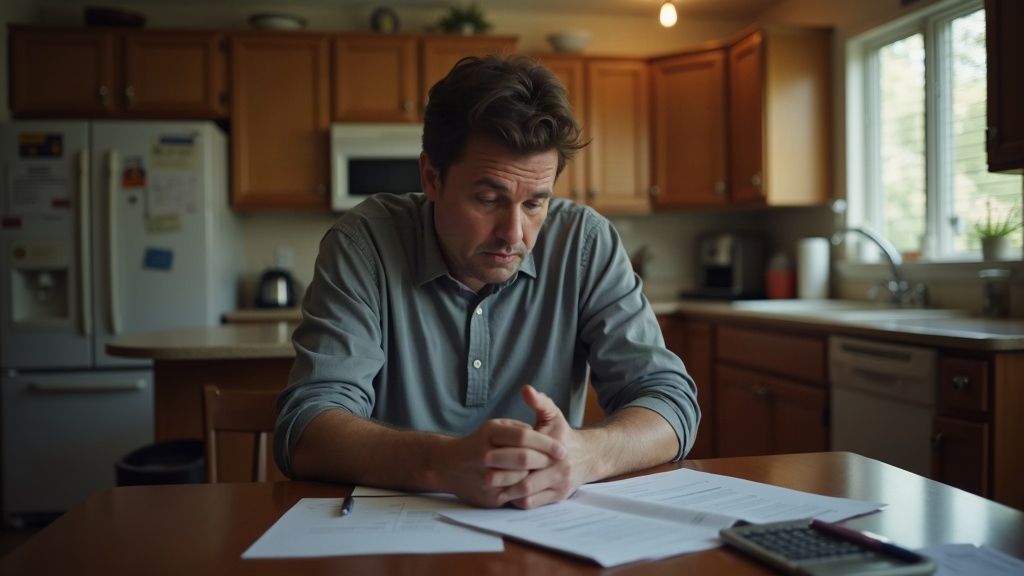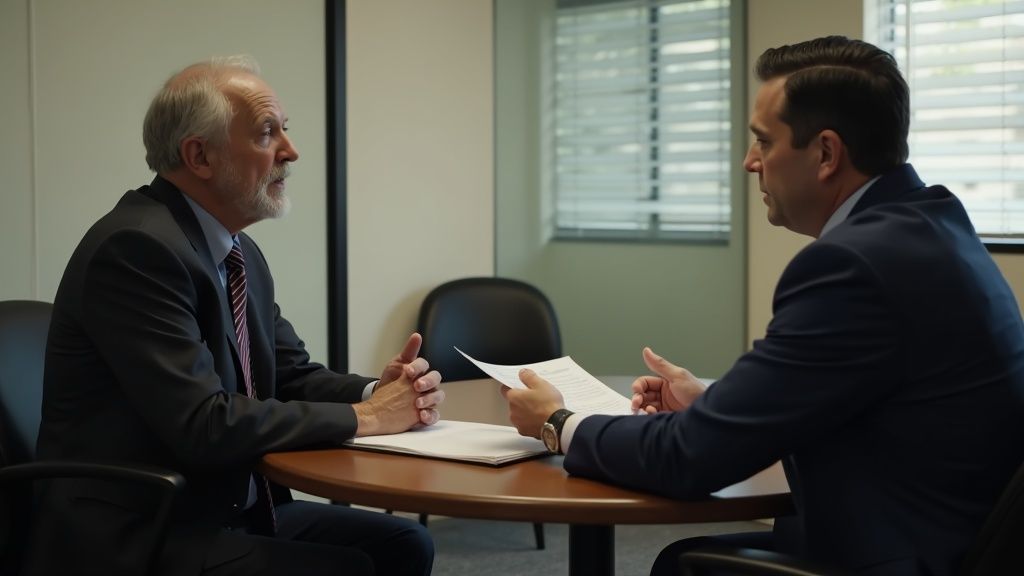
If you've been in a crash in California, the other driver's insurance adjuster will call you, sometimes within hours. The call sounds routine. It is not.
Every question an adjuster asks is designed to build a record the insurer can use to limit what they pay you. Some questions are obvious traps. Others sound like small talk. All of them matter.
We've recovered over $150,000,000 for injured workers and accident victims in Southern California. Here is what we've learned about the ten questions adjusters ask most, and what you should know before you answer any of them.
Quick-reference summary:
- "Can I record this call?", you can decline, and you should.
- "How are you feeling?", never say "fine" before a doctor clears you.
- "How fast were you going?", exact numbers can be used against you.
- "Can you describe exactly what happened?", stick to confirmed facts only.
- "Whose fault do you think it was?", never assign blame.
- "Have you been injured like this before?", answer honestly, but don't volunteer extra.
- "Have you seen a doctor yet?", gaps in treatment hurt your case.
- "Will you sign this medical authorization?", never sign a blanket release.
- "Are you ready to settle?", almost certainly too early.
- "Do you have an attorney?", your answer changes everything.
1. Can I Record This Call?
You are not required to give a recorded statement to the other driver's insurance company in California.
Adjusters ask this question and then sometimes begin recording before you answer. California is a two-party consent state under Cal. Penal Code §632, which generally requires all parties to consent to recording a confidential conversation. But the bigger issue is not legality, it is strategy.
A recorded statement locks you into a version of events before you have seen all the evidence, before your injuries have fully declared themselves, and before you have spoken with an attorney. Adjusters are trained to find inconsistencies between early statements and later medical records or accident reports.
How to respond: "I'd prefer not to give a recorded statement at this time. Please put your questions in writing." That is a complete, professional answer. You do not owe the other driver's insurer a recorded statement. (You may have a contractual duty to cooperate with your own insurer, your policy language governs that, and you should review it or call us to walk through it.)
Practical takeaway: Decline politely, ask for written questions, and call an attorney before saying anything further.
2. How Are You Feeling?
The question "How are you feeling?" is one of the most common adjuster traps, adrenaline can mask serious injuries for hours or days after a crash, so never say you are fine before a doctor has fully evaluated you.
This question sounds like basic human courtesy. It is not. If you say "I'm doing okay" or "I'm a little sore but fine," the adjuster logs that statement. When you later report a herniated disc or a torn rotator cuff, the insurer points back to that first call: "You told us you were fine."
The physiology is real. Adrenaline released during a crash suppresses pain signals. Soft-tissue swelling, spinal disc injuries, and nerve compression often do not produce their worst symptoms until 24 to 72 hours post-impact. You cannot accurately assess your own injuries at the scene or the day of the crash.
How to respond: "I haven't been fully evaluated by a doctor yet, so I can't describe my condition." That is the accurate, honest, and safest answer.
Practical takeaway: Never characterize how you feel in an adjuster call before you have a medical evaluation in hand.
3. How Fast Were You Going?
Speed is one of the first facts an insurer will try to establish, because speed is one of the first facts they will use to argue you share fault for the collision.
California follows a pure comparative negligence rule under Cal. Civ. Code §1714. That means if an adjuster can argue you were even 10% at fault, say, because you were traveling slightly above the posted limit, your recovery is reduced by that 10%. On a $200,000 case, that is $20,000 out of your pocket.
You may genuinely not know exactly how fast you were going. You were likely focused on the other driver, the road conditions, and your own reaction. That uncertainty is honest. Use it.
How to respond: "I was traveling within what traffic conditions required. I don't have an exact speed." Do not estimate. Do not guess. Estimates become facts in an adjuster's notes.
Practical takeaway: Any number you volunteer can be used to argue comparative fault. Speak only to what you know with certainty.
4. Can You Describe Exactly What Happened?
Adjusters ask for your full account of the crash as early as possible, ideally before you have seen the police report, any traffic camera footage, or the other driver's account. The goal is to find a version of events they can use if your story changes later, even slightly.
Memories of high-stress events are naturally imperfect. Details shift. A minor inconsistency between your Day-1 account and your Day-30 account can be used to attack your credibility at a deposition or trial.
How to respond: Confirm only the basic facts you are certain of: the date, the general location, the direction you were traveling. "I was heading northbound on [street] when the collision occurred. Beyond that, I'd like to review the police report before making any detailed statement."
You are not required to narrate a full accident reconstruction for the other driver's insurer. The police report and physical evidence will tell a more accurate story than a stressed person's memory from hours after the crash.
Practical takeaway: Stick to confirmed, basic facts. Save the full account for your attorney, not the adjuster.
5. Whose Fault Do You Think It Was?
California follows a pure comparative negligence rule, meaning any percentage of fault assigned to you directly reduces the money you can recover.
This question is the most direct attempt to get you to take responsibility. Even a hedged answer, "Well, maybe I could have braked sooner", is a partial admission that the insurer will use to reduce your payout.
Fault is a legal and factual determination. It requires reviewing the police report, eyewitness accounts, traffic camera footage, vehicle damage patterns, skid marks, and sometimes accident reconstruction analysis. You do not have that information on the first call. The adjuster does not either, but they are hoping you will fill in the gaps for them.
Under Cal. Civ. Code §1714, pure comparative negligence means even a 5% fault assignment costs you 5% of your recovery. On significant claims, that number matters enormously.
How to respond: "I'm not in a position to assign fault. That's what the investigation is for."
Practical takeaway: Never speculate about fault. Let the evidence speak.
6. Have You Been Injured Like This Before?
This question is designed to uncover prior injuries the insurer can use to argue your current pain is not new, that it is a pre-existing condition they are not responsible for.
California law actually protects you here, through what courts call the "eggshell plaintiff" doctrine. If a crash aggravates a pre-existing condition, the at-fault driver is still liable for that aggravation. But you have to know how to frame the answer.
How to respond: Answer honestly. If you have had a prior back injury, you can say: "I had a prior back condition, but I was functioning normally before this crash." Do not volunteer details the question didn't ask for. Do not describe every medical event in your history. Answer the question asked, and stop.
What you should never do is deny a prior condition that is in your medical records. If you deny it and the insurer pulls records that show otherwise, you lose credibility on everything else in the case.
Practical takeaway: Be honest about prior conditions. Be clear that the crash made things worse. Don't volunteer extra detail.
7. Have You Seen a Doctor Yet?
If you say no, the insurer records a gap in treatment. Every day between the crash and your first medical visit becomes an argument that your injury is minor, exaggerated, or unrelated to the accident.
This is one of the most damaging mistakes injured people make. They feel sore but not emergency-room-level injured. They assume they'll feel better in a few days. They don't want to make a big deal of it. Then three weeks later they're in an MRI machine with a herniated disc, and the insurer argues the injury happened somewhere else.
California's statute of limitations for personal injury claims under Cal. Code Civ. Proc. §335.1 gives you two years from the date of injury to file suit, but gaps in your medical record can undermine your case long before you ever reach that deadline.
How to respond: Ideally, you have already seen a doctor before this call. If not, make that appointment today, not tomorrow. And when the adjuster asks, your answer should be: "I am in the process of receiving medical evaluation."
Practical takeaway: See a doctor immediately after any crash, regardless of how you feel. Consistent treatment documentation is the foundation of a successful claim.
8. Will You Sign This Medical Authorization?
A blanket medical authorization hands the insurer access to your entire medical history, not just records from this crash, never sign one without talking to an attorney first.
The adjuster frames this as routine paperwork needed to process your claim. It is not routine. A blanket medical authorization, often a HIPAA release, gives the insurer permission to request your complete medical history from every provider you have ever seen.
They are not doing this to help you. They are doing it to find anything in your past that they can argue caused your current symptoms. A back surgery from ten years ago. A prior car accident. A sports injury in your twenties. Any of these become ammunition to argue that your pain is not this crash's fault.
You are entitled to limit any authorization to records relevant to this specific accident and the injuries it caused. But the form they send you will not say that.
How to respond: "I'd like to review any authorization with my attorney before signing." If you do not yet have an attorney, call (818) 794-9947 before signing anything. This is one of the most important protective steps you can take.
Practical takeaway: Never sign a blanket medical authorization. A limited, crash-specific authorization is what the insurer is actually entitled to.
9. Are You Ready to Settle?
This question almost always comes too early, sometimes within days of the crash, before you have completed treatment or received a full diagnosis.
The reason is straightforward: the insurer wants to close your claim before the full cost of your injuries is known. Soft-tissue injuries, disc herniations, nerve damage, and the need for surgery often cannot be accurately valued until you reach maximum medical improvement (MMI), the point at which your condition has stabilized to the extent that a doctor can project your future medical needs.
Settling before MMI means you are estimating your own future medical costs and lost wages, usually with far less information than you need. Once you sign a release and accept a settlement, you cannot go back and ask for more, even if your condition turns out to be far worse than it appeared.
How to respond: "I'm not in a position to discuss settlement until I've completed my medical treatment and understand the full extent of my injuries."
Practical takeaway: No settlement discussion should happen before MMI. A fair settlement accounts for past and future medical costs, lost wages, and pain and suffering, none of which can be accurately calculated before your treatment is complete.
10. Do You Have an Attorney?
Once you have an attorney, the insurance company is required to communicate through your lawyer, not directly with you.
This question tells the adjuster exactly how to handle your claim. If you say no, they know they are dealing with someone who may not understand the process, may underestimate the value of the claim, and may be willing to settle quickly for less. Lowball offers follow.
If you say yes, everything changes. The adjuster is required to route all communications through your attorney. They know that an experienced personal injury attorney will reconstruct fault properly, document all medical costs, demand full compensation for future treatment and lost earning capacity, and be prepared to file suit if the offer isn't fair.
Represented claimants consistently receive better outcomes. That is not a slogan, it is why insurers behave differently the moment they know you have counsel.
How to respond: If you have an attorney, give the adjuster their contact information and end the call. If you don't yet have one, this question is the signal to get one before this call goes any further.
Practical takeaway: If you don't have an attorney when this question is asked, consider that the answer to what you should do next.
Frequently Asked Questions
What questions does an insurance adjuster ask after an accident?
Adjusters typically ask about the sequence of events, your speed, your physical condition, your medical history, whether you've seen a doctor, and whether you're ready to settle. Each question is designed to build a record that limits the insurer's payout. The ten questions in this article are the most common and the most consequential.
Do I have to answer the insurance company's questions?
You are generally required to cooperate with your own insurer under your policy terms. However, you are not legally required to give a recorded statement or answer detailed questions from the other driver's insurer. You can decline recorded statements and ask for questions in writing while the claim is under investigation.
Why does the adjuster ask about my medical history?
Adjusters ask about prior injuries to argue that your current pain is a pre-existing condition rather than a result of this crash. California's eggshell plaintiff doctrine means the at-fault driver is still liable for aggravating a pre-existing condition, but you need to frame your answers carefully, which is one reason having an attorney before these conversations is valuable.
Should I answer insurance questions without a lawyer?
No. Adjuster calls are recorded, and statements made early in a claim routinely surface at depositions and settlement negotiations to undermine higher valuations. An attorney can shield you from direct adjuster contact, ensure your statements are accurate and protected, and position the claim for full value from the start.
What happens if I say "I'm fine" to an insurance adjuster?
That statement goes into the adjuster's notes and may be used to argue that your injuries are minor or that they developed after the crash for unrelated reasons. Because serious injuries often take 24 to 72 hours to fully manifest, any statement about your physical condition made before a complete medical evaluation should be avoided.
Can an insurance adjuster record my call in California?
California's two-party consent law under Cal. Penal Code §632 generally requires all parties to consent to a recorded conversation. You can decline recording. More importantly, giving any recorded statement before you have legal counsel can lock you into an early account of events that may not reflect the full picture once investigation and medical evaluation are complete.
What is maximum medical improvement (MMI), and why does it matter for settlement?
MMI is the point at which your treating physician determines that your condition has stabilized and further significant improvement is unlikely. It is the earliest point at which your future medical costs, need for ongoing care, and long-term disability can be accurately assessed. Settling before MMI means settling before you or anyone else fully knows what your injuries will cost you.
What should I do immediately after a crash in California?
Seek medical evaluation immediately, even if you feel okay. Report the crash to your own insurer. Do not give a recorded statement to the other driver's insurer. Do not sign any authorization or release. Contact a personal injury attorney before your next contact with any adjuster.
If you've been in a crash in California and the other driver's insurer is already calling, the time to protect your claim is now. Every question in this article represents a potential reduction in what you're owed, and you do not have to navigate it alone.
We fight for injured workers and accident victims across Southern California. No fee unless we win. Call (818) 794-9947) for a free case review, available in English and Spanish.