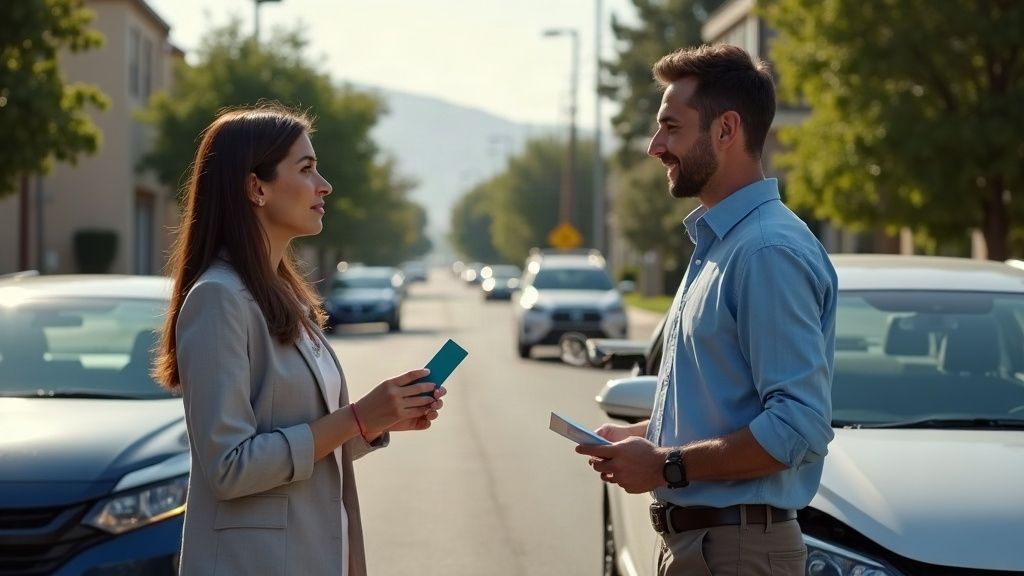
If you were injured in a car accident and the driver was your best friend, your sibling, or your spouse's cousin, you are probably wrestling with something most injury victims never have to think about: is filing a claim worth damaging a relationship?
The short answer is yes, and this article explains why. The eight points below cover California law, insurance mechanics, and the practical reality of what happens when a claim involves someone you care about. Every item stands on its own, so you can read the one most relevant to your situation right now.
Here is the full picture at a glance:
- The claim goes to their insurer, not their bank account.
- California fault law treats your friend or relative the same as a stranger.
- Guilt is normal but should not stop you from protecting your finances.
- Underinsured motorist coverage may be available if their policy is too low.
- Household exclusions can block coverage if you live with the driver.
- Many relationships survive a claim because the insurer, not the person, pays.
- An attorney handles the uncomfortable conversations so you do not have to.
- If the driver asks you not to file, you still have rights and a deadline to protect.
1. The Claim Is Against Their Insurance, Not Their Personal Savings
When you file a claim after being injured by a friend or family member in a California car accident, you are making a claim against their auto insurance policy, not their personal savings.
California law requires every registered vehicle owner to maintain liability insurance. When an at-fault driver's insurer pays your medical bills, lost wages, and pain and suffering, the money comes from a policy premium pool, not from your loved one's checking account. In the vast majority of cases, your friend or relative never writes a personal check.
This distinction matters emotionally. Many injured people hold back because they picture their friend losing their home or emptying their savings. That picture does not match how California auto liability insurance actually works.
Practical takeaway: Before you decide not to file, confirm the driver has active coverage. An attorney can verify that in the first consultation.
2. Liability Works the Same Regardless of Your Relationship
California follows a pure comparative fault system, and Civil Code §1431.2 makes each defendant's liability for non-economic damages several in proportion to their fault, assigning liability based on the facts of the crash regardless of the relationship between the driver and the injured person.
Under Cal. Civ. Code §1431.2, each party bears responsibility in proportion to their share of fault. If your friend ran a red light and you were a passenger, they are 100% at fault. The fact that you are friends does not reduce their legal liability or reduce what their insurer owes you.
Insurance adjusters evaluate these claims the same way regardless of the parties' relationship. They look at the police report, photos, witness statements, and medical records. Your relationship to the driver simply is not a factor in their liability analysis.
Practical takeaway: Do not accept a lower settlement because you feel you should be "nice" about it. The insurer is a corporation with no stake in your friendship.
3. Guilt and Awkwardness Are Normal, and They Should Not Stop You From Filing
Feeling uncomfortable about filing a claim against someone you care about is completely understandable. It is one of the most common hesitations we hear from injured people in exactly this situation.
But consider the financial stakes. Serious car accident injuries, including fractures, disc injuries, and traumatic brain injuries, routinely generate medical bills in the tens of thousands of dollars. Lost wages on top of that can multiply the damage quickly. If you absorb those costs out of loyalty to a friend, you are effectively paying for an accident you did not cause.
The California civil justice system exists precisely to shift that cost to the party responsible for creating it. Using it as intended is not a betrayal.
Practical takeaway: The discomfort fades. Medical debt and lost income linger for years. File the claim.
4. What Happens When Their Insurance Is Not Enough
Policies issued or renewed on or after January 1, 2025 must carry at least $30,000 per person and $60,000 per accident in bodily injury liability under California Vehicle Code §16056.
Even so, serious injuries can exceed those minimums. If your friend or relative carries a policy at or near those minimum limits and your losses are higher, their policy alone may not fully compensate you.
In that situation, two options are worth exploring with an attorney:
Underinsured motorist (UIM) coverage: Cal. Ins. Code §11580.2 requires California insurers to offer UIM coverage on every auto policy. If you purchased UIM on your own policy, it can step in to cover the gap between the at-fault driver's limits and your actual damages.
Personal assets: In rare cases where the at-fault driver has significant assets and grossly inadequate insurance, a judgment against them personally is possible. This is uncommon and should be evaluated carefully with legal counsel.
Practical takeaway: Never assume you are out of options just because your friend's policy cap looks low. Review your own declarations page for UIM coverage before settling anything.
5. Household Exclusions Can Block Coverage If You Live Together
Many California auto policies contain a household exclusion that bars coverage when the injured person and the at-fault driver live at the same address, which can redirect your claim to your own policy.
This is one of the most surprising coverage gaps injured people discover after the fact. Standard household exclusions are legal in California and routinely enforced. If you are a spouse, domestic partner, or roommate of the at-fault driver and you share a home, their liability policy may flatly refuse to pay your claim.
When a household exclusion applies, you will likely need to look to:
- Your own policy's medical payments (MedPay) coverage, if you purchased it.
- Your own uninsured or underinsured motorist coverage under Cal. Ins. Code §11580.2.
- Health insurance to cover immediate medical costs.
The language of the exclusion and how it interacts with both policies is something an experienced personal injury attorney should review before you file anything with either insurer.
Practical takeaway: If you live with the driver, do not assume their policy covers you. Pull both insurance declarations pages and have an attorney read the exclusions before accepting any characterization from an adjuster.
6. A Claim Does Not Have to End the Relationship
Many people quietly assume that filing an insurance claim against a friend or family member will permanently damage the relationship. In practice, that is not always what happens.
Here is why: once you notify the driver that you are filing a claim, their insurance company takes over. The driver cooperates with their insurer, the insurer investigates, and if liability is clear, the insurer negotiates a settlement with you or your attorney. The driver typically does not participate in those negotiations at all.
The check comes from the insurance company. The driver sees the claim resolved. Many families and friend groups process the experience and move forward, especially when both sides understand that the claim was really against an insurance company, not a person.
Relationships are most strained when claims are handled informally and money changes hands between the individuals directly. Keeping the insurance process in the middle is protective of the personal bond.
Practical takeaway: Using the formal insurance process can actually protect a relationship better than trying to handle it person-to-person.
7. An Attorney Acts as a Buffer and Keeps the Process Professional
Hiring a personal injury attorney removes you from direct negotiation with your friend or relative and with their insurer, protecting both your legal claim and your personal relationship.
Once you retain an attorney, all communication about the claim flows through that attorney. You stop receiving calls from the insurance adjuster. Your friend or relative no longer feels pressure to talk to you about it. The negotiation happens between legal and insurance professionals, which keeps the personal relationship out of the transactional details.
An attorney also makes sure you are not settling for less than your claim is worth. Insurance adjusters are trained to close claims quickly and at the lowest number the injured person will accept. Without representation, you may not know what your medical records, lost wages, and pain and suffering actually support as a demand number.
At Nordanyan Law, we handle every case as if it were going to trial, because insurance companies settle for more when they know the other side is prepared to fight. That posture does not change because the at-fault driver happens to be someone you know.
Practical takeaway: An attorney is not just a legal advocate, in these cases, they are a relationship buffer that lets everyone keep their dignity intact.
8. Steps to Take If the Driver Asks You Not to File
California's statute of limitations for personal injury claims is two years from the date of the accident under Cal. Civ. Proc. Code §335.1, so waiting at a friend's request can cost you the right to recover anything.
A driver asking you not to file a claim is asking you to absorb their legal liability personally. They may mean well, and they may intend to pay you directly. But informal arrangements fall apart, and the clock on your legal rights does not stop running while you wait to see if the situation resolves itself.
If the driver asks you not to file, here is what to do:
- Seek medical evaluation immediately. Injuries that seem minor at the scene can develop into serious conditions within days. A documented medical record is essential to any future claim.
- Preserve all evidence. Photographs of the scene, vehicle damage, and your injuries. The police report if one was filed. Contact information for any witnesses.
- Do not sign anything. If the driver or their insurer offers you a form to sign or a quick check in exchange for releasing your claims, do not sign it without an attorney reviewing it first.
- Consult an attorney before the deadline. Under Cal. Civ. Proc. Code §335.1, you generally have two years from the date of the accident to file a personal injury lawsuit. Missing that deadline almost always means losing your right to compensation permanently.
- Keep communication respectful but firm. You can tell your friend you care about them and still protect your legal rights. An attorney can help you frame that conversation if needed.
Practical takeaway: Loyalty is admirable. But no friendship is worth tens of thousands of dollars in uncompensated medical bills and lost income. Get legal advice before you agree to anything.
Frequently Asked Questions
Can I sue a family member after a car accident in California?
Yes. California law treats liability the same regardless of the relationship between the driver and the injured person. Under Cal. Civ. Code §1431.2, fault is determined by the facts of the crash. In most cases, the claim is paid by the at-fault family member's auto liability insurer, not by the individual personally.
Will my claim affect my friend's insurance rates?
Possibly. An at-fault accident can result in a premium increase when the driver's policy renews, depending on their insurer and driving history. That is a consequence of the accident itself, not of your decision to file a legitimate claim. You are not responsible for managing their insurance costs.
What if the at-fault driver is a relative living with me?
This situation is governed by the household exclusion in their auto policy, which may bar coverage for injuries to household members. If the exclusion applies, you may need to rely on your own policy's medical payments coverage, uninsured motorist coverage under Cal. Ins. Code §11580.2, or health insurance. An attorney should review both policies before you proceed.
Is it awkward to file a claim against someone I know?
Many people find it awkward at first, but the formal insurance process is designed to handle exactly this situation. Once a claim is filed, the insurance company takes over the investigation and negotiation, which removes the injured person and the at-fault driver from most of the transactional friction. Many relationships remain intact after a claim is resolved through the proper insurance channel.
What if my friend's insurance limits are too low to cover my injuries?
If the at-fault driver carries minimum limits under California Vehicle Code §16056 and your losses exceed those limits, your own underinsured motorist (UIM) coverage under Cal. Ins. Code §11580.2 may cover the gap. In limited circumstances, a personal judgment against the driver for the excess amount is also possible. An attorney can evaluate which option applies to your facts.
What is the deadline to file a personal injury claim in California?
The general statute of limitations for personal injury in California is two years from the date of the accident under Cal. Civ. Proc. Code §335.1. Certain exceptions apply, including claims against government entities, which carry a six-month administrative deadline under the California Tort Claims Act. Missing the deadline forfeits your right to compensation regardless of how strong your case is.
Can I handle the claim directly with my friend to avoid involving insurance?
You can try, but informal arrangements carry serious risks. If your friend cannot or does not pay, you may have waited past the statute of limitations by the time you seek legal help. Verbal agreements are difficult to enforce. Documenting the accident, seeking medical care, and at minimum consulting an attorney protects your options without forcing any particular outcome.
Do I need an attorney to file a claim against a friend or relative's insurance?
You are not legally required to have one, but an attorney provides meaningful advantages: verified coverage review, accurate damage calculation, negotiation leverage with the insurer, and a buffer that keeps the personal relationship out of the transactional process. At Nordanyan Law, the consultation is free and there is no fee unless we win.
Being injured by someone you care about is one of the harder situations that personal injury law has to handle. The legal framework in California is designed for exactly this: it directs accountability to the insurance system that every driver is required to fund, not to personal relationships.
If you were injured in a car accident caused by a friend or family member in California, you deserve the same quality of legal representation as any other injured person. We've recovered more than $150,000,000 for injured people across Southern California, and we handle every case as if it were going to trial.
Call (818) 794-9947 for a free consultation. No fee unless we win.
Reviewed by Minas Nordanyan, CA Bar #296806. Nordanyan Law, Van Nuys, California.