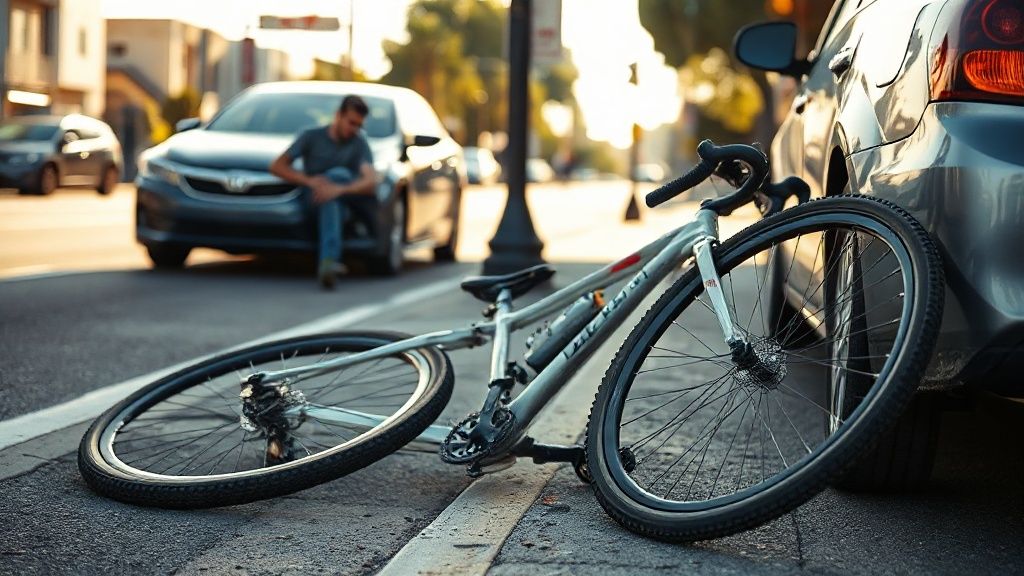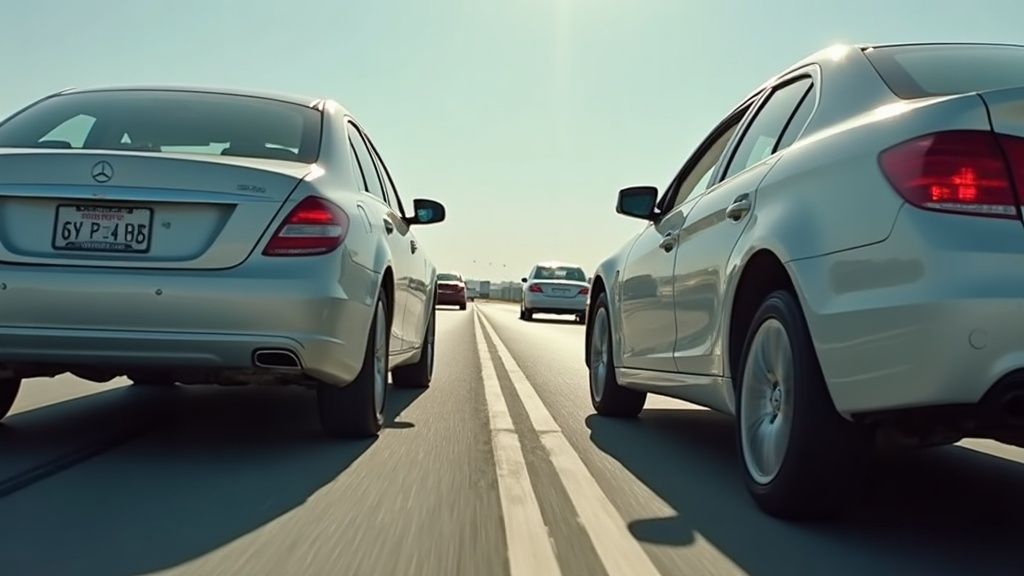
If someone slammed their brakes in front of you on purpose and you rear-ended them, you may be wondering whether California law blames you automatically. The short answer is no. Brake-checking is aggressive driving under California law, and the person who did it may bear significant, or even full, liability for the crash.
This article explains how California traffic law treats brake-checking, how fault is split when both drivers share some responsibility, and what evidence you need to build a strong claim.
If you were hurt in a brake-check crash and need to talk through your options, call (818) 794-9947 for a free consultation. No fee unless we win.
Quick-Answer Summary
- Brake-checking is intentional slamming of brakes to intimidate a following driver. California treats it as aggressive driving under Cal. Veh. Code §23103.
- The rear driver is not automatically at fault. Courts and insurers look at the front driver's intent and conduct.
- California uses pure comparative fault (Li v. Yellow Cab Co., 1975), so your payout is reduced by your own percentage of fault, but you can still recover even if you share some blame.
- Dashcam footage, EDR (event data recorder) data, and witness statements are critical evidence.
- You have two years from the crash date to file a lawsuit under Cal. Code Civ. Proc. §335.1.
- If the brake-checker acted maliciously, you may be entitled to punitive damages under Cal. Civ. Code §3294.
- Document everything at the scene and speak to a personal injury attorney before giving a recorded statement to any insurer.
What Is Brake-Checking and Why It Happens on California Roads
Brake-checking is when a driver in front of you suddenly and deliberately hits their brakes hard, not because traffic or road conditions require it, but to frighten, retaliate against, or "teach a lesson" to the driver behind them.
It typically happens in these situations:
- Road rage. A driver feels tailgated or cut off and retaliates by slamming the brakes.
- Insurance fraud. A driver intentionally causes a rear-end collision, betting that the rear driver will be blamed and their own insurer will pay out.
- Aggressive lane disputes. One driver cuts off another and then brakes hard when the other driver follows closely.
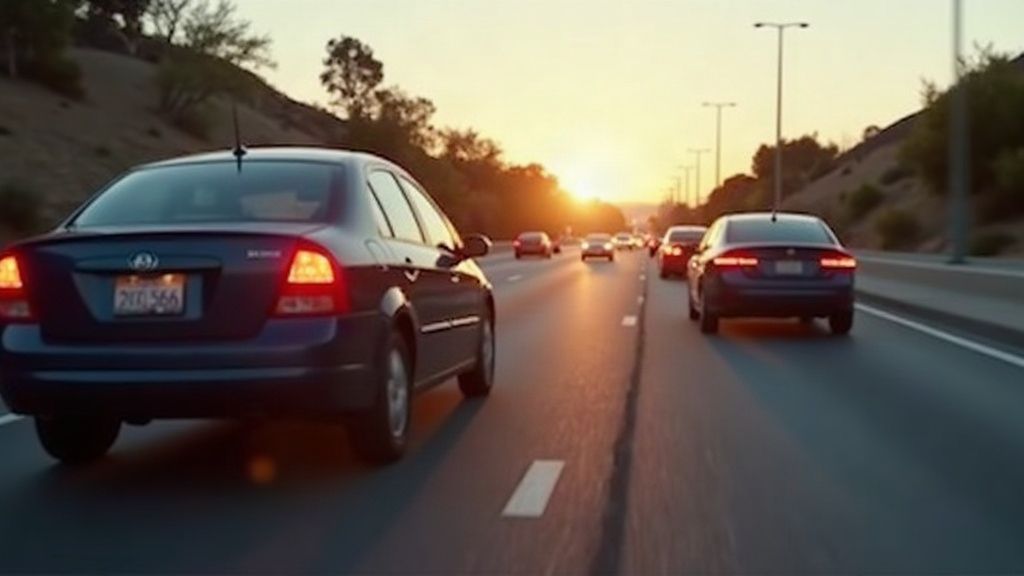
On California highways, including the I-5, I-405, and SR-118 corridors through Los Angeles and the San Fernando Valley, these scenarios are common. Heavy stop-and-go traffic combined with short following distances creates conditions where an intentional brake-check can turn a minor conflict into a serious multi-car crash.
California Traffic Law: Is Brake-Checking Against the Law?
Yes. Deliberate brake-checking violates California traffic law in more than one way.
Cal. Veh. Code §23103 defines reckless driving as operating a vehicle with "willful or wanton disregard for the safety of persons or property." A driver who intentionally slams their brakes without a legitimate reason to stop is doing exactly that.
In addition, Cal. Veh. Code §21703 prohibits following another vehicle more closely than is "reasonable and prudent." Insurance adjusters often cite this against the rear driver. But that provision says nothing about the front driver's right to create a hazard by braking without cause. A driver who provokes a crash is not protected simply because the person behind them was following closely.
California also has a general negligence per se framework. When a driver violates a traffic code and that violation causes an injury, courts can treat the violation as evidence of negligence under the standard established in the California Vehicle Code. Proving that the front driver violated §23103 is a powerful building block in a brake-check injury claim.
Who's Really at Fault: The Brake-Checker or the Following Driver?
This is where most people misunderstand California law.
The presumption of rear-driver fault is a starting point, not the final answer.
California applies the pure comparative fault rule, established by the California Supreme Court in Li v. Yellow Cab Co., 13 Cal.3d 804 (1975). Under that rule, fault is allocated among all parties based on their respective contributions to the crash. Your compensation is then reduced by your own percentage of fault. But you can still recover even if you were 30%, 40%, or more at fault.
For example: If a jury finds that the brake-checker was 80% at fault and you were 20% at fault for following too closely, and your total damages are $100,000, you recover $80,000.
This is very different from the old contributory negligence rule, which barred recovery entirely if the victim was even 1% at fault. California abandoned that rule in 1975. So the insurer who tells you that you can't recover anything because you rear-ended someone is not being straight with you.
Key factors that shift fault toward the brake-checker:
- Sudden, unexplained deceleration captured on dashcam or witnessed by others
- Prior road-rage conduct in the moments before the brake-check
- Evidence that the front driver had been involved in similar fraud or aggressive driving incidents
- EDR data showing the brake application was abrupt and inconsistent with normal traffic flow
- No traffic, signal, or obstacle that would explain the stop
Key factors that can increase your share of fault:
- Driving at an unsafe following distance (Cal. Veh. Code §21703)
- Speeding before the collision
- Distracted driving (phone use, looking away)
Understanding how these factors interact is exactly what an experienced personal injury attorney does when evaluating a brake-check claim.
How Evidence Like Dashcam Footage Can Prove Intentional Braking
Proving a brake-check happened at all is the central challenge in these cases. The other driver's insurer will almost certainly argue that the stop was legitimate and that you were tailgating. Evidence is how you overcome that argument.
Dashcam footage, eyewitness statements, and electronic data recorder data are the strongest forms of evidence for proving an intentional brake-check in California.
The most useful evidence in a California brake-check case:
1. Dashcam video. A forward-facing dashcam that captured the moments before, during, and after the brake-check is the single most powerful piece of evidence. It shows the spacing between vehicles, the speed, and the absence of any traffic reason for the sudden stop. If you have a dashcam, preserve the footage immediately. Overwriting can happen within hours on loop-recording devices.
2. Electronic data recorder (EDR) data. Most vehicles made after 2013 have an EDR that records speed, brake application, throttle position, and steering input in the seconds before and during a crash. A forensic download by a certified technician can show exactly how abruptly the front vehicle decelerated relative to normal driving. This is critical in disputes about whether the stop was sudden and unreasonable.
3. Witness statements. Bystanders, other drivers, or passengers who saw the brake-check happen can provide written statements or testify. Collect contact information at the scene before anyone leaves.
4. Cell phone records. If the other driver was distracted or agitated immediately before the brake-check, subpoenaing their records can support a road-rage narrative.
5. Traffic and surveillance camera footage. California highways and intersections are covered by Caltrans cameras and private business cameras. This footage is often overwritten quickly. An attorney can send a preservation letter before it disappears.
6. Prior incident records. If the other driver has a history of road-rage incidents, aggressive driving citations, or prior staged-accident fraud, that pattern may be admissible or at minimum useful in settlement negotiations.
In California, fault for a brake-check accident is not automatically placed on the rear driver. Courts and insurance adjusters evaluate whether the front driver acted intentionally or recklessly.
Common Injuries From Sudden-Stop Chain-Reaction Crashes
Brake-check crashes often produce serious injuries because the rear driver has almost no reaction time. The forces involved in a sudden, unexpected collision can be severe even at moderate highway speeds.
Common injuries include:
- Whiplash and soft-tissue neck injuries. The sudden forward-and-back motion strains ligaments, tendons, and muscles in the cervical spine. Symptoms can be delayed by 24 to 72 hours after the crash.
- Herniated discs. Lumbar and cervical discs can rupture under crash forces, causing radiating pain, numbness, and weakness that may require surgery.
- Traumatic brain injury (TBI). Even a low-speed impact can cause the brain to move inside the skull. Concussion symptoms include headache, confusion, memory problems, and light sensitivity.
- Knee and leg injuries. Bracing against the floorboard or dashboard can fracture the knee, patella, or ankle.
- Broken ribs and chest injuries. Seatbelt forces in a sudden stop can fracture ribs or bruise the sternum.
- Psychological injuries. Post-traumatic stress, anxiety, and driving phobia are recognized compensable injuries in California personal injury claims.
Chain-reaction crashes, where your vehicle is pushed into the car ahead, can compound injuries significantly. In those cases, multiple vehicles and drivers may all share liability, which makes the Cal. Civ. Code §1431.2 framework important. Under Proposition 51, when there are multiple defendants, each defendant is only liable for non-economic damages (pain and suffering, emotional distress) in proportion to their own percentage of fault. Economic damages (medical bills, lost wages) can still be recovered in full from any defendant who is found liable.
Brake-checking is when a driver intentionally slams their brakes to intimidate or retaliate against a following driver, and in California it is treated as aggressive driving under Vehicle Code Section 23103.
Steps to Take at the Scene and With Insurance After a Brake-Check Crash
What you do in the first minutes and hours after a brake-check collision can determine how strong your claim is.
At the scene:
- Check for injuries and call 911. A police report is essential. Ask the responding officer to note any statements the other driver makes about why they braked.
- Do not admit fault. Even saying "I'm sorry" can be used against you. Describe only facts if asked.
- Photograph everything. Skid marks, vehicle positions, damage to both cars, traffic signs, and lane markings.
- Collect witness information. Names, phone numbers, and a brief written description of what they saw.
- Secure your dashcam footage. Remove the SD card or back up the file before the loop recording overwrites it.
- Seek medical attention immediately. Even if you feel fine, see a doctor that day. Delayed treatment creates gaps in your medical record that insurers use to dispute the severity of your injuries.
With insurance:
- Report the crash to your own insurer promptly. California drivers are required to cooperate with their own insurer.
- Do NOT give a recorded statement to the other driver's insurer before speaking with an attorney. Adjusters are trained to elicit statements that shift fault to you.
- Do NOT accept a quick settlement offer before your injuries are fully diagnosed. Once you sign a release, you cannot reopen the claim.
If you were injured in a brake-check accident, California law gives you two years from the date of the collision to file a personal injury lawsuit under Code of Civil Procedure Section 335.1.
How a Comparative Negligence Argument Could Reduce Your Claim
The other driver's insurer will try to increase your percentage of fault to lower the payout. The most common arguments:
"You were tailgating." Cal. Veh. Code §21703 requires maintaining a reasonable following distance. If the insurer can show you were following too closely, your fault percentage goes up.
"You were speeding." Speed data from your own EDR can be used against you if you were traveling above the posted limit.
"You were distracted." If you did not brake at all before impact, the insurer may argue you were not paying attention.
How do you counter these arguments? With the same evidence discussed above: dashcam footage showing reasonable spacing, EDR data showing you braked but had no time to stop, and witness testimony confirming the brake-check was sudden and without cause.
California adopted pure comparative fault in Li v. Yellow Cab Co., 13 Cal.3d 804 (1975), meaning your compensation is reduced by your own percentage of fault, but you can still recover even if you are partly responsible.
A note on punitive damages. If the brake-check was intentional, particularly in a staged-accident fraud scheme or a clear road-rage episode, your attorney may seek punitive damages under Cal. Civ. Code §3294. Punitive damages are awarded on top of your actual losses when the defendant's conduct is found to be malicious, oppressive, or fraudulent. They are not automatic and require clear and convincing evidence of the front driver's intent, but they are available in California for exactly this kind of deliberate, dangerous conduct.
Victims of intentional brake-checking in California may be able to seek punitive damages in addition to compensatory damages if the front driver's conduct was malicious or oppressive.
What Nordanyan Law Does in a Brake-Check Case
We have recovered over $150,000,000 for injured people in California. When a client comes to us after a brake-check crash, here is how we approach the case:
- We send immediate preservation letters to Caltrans and any business whose cameras may have captured the collision.
- We retain a forensic technician to download EDR data from both vehicles before the data is overwritten or the vehicle is repaired.
- We identify and interview witnesses before memories fade.
- We handle all communication with the other driver's insurer so you do not give a statement that reduces your recovery.
- We work with your treating physicians to document the full extent of your injuries, including delayed-onset conditions like disc herniations and PTSD.
- We evaluate whether punitive damages are appropriate and build the factual record to support that argument if they are.
Every injured driver deserves the same quality of legal representation as any corporation. That is the principle this firm was built on.
Call (818) 794-9947 for a free consultation. No fee unless we win.
Frequently Asked Questions
Is brake-checking illegal in California?
Yes. Deliberate brake-checking violates Cal. Veh. Code §23103, which prohibits reckless driving. If a driver intentionally slams their brakes without a legitimate reason, they are driving with willful or wanton disregard for the safety of others. They can face a traffic citation, and their conduct can form the basis of a civil personal injury claim.
Who is at fault if someone brake checks you?
Fault depends on the specific facts. The brake-checking driver bears significant liability if the stop was intentional or reckless. However, if you were also following too closely, speeding, or distracted, you may share some portion of fault. Under California's pure comparative fault rule from Li v. Yellow Cab Co., 13 Cal.3d 804 (1975), you can still recover damages even if you are partly at fault. Your recovery is simply reduced by your percentage of fault.
Can you sue someone for brake-checking you in California?
Yes. A driver who brake-checked you and caused a collision can be sued for negligence or reckless driving. If the conduct was intentional, such as in a staged-accident scheme or a deliberate road-rage act, you may also have a claim for punitive damages under Cal. Civ. Code §3294. You have two years from the date of the crash to file under Cal. Code Civ. Proc. §335.1.
What should I do if I was rear-ended after a brake check?
If you rear-ended someone who had brake-checked you, call 911, collect witness information, secure dashcam footage, seek medical care the same day, and contact a personal injury attorney before giving any statement to the other driver's insurer. The police report and physical evidence gathered at the scene are critical to showing that the stop was sudden and unjustified.
Does the rear driver always get blamed in California?
No. The "rear driver is at fault" idea is a common assumption, not a legal rule. California courts look at all the circumstances. If the front driver brake-checked intentionally, violated Cal. Veh. Code §23103, and there was no traffic reason for the stop, the front driver can bear the majority or all of the fault.
What evidence proves a brake-check was intentional?
The strongest evidence is dashcam video showing sudden braking with no traffic reason, EDR data showing an abrupt brake application inconsistent with normal driving, eyewitness statements, and any prior road-rage behavior by the front driver. Pattern evidence, such as prior staged-accident involvement, can also be relevant.
How long do I have to file a claim after a brake-check accident in California?
Two years from the date of the collision under Cal. Code Civ. Proc. §335.1. If the other driver is a government employee operating a government vehicle, you may have as little as six months to file a government tort claim under Cal. Gov. Code §911.2 before filing suit. Missing these deadlines typically eliminates your right to recover.
Can I recover for emotional distress after a brake-check accident?
Yes. Emotional distress, including anxiety, PTSD, and driving phobia, is a recognized category of damages in California personal injury cases. If your treating physician or a mental health professional documents the condition and links it to the crash, it is compensable as a non-economic damage.
What if the brake-checker was committing insurance fraud?
Staged accidents are a form of insurance fraud under California law. If you have reason to believe the brake-check was part of a scheme to generate a fraudulent insurance claim, report it to the California Department of Insurance in addition to your own insurer. An attorney can also investigate prior incidents involving the same vehicle or driver, which can significantly strengthen your case and support a punitive damages claim.
What if multiple cars were involved in the chain-reaction crash?
When there are multiple defendants, Cal. Civ. Code §1431.2 (Proposition 51) governs non-economic damages. Each defendant pays non-economic damages only in proportion to their own fault percentage. Economic damages, such as medical bills and lost wages, are not subject to this limitation and can be recovered in full from any liable defendant. A personal injury attorney can identify all responsible parties and structure the claim accordingly.
Reviewed by Minas Nordanyan, CA Bar #296806. Last legal review: 2026. This article is for general informational purposes and does not constitute legal advice for any specific situation. Contact an attorney to evaluate the facts of your case.