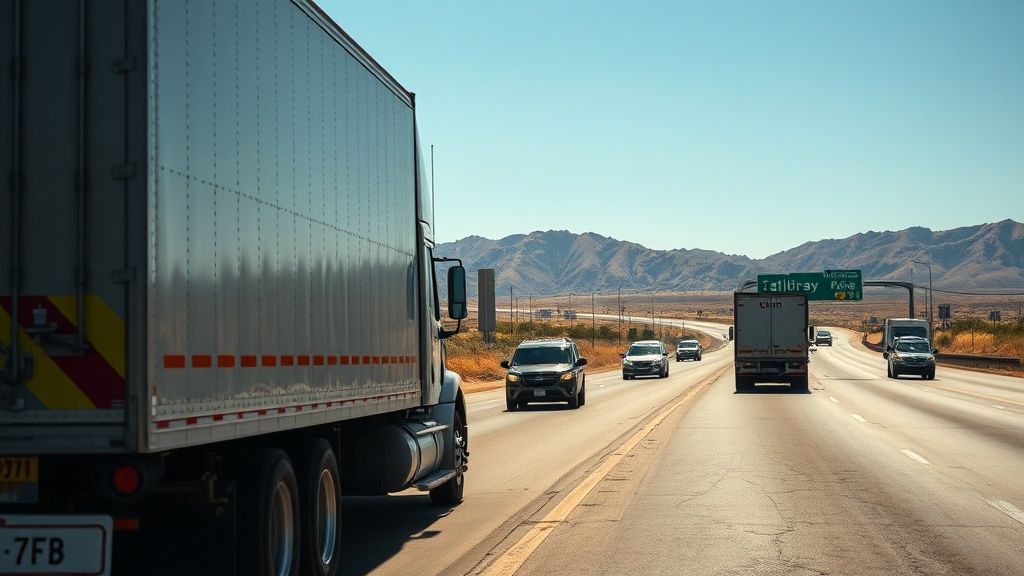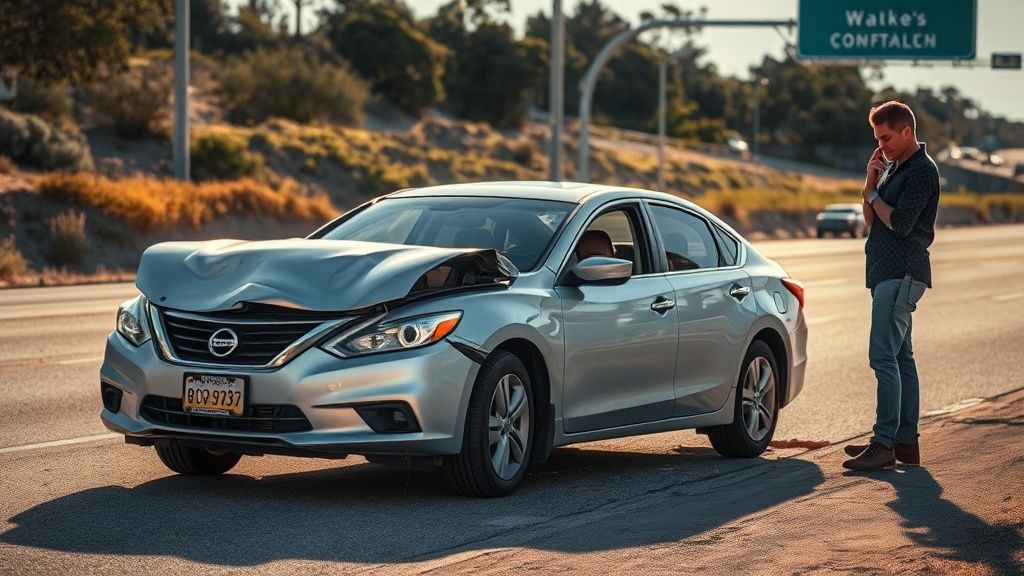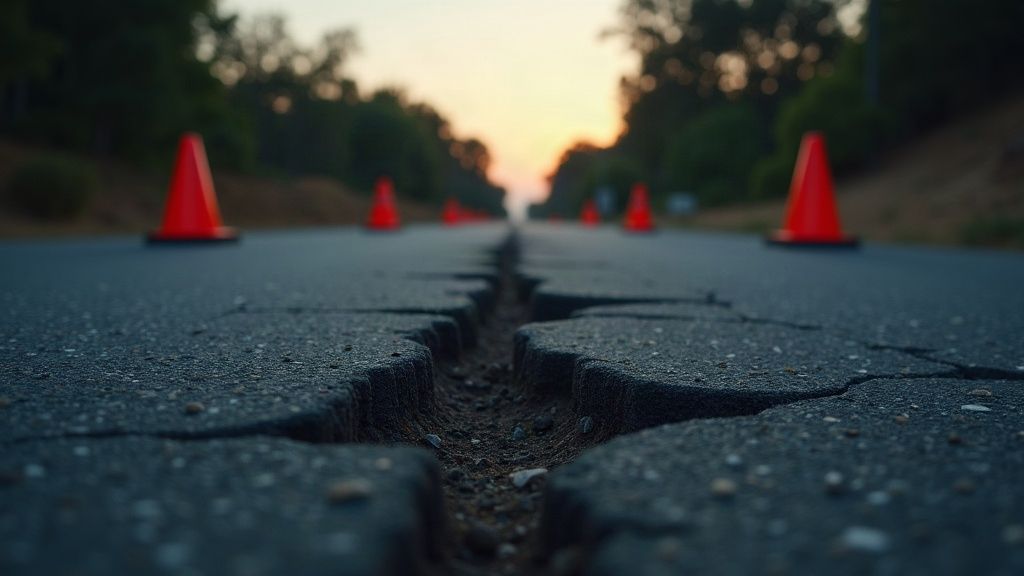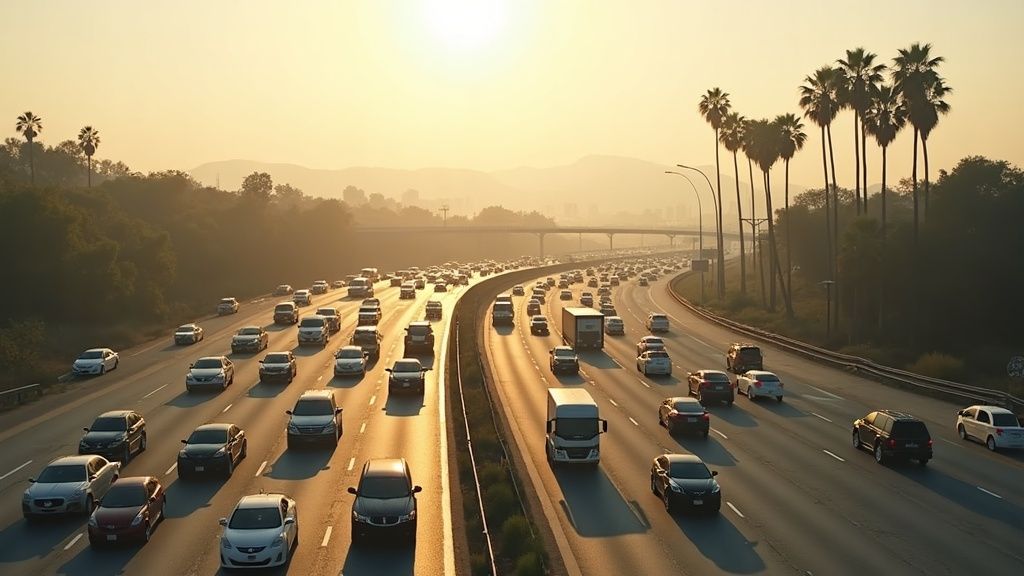
If you've been hurt in a California car accident, understanding what caused the crash is not just useful, it's the foundation of your legal claim. Liability in California turns on fault, and fault turns on which traffic law was broken, how, and by whom.
California follows a pure comparative fault rule established in Li v. Yellow Cab Co., 13 Cal.3d 804 (1975), meaning you can recover damages even if you share some responsibility for the crash, your recovery is simply reduced by your percentage of fault. That rule makes identifying the actual cause of a crash critical to every claim.
Below are the 10 most common causes of car accidents in California, each grounded in the specific statute or legal standard that turns that behavior into liability.
Quick summary:
- Distracted driving, including texting, violates California Vehicle Code §23123.5.
- Speeding, including speed legal on paper but unsafe for conditions, violates Vehicle Code §22350.
- Driving under the influence violates Vehicle Code §23152.
- Running red lights or stop signs violates Vehicle Code §21453 or §21802.
- Unsafe lane changes and failure to yield violate Vehicle Code §21658 and §21801.
- Tailgating violates Vehicle Code §21703.
- Drowsy driving creates civil negligence liability even without a dedicated criminal statute.
- Poor weather and road conditions can implicate government liability under Government Code §835.
- Reckless and aggressive driving violates Vehicle Code §23103.
- Inexperienced drivers are governed by a graduated licensing program under Vehicle Code §12814.6.
1. Distracted Driving
Distracted driving, including texting while driving, violates California Vehicle Code §23123.5 and is one of the most common causes of car accidents in California.
Distracted driving is the single most frequently cited crash factor on California roads. A driver reading or composing a text at 55 mph travels the equivalent of a football field, about 100 yards, before their eyes return to the road. That is enough distance to rear-end a stopped car, run a red light, or drift into another lane.
California Vehicle Code §23123.5 prohibits any driver from holding or using a wireless phone or other electronic device while operating a motor vehicle. A first offense carries a base fine; a second offense within 36 months carries a higher fine. More important for injury claims, a violation of §23123.5 is negligence per se, the plaintiff does not need to prove the behavior was unreasonable because the legislature already made that judgment.
Distracted driving extends beyond phones. Eating, adjusting a GPS, or turning to speak to a passenger all divert attention from the road and can support a negligence claim even without a specific code violation.
Takeaway: If the other driver was on their phone, demand their cell records early. A subpoena for carrier data showing activity at the time of the crash is strong evidence of liability.
2. Speeding and Unsafe Speed for Conditions
California's basic speed law under Vehicle Code §22350 requires drivers to travel at a speed safe for actual road and weather conditions, not just the posted limit.
Speed is a factor in a substantial share of fatal crashes in California. The state operates under two overlapping speed rules.
California Vehicle Code §22349 sets an absolute maximum speed of 65 mph on most highways (70 mph where posted). California Vehicle Code §22350 goes further: the basic speed law states that no person shall drive at a speed greater than is reasonable or prudent given current traffic, weather, road surface, and visibility. A driver traveling 65 mph on a rain-slicked freeway during reduced visibility can be found negligent under §22350 even though they were at or below the posted limit.
This distinction matters enormously in injury claims. Insurance adjusters prefer to argue "the driver wasn't speeding." The basic speed law counters that argument directly.
Takeaway: If weather or heavy traffic was a factor in your crash, document road and visibility conditions at the scene with photos and timestamps. Those images support the argument that the at-fault driver violated §22350 regardless of what the speedometer read.
3. Driving Under the Influence
Driving under the influence violates California Vehicle Code §23152, and a blood-alcohol concentration of 0.08% or higher is a per se violation.
DUI crashes disproportionately produce fatalities and catastrophic injuries because impaired drivers operate at higher speeds, brake later, and misjudge distance. California Vehicle Code §23152(a) prohibits driving while under the influence of alcohol; §23152(b) prohibits driving with a blood-alcohol concentration of 0.08% or higher. Commercial drivers face a lower limit of 0.04% under §23152(d), and any driver can be charged under §23152(f) for driving under the influence of drugs, including legally prescribed medication.
A DUI conviction from the criminal case is admissible evidence in the civil personal injury action. Courts in California have long recognized that DUI involves willful and wanton conduct, which can support a claim for punitive damages in addition to compensatory damages under California Civil Code §3294. Punitive damages are designed to punish egregious conduct and can substantially exceed the compensatory award in serious DUI crash cases.
Takeaway: If the at-fault driver was arrested for DUI at the scene, preserve the police report, breathalyzer result, and any field sobriety test records. A criminal conviction simplifies, but is not required for, the civil claim.
4. Running Red Lights and Stop Signs
Intersection crashes caused by a driver blowing through a red light or ignoring a stop sign are among the most severe collision types because vehicles enter the intersection at speed from perpendicular directions.
California Vehicle Code §21453 requires drivers to stop at a red signal and remain stopped until a green is displayed. California Vehicle Code §21802 requires a driver facing a stop sign to stop completely and yield to all vehicles in the intersection or approaching closely enough to constitute an immediate hazard. Violation of either statute is negligence per se in a civil case.
T-bone collisions from red-light running are particularly dangerous. The side of a passenger vehicle provides significantly less structural protection than the front or rear, and occupants on the struck side absorb the full impact force directly. Serious injuries, including traumatic brain injury, fractured pelvis, and internal organ damage, are common outcomes.
Red-light camera footage, if available in the jurisdiction, is often decisive evidence. Many Southern California intersections are monitored; request the footage immediately after a crash because retention periods are short.
Takeaway: Request intersection camera footage and any dash-cam video within days of the crash. Evidence that puts the other driver in the intersection on red locks in liability early.
5. Unsafe Lane Changes and Failure to Yield
Sideswipe and broadside crashes on California freeways frequently trace back to a driver who changed lanes without checking blind spots or cut across multiple lanes without signaling.
California Vehicle Code §21658 requires a driver to move from one lane to another only when it can be done safely and to signal the intention to do so. California Vehicle Code §21801 requires a driver turning left across oncoming traffic to yield to all oncoming vehicles close enough to constitute a hazard. Failure to yield on a left turn is a leading cause of head-on and T-bone collisions at uncontrolled intersections.
Both violations are negligence per se. In multi-vehicle freeway crashes, dashcam footage from other drivers, obtained through witness interviews at the scene or requests to nearby motorists, can establish which vehicle initiated the unsafe movement.
Takeaway: Exchange information with all witnesses at the scene, not just the other driver. A witness two cars back who saw the other driver cut across three lanes without signaling can be decisive.
6. Tailgating and Following Too Closely
Tailgating violates California Vehicle Code §21703 and is a leading cause of rear-end collisions that produce whiplash, herniated discs, and other serious injuries.
Rear-end collisions are one of the most frequent crash types on California freeways. The physical mechanics are straightforward: a driver following too closely cannot stop in time when traffic slows or a vehicle ahead brakes suddenly.
California Vehicle Code §21703 prohibits a driver from following another vehicle more closely than is reasonable and prudent given the speed of the vehicles and the traffic and road conditions. There is no fixed following distance number in the statute; reasonableness is judged by the circumstances. At freeway speeds, traffic engineers generally recommend a minimum of three seconds of following distance, a standard that expert witnesses often use in crash reconstruction.
In California, the rear driver in a rear-end crash carries a presumption of fault, though that presumption is rebuttable. Injuries in rear-end collisions commonly include whiplash, cervical and lumbar disc herniation, and closed-head injuries.
Takeaway: Seek medical evaluation immediately after a rear-end crash even if you feel only mild discomfort. Disc injuries and soft-tissue damage frequently worsen over 24-72 hours, and delayed treatment creates gaps in the medical record that adjusters exploit.
7. Drowsy Driving
Drowsy driving kills and injures thousands of motorists each year nationwide. A fatigued driver experiences slowed reaction time, impaired judgment, and micro-sleep episodes, brief involuntary sleep lasting only a few seconds, which at highway speeds can send a vehicle hundreds of feet off course before the driver wakes.
California does not have a standalone criminal drowsy-driving statute equivalent to its DUI law. However, drowsy driving fully supports a civil negligence claim. A driver who chooses to operate a vehicle while dangerously fatigued breaches the standard of care owed to other road users. Commercial drivers governed by the Federal Motor Carrier Safety Administration (FMCSA) hours-of-service regulations face an additional layer of liability when a crash occurs after a driver has exceeded permissible driving hours.
Evidence of drowsiness can come from electronic logging device (ELD) data in commercial crashes, cell phone activity showing the driver was awake far past a reasonable hour, witness statements, and the physical evidence of the crash itself, long straight skid marks, no braking, or running off the road in a straight line are common signatures of a microsleep event.
Takeaway: In crashes involving commercial trucks or delivery vehicles, request ELD and driver log data immediately. Federal regulations impose data-preservation duties, but those records can be overwritten quickly if a litigation hold is not issued.
8. Poor Weather and Road Conditions
California drivers often underestimate how dramatically rain transforms road hazards. Motor oil deposited on dry pavement emulsifies at the first rain, creating slick conditions that can persist for several miles. Fog in the Central Valley and coastal areas can drop visibility to near zero within seconds.
As noted above, California Vehicle Code §22350 requires a driver to reduce speed when conditions warrant, regardless of posted limits. A driver who refuses to adjust speed for rain, fog, or debris on the roadway violates the basic speed law and is liable for any resulting crash.
A government agency can be held liable for crash injuries caused by a dangerous road defect under California Government Code §835 if it had notice of the hazard.
California Government Code §835 allows a plaintiff to sue a public entity for a dangerous condition of public property if the entity created the condition or had actual or constructive notice of it and failed to remedy it. Pothole-related crashes, missing guardrails, obscured signage, and flooded roadways with no warning signs can all support a government liability claim. These claims require a government tort claim to be filed within six months of the incident under California Government Code §911.2, a deadline far shorter than the standard two-year personal injury statute of limitations.
Takeaway: If a road defect contributed to your crash, you may have claims against both the other driver and a government entity. The six-month government claim deadline is easy to miss, call an attorney quickly.
9. Reckless and Aggressive Driving
Road rage incidents and deliberate acts of aggression behind the wheel, hard braking to punish a driver who cut in, boxing in a slower vehicle, weaving through traffic at high speed, create crash risks far beyond normal driving errors.
California Vehicle Code §23103 defines reckless driving as driving a vehicle upon a highway in willful or wanton disregard for the safety of persons or property. Reckless driving is a misdemeanor; if it causes bodily injury, it can be charged as a more serious offense. In the civil arena, reckless driving is more than negligence, it reflects the willful and wanton conduct that can support a claim for punitive damages under California Civil Code §3294.
Aggressive driving frequently escalates. What begins as a tailgating dispute on the 405 can end in a multi-vehicle collision at freeway speed. Dashcam footage, traffic camera coverage, and witness accounts of the pre-crash interaction between vehicles can establish the aggressive driver's conduct leading up to the point of impact.
Takeaway: If the crash was preceded by a road rage incident, preserve any dashcam footage immediately and call law enforcement so the aggressor's behavior is documented in an official report. That report will be critical to both the criminal referral and the civil claim.
10. Inexperienced Drivers
New drivers lack the trained instincts that experienced drivers rely on in emergencies: knowing how much braking distance a vehicle needs at speed, reading the behavior of other vehicles before a lane change, or recognizing that a slowing vehicle two cars ahead means traffic is stopping.
California's graduated licensing program under California Vehicle Code §12814.6 restricts newly licensed drivers under 18 from driving between 11 p.m. and 5 a.m. without a licensed adult passenger, and prohibits them from carrying passengers under 20 without such supervision for the first 12 months. These restrictions exist precisely because young inexperienced drivers are statistically overrepresented in crash data.
When an inexperienced driver causes a crash, liability generally falls on the driver and, if the driver is a minor, on the parents or guardians who signed the licensing application. California Vehicle Code §17707 imposes liability on any person who signs a minor's driving license application for damages caused by that minor's negligent operation of a vehicle.
Takeaway: If the at-fault driver is a minor, identify who signed their license application, that person shares civil liability under Vehicle Code §17707. Parent and household insurance policies may provide additional coverage.
What to Do After a California Car Accident
Regardless of which cause drove your crash, the steps you take in the first 24-72 hours shape everything that follows.
- Call 911. A police report creates an official record of the scene, the drivers, and the facts while they are fresh.
- Document everything at the scene. Photographs of vehicle damage, skid marks, road conditions, traffic signals, and all license plates preserve evidence that disappears quickly.
- Get medical care immediately. Even if you feel fine, disc injuries and traumatic brain injuries often produce delayed symptoms. A same-day medical record ties your injuries to the crash.
- Do not give a recorded statement to the other driver's insurer. California law does not require you to cooperate with an adverse insurance adjuster. Recorded statements are used to minimize your claim.
- Talk to an attorney before accepting any settlement offer. Under California's comparative fault rule from Li v. Yellow Cab Co., you are entitled to a full accounting of all damages, medical expenses, lost income, and pain and suffering, before you sign anything.
We've recovered over $150,000,000 for injured workers and accident victims across Southern California. If you were hurt in a car accident that wasn't your fault, or wasn't entirely your fault, you deserve a straight answer about what your case is worth before an insurance company decides for you.
Call (818) 794-9947 for a free case review. No fee unless we win.
Frequently Asked Questions
What causes most car accidents in California?
Distracted driving, speeding, and driving under the influence are consistently among the most frequently cited factors in California crashes. Distracted driving violations under California Vehicle Code §23123.5 are particularly common because smartphones are present in nearly every vehicle.
What is the leading cause of crashes in California?
Distracted driving ranks as one of the top causes based on crash report data compiled by the California Highway Patrol (CHP) and the California Office of Traffic Safety (OTS). Speeding and DUI consistently round out the top three factors in fatal crashes statewide.
Is distracted driving illegal in California?
Yes. California Vehicle Code §23123.5 prohibits holding or using a handheld wireless device while driving. A first offense carries a base fine, and a second offense within 36 months carries a higher fine. A violation is also negligence per se in any civil personal injury case arising from the crash.
Can I still recover damages if I was partly at fault for a California car accident?
Yes. California follows the pure comparative fault rule established in Li v. Yellow Cab Co., 13 Cal.3d 804 (1975). Your damages are reduced by your percentage of fault, but you are not barred from recovery simply because you share some responsibility for the crash.
How long do I have to file a car accident lawsuit in California?
Generally two years from the date of the crash under California Code of Civil Procedure §335.1. If a government entity is potentially liable, for example, because a road defect contributed to the crash, you must file a government tort claim within six months of the incident under California Government Code §911.2. Missing that shorter deadline can permanently bar the government claim.
What if a road defect caused my accident?
You may have a claim against the responsible government entity under California Government Code §835. To succeed, you must show the entity created the dangerous condition or had actual or constructive notice of it and failed to fix it in a reasonable time. The six-month deadline to file a government tort claim is strict, do not wait.
Does tailgating automatically make the rear driver liable in California?
In rear-end crashes, the rear driver carries a presumption of fault because Vehicle Code §21703 imposes an affirmative duty to maintain a safe following distance. That presumption is rebuttable, for example, if the front driver made a sudden unexpected stop with no mechanical reason, but the rear driver bears the burden of producing evidence to overcome it.