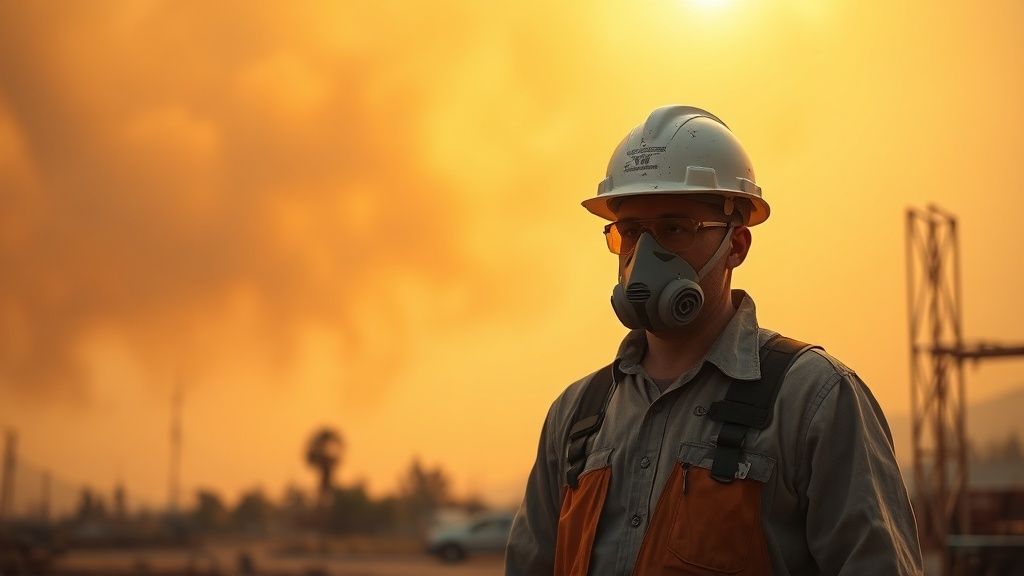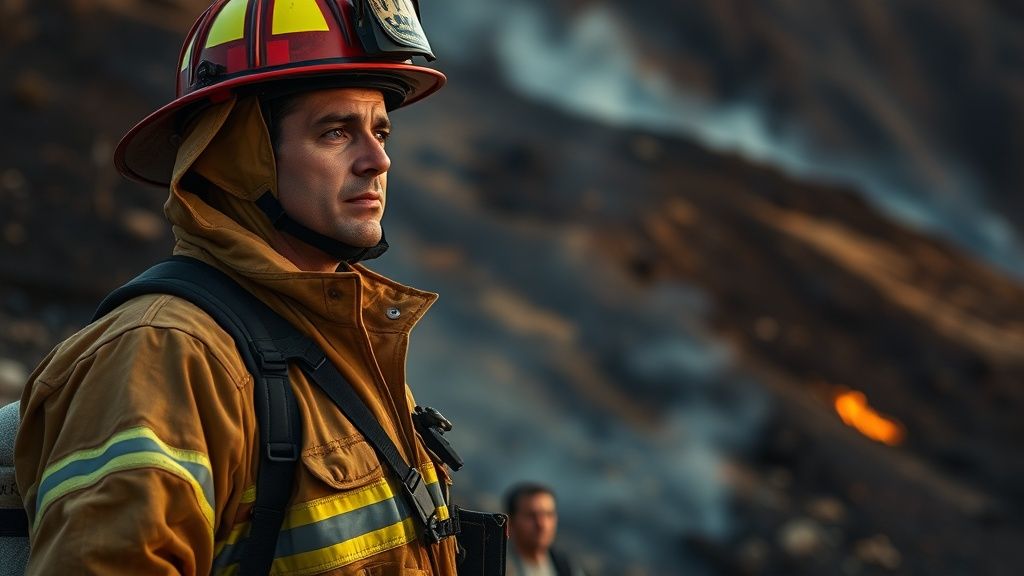
If you're a California firefighter dealing with breathing problems — asthma, COPD, chronic bronchitis — you shouldn't have to prove that years of breathing smoke, toxic fumes, and chemical vapors caused it. California agrees with you. That's exactly what Cal. Lab. Code §3212.1 is designed to do: flip the burden onto your department, so you don't spend years fighting for benefits while your lungs get worse.
This article explains how that presumption works, who it covers, what conditions qualify, and what to do if your department or its insurance carrier tries to deny your claim.
Quick answers for skimmers:
- Cal. Lab. Code §3212.1 presumes that a firefighter's respiratory disease was caused by their job — the firefighter does not have to prove causation.
- It covers active AND retired firefighters, with a post-employment window that varies by years of service.
- Qualifying conditions include asthma, COPD, chronic bronchitis, and other respiratory diseases.
- The employer can rebut the presumption, but it is very difficult to do.
- Separate presumptions under §3212 (heart disease) and §3212.85 (cancer) cover other common firefighter conditions.
- If your claim was denied, you can appeal to the WCAB — and you should call an attorney before that deadline passes.
- Call (818) 794-9947 for a free case review. No fee unless we win.
What §3212.1 Actually Says
Cal. Lab. Code §3212.1 creates what California law calls a "presumption of compensability" for respiratory disease in firefighters. In plain English: if you're a firefighter and you develop a respiratory disease, the law assumes it came from your job.
That may sound obvious. After all, firefighters breathe in smoke, carbon monoxide, hydrogen cyanide, asbestos, and hundreds of other toxic compounds on every major fire. But in the normal workers' compensation system, an injured worker still has to prove their injury or illness is work-related. For a disease that takes ten or twenty years to develop — like COPD or chronic bronchitis — proving causation is enormously difficult and expensive.
The legislature built §3212.1 specifically to solve that problem for firefighters.
Under California Labor Code §3212.1, if a firefighter develops a respiratory disease, the law presumes it was caused by their job — the firefighter does not have to prove it.
The statute applies to any "active firefighting member" of a fire department who is covered by workers' compensation under the California Labor Code. That includes:
- City and county firefighters
- State firefighters (including CAL FIRE personnel)
- District firefighters
- Firefighters employed by the University of California and California State University systems
- Certain airport firefighters and harbor firefighters
It does NOT automatically cover volunteer firefighters unless the employing entity has specifically extended workers' compensation coverage to them under a separate provision.
Which Respiratory Conditions Are Covered
The statute does not limit coverage to one specific diagnosis. §3212.1 covers "a respiratory disease" as a category — which courts and the WCAB have interpreted broadly. In practice, the conditions most commonly claimed under this presumption include:
- Asthma — including occupational asthma that develops or worsens during service
- Chronic obstructive pulmonary disease (COPD) — encompassing emphysema and chronic airway obstruction
- Chronic bronchitis — recurring inflammation of the bronchial tubes, commonly linked to smoke exposure
- Reactive airways dysfunction syndrome (RADS) — a form of occupational asthma triggered by a single acute toxic exposure
- Lung cancer — while §3212.85 (discussed below) covers cancer more broadly, lung cancer in a firefighter can be claimed under §3212.1 as a respiratory disease AND under the cancer presumption statute, depending on the facts
Conditions covered under §3212.1 include asthma, chronic obstructive pulmonary disease (COPD), chronic bronchitis, and any other respiratory disease that develops during or after active duty.
If your pulmonologist or treating physician has diagnosed you with any condition affecting your airways, lungs, or respiratory function, it is worth discussing with an attorney whether §3212.1 applies to your specific diagnosis. Borderline cases — like sleep apnea with a pulmonary component, or pleural disease from asbestos exposure — may still qualify depending on how the condition is characterized medically.
Active Firefighters vs. Retired Firefighters: When the Presumption Still Applies
This is one of the most important — and most misunderstood — parts of §3212.1. Many retired firefighters assume they've lost their rights to the presumption once they leave service. That is not accurate.
The presumption applies to both active and retired firefighters, as long as the disease manifests within a specific window after the firefighter leaves service.
The post-employment window under §3212.1 is tied to how long the firefighter served:
Less than 5 years: 3 years after last date of active service
5 to 10 years: 5 years after last date of active service
10 to 15 years: 10 years after last date of active service
15 or more years: Continuous — the presumption does not expire
This matters enormously for long-career firefighters. A battalion chief who retires after 25 years of service and develops COPD at age 65 — a decade after retiring — can still claim the §3212.1 presumption. The disease "manifested" during the presumption window, and the law presumes the job caused it.
Practical implications for retired firefighters:
- The date of "injury" in a respiratory disease claim is typically the date of diagnosis, or the date the disease first caused disability or need for medical treatment — not the date you actually noticed symptoms.
- Many firefighters delay filing because they assume their symptoms are just "part of getting older." That delay can cost you benefits if the filing window closes.
- If you are a retired firefighter and a doctor has told you that you have COPD, asthma, or another chronic respiratory condition, call an attorney today to find out whether your window is still open.
How the Presumption Shifts the Burden to Your Employer
In a standard workers' compensation case, you — the injured worker — have to show that your condition is "arising out of and in the course of employment." That's the basic test under Cal. Lab. Code §3600. It sounds simple, but for occupational disease, it means hiring expert witnesses, finding medical literature, and often fighting through a QME (qualified medical evaluator) process that can take years.
§3212.1 reverses that burden for firefighters with respiratory disease.
Once the presumption applies, the burden shifts to the employer or insurance carrier to prove the respiratory disease was caused by something other than the firefighter's work — and that is very difficult to do.
Once you establish that you are an eligible firefighter and you have a qualifying respiratory diagnosis, the burden is on your employer — or its insurance carrier — to prove the disease was NOT caused by your service. That is a much harder job than it sounds.
The employer typically has to show one of the following:
- The condition existed before you were hired (which requires documented pre-employment medical records showing the exact same diagnosis).
- The condition was caused by a non-occupational factor — like a personal smoking history that fully accounts for the disease, independent of job exposure.
- The condition is not a "respiratory disease" within the meaning of the statute.
Attempting to "apportion" a firefighter's respiratory disease to lifestyle factors like smoking is a common defense strategy, but California courts have held that apportionment under Cal. Lab. Code §4663 does not simply cancel out the presumption. The employer has to rebut the presumption entirely — it can't just reduce your benefits by the percentage it claims is attributable to personal habits.
How the Department Can Rebut the Presumption (and Why It Usually Fails)
The presumption under §3212.1 is strong, but it is rebuttable — meaning the employer does have a theoretical path to defeat it. In practice, the bar is high.
To successfully rebut the presumption, the employer must produce competent medical evidence showing that the firefighter's specific respiratory condition was caused by non-occupational factors that are separate from and sufficient to explain the disease on their own. A vague opinion that "other causes may have contributed" is not enough to overcome the presumption.
Common rebuttal attempts — and why they often fail:
- "You smoked cigarettes." Courts have held that a history of personal tobacco use does not automatically rebut the presumption, especially when occupational smoke exposure was also significant and documented.
- "You were only exposed briefly." The statute does not require a minimum exposure threshold. One year on the job as a firefighter is enough to trigger eligibility.
- "The condition pre-existed employment." Pre-existing condition defenses require specific, documented medical evidence from before the firefighter was hired — not just a general statement that the person "might have" had a prior condition.
- "Your spirometry was normal at hire." A normal pre-employment pulmonary function test does not prevent the employer from later claiming the disease pre-existed — but it also doesn't help the employer much, because it shows the serious deterioration happened during service.
If your department or its insurer is claiming one of these defenses, do not try to counter it alone. The evidentiary battle at the WCAB is technical, and having an attorney who has handled firefighter presumption cases specifically makes a significant difference.
Other First-Responder Presumptions You Should Know About
§3212.1 is one of several California statutes that create presumptions for firefighters and other first responders. Depending on your diagnosis, more than one presumption may apply to your case — or you may need a different statute than §3212.1.
§3212 — Heart Disease Presumption
Cal. Lab. Code §3212 presumes that heart trouble in a firefighter is work-related. This is one of the oldest presumption statutes in California workers' comp law. It covers heart disease, coronary artery disease, and related cardiac conditions. If your respiratory issues are secondary to an underlying heart condition, §3212 may be the primary avenue.
§3212.85 — Cancer Presumption
Cal. Lab. Code §3212.85 creates a presumption that certain cancers in firefighters are work-related. The covered cancer types include:
- Cancer of the bladder, blood, brain, breast, cervix, colon, esophagus, kidney, large intestine, liver, lung, ovary, pancreas, prostate, rectum, skin, stomach, testis, thyroid, and uterus
- Leukemia, lymphoma, and multiple myeloma
- Mesothelioma
California Labor Code §3212.85 extends a separate presumption to cover certain cancers in firefighters, including cancers of the bladder, skin, blood, and lymphatic system.
If your respiratory disease is lung cancer — or if you are dealing with both a respiratory illness and a cancer diagnosis — §3212.85 may provide additional or alternative coverage. An attorney can help you identify which statute (or combination of statutes) best supports your claim.
§3212.7 — MRSA and Other Bloodborne Presumptions
Cal. Lab. Code §3212.7 covers methicillin-resistant staphylococcus aureus (MRSA) and other infectious disease in firefighters. Not respiratory in the traditional sense, but worth knowing if your illness has an infectious component.
How to File a Workers' Comp Claim Under §3212.1
If you're a firefighter with a qualifying respiratory disease, here's how to move through the process:
Step 1: Get your diagnosis in writing.
You need a physician's diagnosis of a specific respiratory condition. Make sure the diagnosis is documented in your medical records — a verbal mention from a doctor is not enough. The formal diagnosis is what triggers the presumption.
Step 2: Report the injury to your employer.
Under Cal. Lab. Code §5400, you must give your employer written notice of a work-related injury within 30 days. For occupational disease — conditions that develop over time — the 30-day clock starts from the date you know (or reasonably should know) that the disease is work-related. For most firefighters, that means the date your doctor tells you it's likely connected to your job.
Step 3: File a DWC-1 claim form.
Your employer is required to provide you with a DWC-1 claim form within one working day of you reporting an injury. If they don't, ask for it in writing. Complete the employee section, return it, and keep a copy.
Step 4: Assert the §3212.1 presumption explicitly.
When you file, or when your attorney files on your behalf, make clear that your claim is being brought under the §3212.1 respiratory disease presumption. This triggers the burden-shifting framework that puts the employer on defense.
Step 5: File within the statute of limitations.
Under Cal. Lab. Code §5405, the general deadline to file a workers' compensation claim is one year from the date of injury. For occupational disease, the "date of injury" is defined under Cal. Lab. Code §5412 as the date when the disability and its work-connection are both known to the worker — often the date of diagnosis. Do not wait.
Step 6: Respond to any QME or AME process.
If your claim is disputed, the DWC will involve a QME (qualified medical evaluator) or, if agreed, an AME (agreed medical examiner). These physician evaluations are critical — they're often where employers try to rebut the presumption. Having an attorney at this stage is essential.
A firefighter who is denied workers' compensation for a respiratory condition covered by §3212.1 has the right to appeal that denial before the Workers' Compensation Appeals Board.
Retired firefighters in California have a post-employment window to file a respiratory presumption claim — the clock does not stop the moment you leave active service.
What If Your Claim Was Already Denied?
A denial is not the end. Insurance carriers — including those covering public agencies — routinely deny or dispute firefighter respiratory claims, counting on the fact that many claimants give up or don't know their rights under §3212.1.
If your claim was denied, you can file an Application for Adjudication of Claim with the WCAB. You typically have one year from the date of the denial — or one year from the last date benefits were provided — to appeal. The WCAB process is adversarial, involves depositions and expert medical testimony, and can be technically complex.
We've recovered over $150,000,000 for injured workers across California, including first responders with occupational disease claims. We handle every case as if it were going to trial — because insurance carriers settle for more when they know the other side is prepared to fight.
If your claim was denied, call (818) 794-9947. The consultation is free. No fee unless we win.
FAQ — Firefighter Respiratory Presumption in California
What is California Labor Code §3212.1?
Cal. Lab. Code §3212.1 is a workers' compensation statute that creates a presumption that any respiratory disease in a qualifying firefighter was caused by their job. This means the firefighter does not have to prove the disease came from work exposure — the law presumes it did, and the burden is on the employer or its insurer to prove otherwise.
Are firefighters automatically covered for respiratory illness in California?
In most cases, yes — if you are an active or recently retired firefighter covered by California workers' compensation, and you receive a diagnosis of a qualifying respiratory disease, §3212.1 creates a legal presumption that the illness is work-related. The claim is not automatic in the sense that you still have to report it and file, but you do not have to prove causation the way other workers do.
Does §3212.1 cover retired firefighters?
Yes. The presumption applies to retired firefighters who develop a qualifying respiratory condition within a post-employment window that depends on years of service. Firefighters who served 15 or more years retain the presumption indefinitely. For those with 5 to 14 years of service, the window ranges from 5 to 10 years after the last date of active service.
What conditions qualify under §3212.1?
The statute covers respiratory diseases broadly. In practice, qualifying conditions include occupational asthma, COPD, chronic bronchitis, reactive airways dysfunction syndrome (RADS), and lung conditions resulting from smoke, chemical, or toxic inhalation. Lung cancer may be claimed under §3212.1 as a respiratory disease or alternatively under the cancer presumption in §3212.85.
How does a firefighter file for respiratory workers' comp in California?
You need a written diagnosis from a physician, a written report of injury to your employer within 30 days of learning the condition is work-related, a completed DWC-1 claim form, and a filing with the WCAB if the claim is disputed. You should explicitly invoke §3212.1 when filing. The general statute of limitations is one year from the date of injury, which for occupational disease is defined under Cal. Lab. Code §5412 as the date you know both that you have the condition and that it is work-related.
Can my employer or their insurer deny my §3212.1 claim?
Yes — they can deny it and try to rebut the presumption, but the burden to rebut it is heavy. They must produce competent medical evidence showing the disease was not caused by your job. Common defenses like personal smoking history or brief tenure rarely succeed on their own. If your claim was denied, you have the right to appeal before the WCAB and you should consult an attorney immediately.
Does §3212.1 also cover COPD and asthma?
Yes. Both COPD (chronic obstructive pulmonary disease) and asthma — including occupational asthma triggered or worsened by fire exposure — are covered under the §3212.1 respiratory disease presumption. These are among the most commonly claimed conditions under this statute.
What other presumptions protect California firefighters?
In addition to §3212.1 (respiratory disease), California firefighters benefit from Cal. Lab. Code §3212 (heart disease presumption), Cal. Lab. Code §3212.85 (cancer presumption covering more than 20 types of cancer), and Cal. Lab. Code §3212.7 (MRSA and bloodborne disease presumption). Depending on your diagnosis, more than one of these statutes may apply to your claim.
How long do I have to file a workers' comp claim as a firefighter with respiratory disease?
The general workers' compensation filing deadline in California is one year from the date of injury. For occupational disease like a respiratory illness, Cal. Lab. Code §5412 defines the injury date as the date you first experience disability from the condition AND know (or reasonably should know) it is work-related. That is typically the date of your formal diagnosis, or the date your physician tells you the condition is connected to your work exposure.
Should I hire an attorney for a §3212.1 claim?
You are not required to hire an attorney, but claims under §3212.1 — especially disputed ones — involve medical evaluations, statutory burden-shifting, and WCAB proceedings that are technical and adversarial. Insurance carriers for public agencies are experienced at contesting these claims. Firefighters who work with attorneys who specialize in California workers' compensation and first-responder presumption claims generally see better outcomes in disputed cases. The consultation is free and there is no fee unless we win.
Firefighter dealing with respiratory issues? You've spent your career in the smoke so others didn't have to. California law is on your side — but only if you use it. Call (818) 794-9947 for a free §3212.1 case review. We handle workers' comp for first responders across Southern California. No fee unless we win.
Reviewed by Minas Nordanyan, CA Bar #296806. Last updated May 2026.