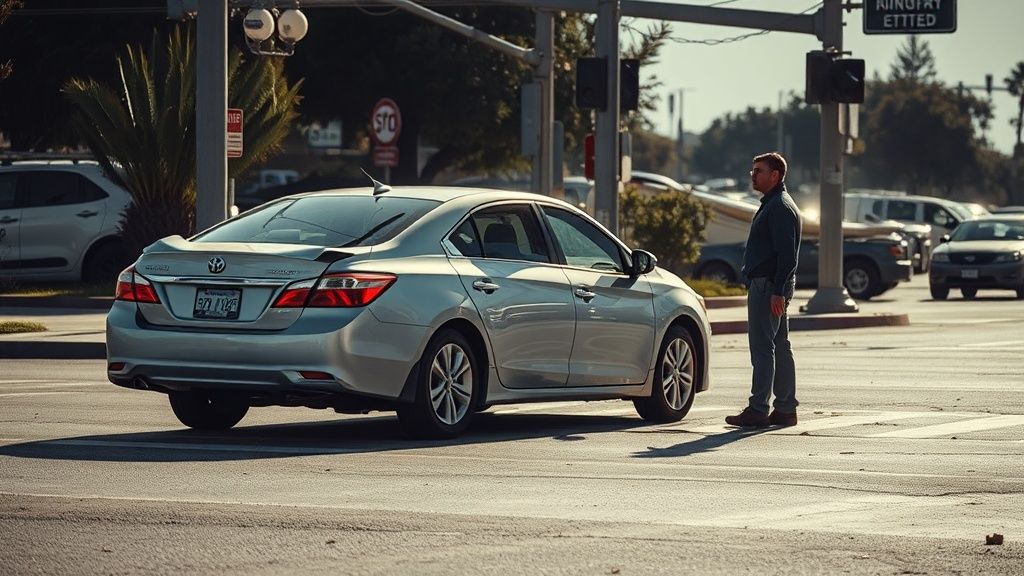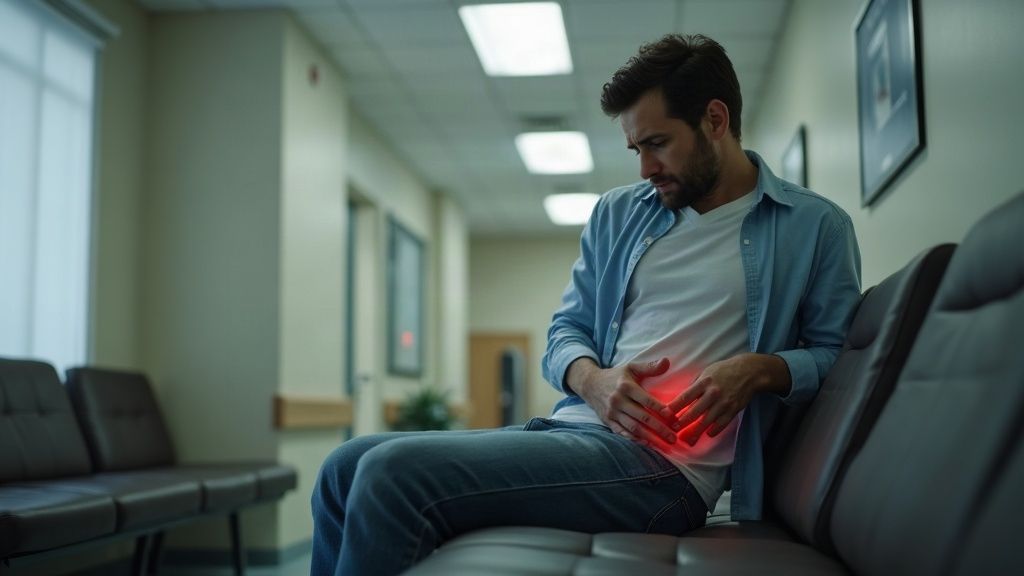
If you hurt your back in a California car accident, the insurance adjuster assigned to the case may tell you one of two things: that your disc injury is not serious enough to pay for, or that it was already there before the crash. Both are common tactics. Neither one ends your claim.
This article explains what a herniated disc is, how a collision causes one, how California law handles pre-existing back conditions, and what you need to prove causation.
If you've been injured in a California car accident and a doctor has identified a disc injury, call (818) 794-9947 for a free case review. No fee unless we win.
Quick-Answer Summary
- A car accident can absolutely cause a herniated disc. The sudden force of a collision compresses the spine in a way everyday movement does not.
- California law requires at-fault drivers to pay for all harm they cause, including the aggravation of a pre-existing back condition.
- The strongest evidence connecting a disc injury to a crash is a timely MRI and a treating physician's written causation opinion.
- California follows pure comparative fault, established by Li v. Yellow Cab Co., 13 Cal.3d 804 (1975), meaning you can still recover even if you were partly at fault.
- The statute of limitations for a car-accident injury claim in California is two years under Cal. Code Civ. Proc. §335.1.
- Gaps in medical treatment and late accident reports weaken claims. Document everything from day one.
What a Herniated Disc Is and How a Crash Causes One
Your spine is a column of vertebrae separated by soft, gel-filled discs. Each disc acts as a shock absorber. The outer wall of a disc, called the annulus fibrosus, surrounds a softer center called the nucleus pulposus. When the outer wall tears or weakens, the inner material can push outward. That is a herniation.
When that protruding material presses on a nearby nerve root, the result can be sharp pain, numbness, tingling, or weakness that radiates into the arms (from a cervical, or neck, disc) or legs (from a lumbar, or lower-back, disc). The medical term for that radiating nerve pain is radiculopathy.
A car accident causes herniations in a specific way. The sudden deceleration or impact force compresses or twists the spine far faster than your muscles can brace against it. Rear-end collisions whip the head and neck backward and forward, stressing the cervical discs. T-bone and head-on collisions load the lumbar spine. Even a relatively low-speed crash generates enough force to tear disc tissue that was already under everyday stress.
A car accident can herniate a disc because the sudden force compresses or twists the spine faster than your muscles can protect it.
Why Insurers Blame Pre-Existing Conditions and Aging
Insurance adjusters receive training on how to reduce payouts. One of their most reliable tools against a disc injury claim is the argument that your spine was already degenerating before the accident.
They are not entirely wrong about the degenerative part. Disc degeneration is common in adults. An MRI on almost any person over forty will show some disc drying, narrowing, or bulging. An adjuster who obtains your prior medical records or a pre-accident MRI will highlight every finding and argue that the crash did not cause anything new.
There are two answers to that argument.
First: degenerative findings and a traumatic herniation are not the same thing. A disc that was slowly drying out over years is very different from a disc that has an acute tear with nuclear material pressing on a nerve root. A qualified radiologist and treating physician can distinguish them. The shape, location, and character of the herniation visible on MRI often tells the story.
Second: even if your spine was degenerating, California law holds the at-fault driver responsible for making it worse. That brings us to the eggshell-plaintiff rule.
The Eggshell-Plaintiff Rule: Taking Victims as They Are
California courts apply a doctrine known as the eggshell-plaintiff rule. The name comes from an old legal teaching: if you negligently hurt someone who turns out to have unusually fragile bones, you cannot escape liability by arguing that a healthy person would not have broken anything. You take your victim as you find them.
In California, an at-fault driver is liable for the full extent of a victim's injuries, even if a pre-existing back condition made those injuries worse, a doctrine courts call the eggshell-plaintiff rule.
In practical terms: if you had a disc that was already weak from years of labor, and the defendant's negligent driving caused it to herniate, the defendant owes you for the herniation. They do not get a discount because your spine was not brand-new.
What they CAN argue is apportionment. If part of your current pain is genuinely attributable to pre-existing degeneration that the accident did not aggravate, a jury can apportion that portion of your damages to the pre-existing condition. This is a fact-intensive fight, and it is exactly the kind of fight where medical expert testimony determines the outcome.
Medical Evidence That Connects the Disc Injury to the Accident
Proving causation in a disc-injury claim comes down to a chain of documentation. Every link in that chain matters.
Seek Medical Attention Immediately
The biggest single mistake injured people make is waiting to see a doctor. If you do not go to the emergency room or an urgent care clinic on the day of the crash, the insurance carrier will argue that your injury either did not exist or was not caused by the accident. A gap between the collision and your first medical visit is the most common reason disc-injury claims are discounted.
The strongest evidence linking a disc injury to a crash is an MRI ordered close in time to the accident, combined with a treating physician's written causation opinion.
The MRI
An X-ray shows bones. Discs are soft tissue and do not appear on X-rays. An MRI (magnetic resonance imaging) scan is the standard imaging study for disc injuries. Your treating physician should order one if you report persistent neck or back pain, radiating pain, numbness, or weakness after the crash.
The MRI report will describe any herniation by location (for example, L4-L5 or C5-C6), the direction it protrudes, and whether it contacts or compresses a nerve root. An attorney working your case will have the MRI reviewed by a specialist if the initial radiology report is ambiguous.
The Causation Opinion
A radiologist can describe what the MRI shows. Only your treating physician or an independent medical expert can say that the crash caused it. That causation opinion must be in writing, typically in a narrative report, and it must explain the physician's reasoning. A conclusion without a supporting rationale will not hold up against a defense expert.
A strong causation opinion addresses three things:
- Your history of prior back complaints (or documented absence of them)
- The mechanism of the collision and how it is consistent with the type and location of the herniation
- Why the physician concludes the accident caused or aggravated the disc injury rather than incidental pre-existing degeneration
Consistent Treatment
Courts and adjusters both look at whether you followed through on treatment. Attending every physical therapy appointment, following your physician's recommendations, and documenting your symptoms in writing creates a record that is difficult to attack. Canceling appointments, skipping prescribed imaging, or disappearing from treatment for months creates gaps an adjuster will exploit.
Treatment Paths from Conservative Care to Surgery
Treatment for a herniated disc from a car accident usually begins conservatively and escalates if symptoms do not improve.
Conservative care includes rest, anti-inflammatory medications, physical therapy, and chiropractic care. For many people, nerve inflammation subsides over weeks to months with this approach.
Interventional pain management includes epidural steroid injections (ESIs) directly into the space around the affected nerve root. ESIs reduce inflammation and can provide significant relief. They are also documented medical expenses that go into the damages calculation.
Surgical intervention ranges from a minimally invasive microdiscectomy (removal of the herniated disc material pressing on the nerve) to spinal fusion in severe multi-level cases. Surgery significantly increases both the medical-cost component of a claim and the pain-and-suffering component, because it reflects a more serious injury and a longer recovery.
Whatever path your treatment takes, keep records of every provider visit, every prescription, every procedure authorization, and every bill. Those records are the foundation of the economic damages calculation in your claim.
Factors That Shape the Value of a Disc-Injury Claim
There is no fixed statewide average settlement for a herniated disc in California. The value of your specific claim depends on several variables that interact with each other.
There is no fixed average settlement for a herniated disc in California; value depends on the severity of the injury, the cost of medical treatment, lost wages, and the at-fault driver's insurance limits.
Economic Damages
Economic damages are your documented, out-of-pocket losses.
- Medical expenses: Emergency room visits, imaging, specialist consultations, physical therapy, injections, and surgery. Keep every Explanation of Benefits and every provider bill.
- Future medical costs: If your treating physician believes you will need ongoing treatment or surgery you have not yet had, those projected future costs are part of your claim. A life-care planner or medical expert typically documents these.
- Lost wages: Time away from work during recovery, documented by pay stubs and an employer letter. If your injury reduces your earning capacity long-term, that loss is also recoverable.
Non-Economic Damages
Non-economic damages compensate for pain, suffering, loss of enjoyment of life, and the impact the injury has on your relationships. California does not cap non-economic damages in personal injury cases the way it does in medical malpractice cases (which are subject to Cal. Civ. Code §3333.2). In a car accident case, non-economic damages are uncapped and argued to the jury or negotiated based on the severity and duration of your suffering.
Comparative Fault
California follows pure comparative fault, meaning your compensation is reduced by your own percentage of fault but is not eliminated even if you were partly responsible.
California's pure comparative fault rule comes from the California Supreme Court's decision in Li v. Yellow Cab Co., 13 Cal.3d 804 (1975). If a jury finds you were 20 percent at fault for the crash, you recover 80 percent of your total damages. You can be 99 percent at fault and still recover 1 percent. That is different from states that bar recovery once the plaintiff reaches a certain fault threshold.
Insurance Limits
The at-fault driver's liability policy is often the ceiling on what you can collect from them directly. California's minimum bodily-injury liability limit is $30,000 per person and $60,000 per accident under Cal. Veh. Code §16056 (updated by SB 1107, effective January 1, 2025). On a serious disc injury with surgery and lost wages, minimum-limits policies can fall well short of full compensation.
If the at-fault driver is underinsured, your own uninsured/underinsured motorist (UM/UIM) coverage becomes critical. Under Cal. Ins. Code §11580.2, California insurers must offer UM/UIM coverage equal to your liability limits unless you reject it in writing. If you carry UM/UIM coverage, your own insurer steps in to cover the gap up to your policy limits.
Statute of Limitations
California's statute of limitations for car-accident personal injury claims is two years from the date of injury under Cal. Code Civ. Proc. §335.1.
You have two years from the date of the accident to file a personal injury lawsuit in California under Cal. Code Civ. Proc. §335.1. Miss that deadline and you lose the right to recover, with narrow exceptions. Do not wait to consult an attorney.
What to Do Starting Today
If you were in a car accident in California and you are experiencing back pain, neck pain, or radiating symptoms, these steps protect your claim:
- See a doctor today, not next week. Emergency rooms, urgent care clinics, and your primary care physician all create the medical record you need.
- Request MRI imaging if your doctor does not order it and your symptoms include radiating pain, numbness, or weakness.
- Document your symptoms daily in a notes app or a physical journal. Pain levels, what activities you cannot do, how sleep is affected.
- Keep every medical bill, receipt, and Explanation of Benefits. Photograph paper documents.
- Do not give a recorded statement to the at-fault driver's insurance carrier before speaking with an attorney. Adjusters are trained to get you to minimize your injury on tape.
- Call (818) 794-9947 for a free case review. We handle personal injury cases on a contingency basis, meaning $0 fee unless we win.
Frequently Asked Questions
Can a car accident cause a herniated disc?
Yes. The sudden compressive or rotational force of a collision can tear disc tissue. Rear-end crashes are a leading cause of cervical (neck) disc herniations. High-speed impacts and side collisions commonly produce lumbar disc injuries.
How do you prove a herniated disc came from a crash?
The core evidence is an MRI performed close in time to the accident, a treating physician's written causation opinion explaining why the injury is attributable to the collision, and a documented history showing no prior complaints of the same symptoms. Consistent medical treatment from the day of the crash forward strengthens the chain of causation.
What if I had prior back problems before the accident?
Prior degeneration does not end your claim. Under the eggshell-plaintiff rule, the at-fault driver is liable for any aggravation of a pre-existing condition. The dispute shifts to apportionment: how much of your current condition was caused or worsened by the crash versus how much was already present. Medical expert testimony resolves that question.
How much is a herniated disc claim worth in California?
There is no single answer. Value depends on medical costs incurred and projected, lost wages, the severity and permanence of the injury, whether surgery was required, and the at-fault driver's insurance limits. Non-economic damages for pain and suffering are not capped in California car accident cases.
What is the deadline to file a car accident injury claim in California?
Two years from the date of the accident under Cal. Code Civ. Proc. §335.1. If the at-fault driver was a government employee or a government entity was involved, the deadline is shorter and requires a prior government tort claim. Talk to an attorney immediately if a government entity may be involved.
What if the at-fault driver has minimum insurance limits?
California's minimum bodily-injury liability coverage is $30,000 per person under Cal. Veh. Code §16056. On a serious disc injury, that may not cover your full losses. Your own UM/UIM policy under Cal. Ins. Code §11580.2 can cover the gap up to your own policy limits. An attorney can also investigate whether other parties share liability.
Does comparative fault affect my recovery if I was partly at fault?
Under California's pure comparative fault rule from Li v. Yellow Cab Co. (1975), your damages are reduced by your percentage of fault. If you were 30 percent at fault, you recover 70 percent of your total damages. You do not lose the entire claim unless you are found completely at fault.
How long does a disc injury settlement take in California?
It depends on the severity of the injury and whether litigation is necessary. Cases that resolve before a lawsuit is filed can settle in months. Cases that involve surgery, disputed causation, or a defendant who refuses to offer fair value often proceed to litigation and take one to three years. We do not recommend settling before you have reached maximum medical improvement (MMI), meaning the point at which your doctor believes your condition has stabilized, because settling before MMI may leave future medical costs uncompensated.
If you've been injured in a California car accident and a physician has identified a disc injury, the documentation you gather in the next few weeks will shape the value of your claim. Call (818) 794-9947 for a free, confidential case review. No fee unless we win. We serve injured Californians in English and Spanish, and we come to you if you cannot travel.
Reviewed by Minas Nordanyan, CA Bar No. 296806. Last updated July 2026. This article is general legal information for California residents, not legal advice specific to your situation. Contact an attorney to discuss the facts of your case.