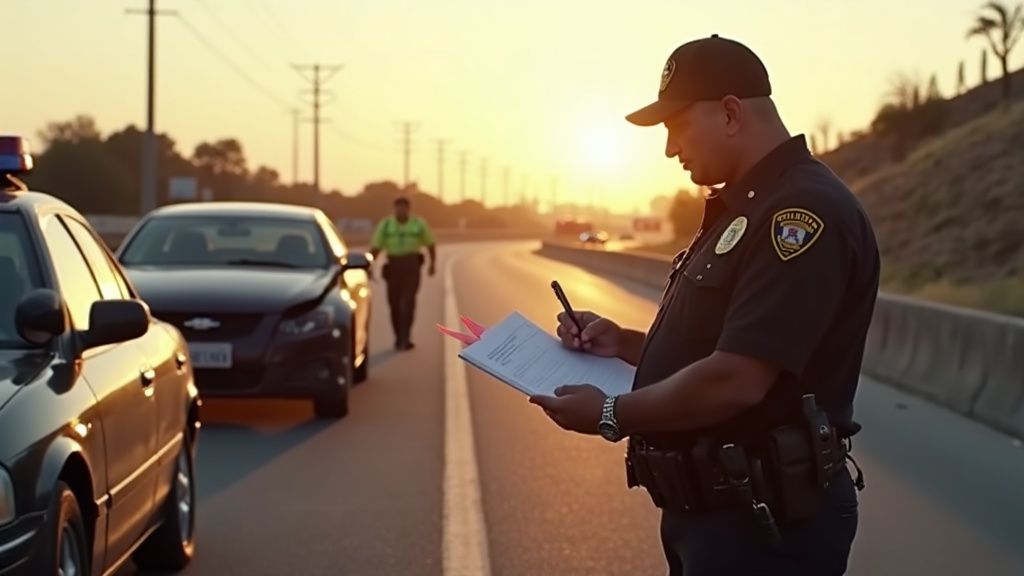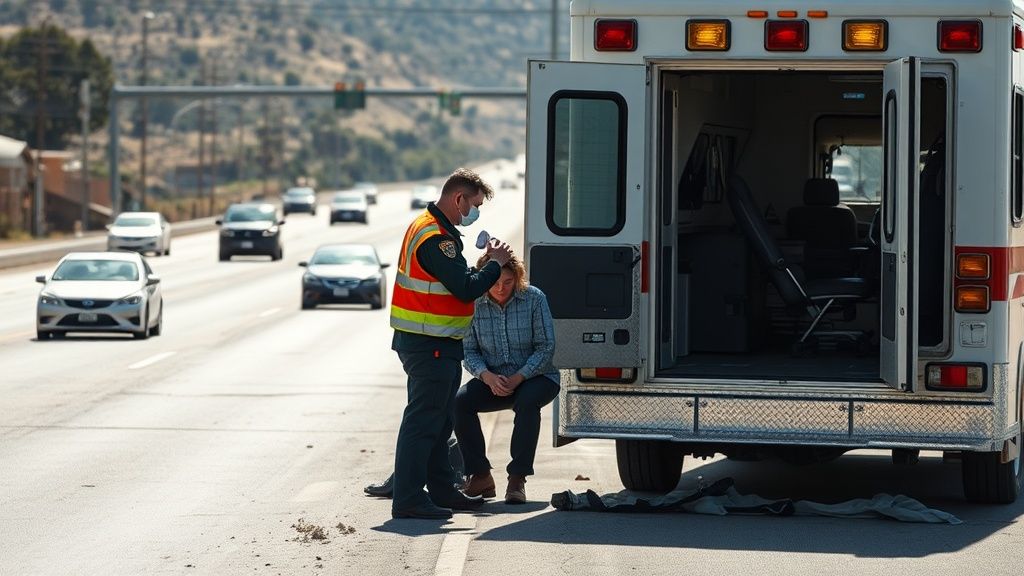
If you were hurt in a California car accident and had to miss work, you are likely owed more than just your medical bills. Lost income is one of the most commonly underestimated categories of damages in personal injury claims, and insurance adjusters know it. They count on injured workers not knowing what counts, not knowing how to document it, and not pushing hard enough to recover every dollar.
This guide covers exactly what California law allows you to recover, how to build the documentation that proves it, and where the common pitfalls are.
If you've been injured in a crash and are losing income, call (818) 794-9947 for a free case review. No fee unless we win.
TL;DR: Key Facts About Lost Wages in California Car Accident Claims
- California law entitles you to recover lost wages as economic damages from the at-fault party under Cal. Civ. Code §3333.
- Lost wages cover past income you already missed. Loss of future earning capacity is a separate, additional category.
- W-2 employees document wage loss with pay stubs, employer letters, and tax returns.
- Self-employed workers, freelancers, and gig workers can claim lost income using returns, invoices, contracts, and bank statements.
- Bonuses, overtime, commissions, and tips count if documented.
- California's pure comparative fault rule (Cal. Civ. Code §1714) reduces your recovery by your percentage of fault, but does not bar it.
- A forensic economist or vocational expert can substantially increase documented recovery in serious cases.
Why Lost Wages Are Often Underestimated in Injury Claims
In California, lost wages after a car accident are a form of economic damages you can recover from the at-fault driver's insurance company or through a personal injury lawsuit.
Most injured people think of "damages" as medical bills. Doctors, surgeries, physical therapy, prescriptions. Those are real and important. But the injury does not stop costing you money when you leave the hospital. Every day you cannot work, every shift you miss, every project you cannot take, every client who moves on because you were unavailable, those losses add up fast.
California law treats lost wages as compensable economic damages because the accident would not have caused them but for the at-fault driver's negligence. Under Cal. Civ. Code §3333, a person injured by the wrongful act of another is entitled to recover "the amount which will compensate for all the detriment proximately caused." That includes your paycheck.
The problem is that lost wages are easy for an adjuster to challenge if they are not carefully documented. Unlike a hospital bill with a clear dollar amount, income loss requires you to reconstruct what you would have earned. That reconstruction has to be specific, credible, and backed by paper.
Lost Wages vs. Loss of Future Earning Capacity: What Is the Difference
These are two separate categories of damages, and the difference matters for your claim.
Lost wages (also called past lost income) cover the money you already did not earn because your injuries kept you out of work. If you broke your arm in January and returned to work in April, your lost wages cover three months of missed income. This is backward-looking and relatively concrete.
Lost wages cover income you have already missed, while loss of future earning capacity covers the income you will earn less of going forward because of a permanent or lasting injury.
Loss of future earning capacity (sometimes called lost earning capacity) is different. It addresses what your injury will cost you going forward. This category applies when your injury is permanent or long-lasting enough to reduce your ability to earn at the same level you would have earned without the accident.
Examples of when loss of earning capacity applies:
- A construction foreman suffers a back injury that prevents heavy lifting, requiring a career change to a lower-paying position.
- A pianist suffers nerve damage to her hand and can no longer perform professionally.
- A truck driver has a traumatic brain injury that prevents him from passing the medical standards required for a commercial driver's license.
Loss of future earning capacity is not speculative. California courts require competent evidence of the injury's effect on earning ability. Testimony from vocational rehabilitation experts and forensic economists is commonly used to calculate this figure with documented, defensible methodology.
Both categories are available to you if both apply. They are not either/or.
Documenting Income Loss If You Are a W-2 Employee
If you work a traditional salaried or hourly job, proving lost wages is relatively straightforward, but only if you collect the right documents.
What you need:
- Pay stubs from the 8-12 weeks before the accident. These establish your baseline rate of pay, hours typically worked, and any regular overtime or bonus patterns.
- A wage verification letter from your employer. This is a letter on company letterhead stating your position, your regular rate of pay (hourly or salary), the dates you missed, and confirmation that you were not paid for those dates. Ask HR for this specifically. Do not rely on a verbal confirmation.
- Federal and state tax returns for the two most recent years. Your W-2 and tax returns show total annual income and are difficult to dispute.
- Documentation of used PTO or sick leave. If your employer required you to use accrued vacation or sick time to cover missed days, you are still owed compensation for that time. You burned a benefit that had real value.
- Doctor's notes and medical records confirming work restrictions. The insurance company will argue you could have returned to work earlier. Medical records documenting your restrictions by date make that argument harder to sustain.
One often-missed category: if you used short-term disability benefits from your employer during the recovery period, the offset between your full wage and the disability benefit payment is also a recoverable loss.
Proving Lost Income When You Are Self-Employed or a Gig Worker
Self-employed workers and gig workers in California can claim lost income after a car accident using tax returns, invoices, contracts, and bank statements showing their typical earnings.
Self-employed individuals, freelancers, independent contractors, and gig workers face a harder documentation challenge but are not barred from recovering lost income. The standard is the same: show what you would have earned but for the accident.
What you need:
- Federal Schedule C or Schedule SE from the two most recent tax years. These show your net self-employment income and are the foundation for establishing an earnings baseline.
- Bank statements. Month-by-month deposits corroborate what your tax returns report and show seasonal patterns. If you typically earn more in certain months (a contractor who does landscaping, a photographer who books weddings), statements make that pattern concrete.
- Client invoices and contracts. If you had work lined up that you could not complete because of your injuries, contracts and purchase orders showing the agreed fee are powerful evidence of a specific dollar loss.
- Client communications. Emails or texts showing you had to cancel, postpone, or turn down work are supporting documentation. Screenshots are fine; preserve them.
- Statements from clients. A client who confirms in writing that they hired someone else because you were unavailable provides third-party corroboration of your loss.
- A CPA or accountant letter. In more complex cases, having your accountant prepare a written statement calculating your average monthly income based on your returns adds professional credibility to the claim.
A word on gig work: Rideshare drivers, delivery workers, and platform-based freelancers often rely on app-based income that is tracked digitally. Download your earnings history from the platform covering the 12 months before the accident. Most platforms (Uber, Lyft, DoorDash, Instacart) provide downloadable CSV reports. Pair those with your tax returns.
How Insurance Adjusters Try to Minimize Wage Loss Claims
Understanding how adjusters approach your wage loss claim helps you anticipate and counter the tactics they use.
Common adjuster arguments:
- "You didn't miss that much work." They may accept only the first week or two and argue that your subsequent absences were voluntary or medically unnecessary. Counter with dated doctor's notes confirming ongoing restrictions.
- "We'll only pay your base hourly rate." They exclude overtime, bonuses, and commissions, claiming those were not guaranteed. Counter with documented historical patterns showing regular overtime or expected bonuses.
- "Your self-employment income is too variable to calculate." This is a favorite against freelancers. Counter with two years of returns and bank statements that show a consistent pattern.
- "You could have gone back to work in a limited capacity." They argue you should have taken light-duty assignments. Counter with medical records showing your treating physician did not authorize that.
- "Your injury was pre-existing." If you had any prior back or neck issues, they will argue the accident did not cause your current limitations. Counter with medical records showing the distinction between your pre-accident baseline and post-accident status.
Adjusters work for the insurance company. Their job is to pay as little as possible. That does not make them villains, but it does mean your claim is not their priority.
Bonuses, Overtime, and Missed Opportunities That Still Count
Bonuses, overtime pay, commissions, and tips all count toward a lost wages claim in California if you can document that you would have received them but for the accident.
One of the most consistent points where injured workers leave money on the table is the narrow view of "lost wages." Most people report only their base salary or hourly rate. California law does not limit you to your base pay.
What counts as compensable lost income:
- Overtime. If you regularly worked overtime and your prior pay stubs show consistent overtime pay, that pattern establishes that you would have continued earning it. Calculate your average weekly overtime over the 8-12 weeks before the crash.
- Bonuses. Scheduled annual bonuses, performance bonuses, and signing bonuses you missed are compensable if you can show the bonus was expected and that your injury prevented you from receiving it.
- Commissions. Sales workers, real estate agents, and others who earn commissions should calculate their average commission income over the prior year and apply that to the weeks missed.
- Tips. Restaurant workers, hotel staff, and others who rely on gratuities should document their average weekly tip income using bank deposits or reported tip income on tax returns.
- Scheduled raises or promotions. If a raise or promotion was formally offered or internally documented before the accident and the injury prevented you from taking the new role, the income differential is a recoverable loss.
- Overtime you would have worked but could not bid on. Some union workplaces operate on seniority-based overtime bidding. If your injury prevented you from bidding on a scheduled overtime period, document the opportunity and what the shift would have paid.
The key in every case is documentation. A pattern shown in pay stubs and tax returns is far more persuasive than an estimate in your own words.
When a Vocational Expert or Economist Strengthens Your Case
In a soft tissue injury case where you missed two weeks of work, you probably do not need an expert witness to calculate your wage loss. The math is simple and the documentation is straightforward.
But some cases are far more complex. When the injury is serious, when the wage loss is large, or when future earning capacity is at issue, a forensic economist or vocational rehabilitation expert can make a material difference in what you recover.
A vocational rehabilitation expert or forensic economist can strengthen a California car accident claim by providing an independent, documented calculation of your past and future income loss.
What these experts do:
A vocational rehabilitation expert evaluates your work history, education, skills, physical restrictions (post-injury), and the labor market to determine what jobs you are now capable of performing and what those jobs pay. If your injury forces you into a lower-paying occupation, the expert calculates the income differential over your remaining work-life expectancy.
A forensic economist takes the vocational expert's findings and applies economic methodology, factoring in earnings growth rates, inflation, and present-value discounting to produce a lump-sum figure representing your total future income loss in today's dollars.
Insurance companies use their own experts to challenge yours. Having a credentialed, independent expert produce a documented report shifts the burden back onto the carrier to rebut it specifically. Insurers are reluctant to go to trial against a well-supported expert economic report because juries in California tend to take these figures seriously.
California's Comparative Fault Rule and Your Wage Claim
California's pure comparative fault rule means your recovery is reduced by your own percentage of fault, so even if you were partly to blame for the crash, you can still recover lost wages.
California follows a pure comparative fault standard under Cal. Civ. Code §1714. This means that even if you were partially at fault for the accident, you can still recover damages. Your recovery is simply reduced by your percentage of fault.
If you were 20% at fault and your total lost wages were $50,000, you would recover $40,000. Pure comparative fault is more favorable to plaintiffs than the contributory negligence standard used in some other states, which can bar recovery entirely if the plaintiff is even slightly at fault.
This also means that insurance adjusters will often argue you share responsibility for the accident as a way to reduce the total payout. Having legal representation during the claims process helps counter those arguments with evidence of the other driver's negligence.
FAQ
How do you prove lost wages after a car accident in California?
You prove lost wages with pay stubs showing your pre-accident earnings, a written verification letter from your employer confirming dates missed and pay withheld, medical records documenting your injury-related work restrictions, and federal tax returns for the prior two years. Self-employed workers substitute returns, invoices, client contracts, and bank statements. The more specific and contemporaneous your documentation, the stronger the claim.
Can self-employed people claim lost income after a crash in California?
Yes. California law does not limit lost income claims to W-2 employees. Self-employed workers, independent contractors, and gig workers can recover lost income by documenting their typical earnings through tax returns (Schedule C or SE), bank statements, client invoices, and contracts for work that was cancelled or postponed because of the injury.
What is the difference between lost wages and loss of earning capacity in California?
Lost wages cover income you already missed during your recovery period. Loss of earning capacity (sometimes called lost future earning capacity) covers the reduction in your ability to earn income going forward because of a permanent or long-lasting injury. Both are compensable under California law if both apply to your situation. Loss of earning capacity typically requires expert testimony from a vocational rehabilitation specialist or forensic economist to establish.
Do bonuses and overtime count toward a lost wages claim in California?
Yes. Bonuses, overtime, commissions, tips, and other forms of compensation beyond base salary all count as compensable lost income in California if you can document that you would have received them. Regular patterns shown in prior pay stubs, W-2s, or tax returns establish what you were likely to earn. Incidental or one-time windfalls are harder to prove, but scheduled bonuses and consistent overtime patterns are generally recoverable.
How does California's comparative fault rule affect my lost wages recovery?
Under California Civil Code §1714, California uses a pure comparative fault standard. If you were partly responsible for the accident, your total damages, including lost wages, are reduced by your percentage of fault. You are not barred from recovering even if you were substantially at fault. For example, if you were 25% at fault and suffered $40,000 in lost wages, you could recover $30,000 in lost wages.
Can I recover lost wages if I used paid time off during my recovery?
Yes. If you were required or chose to use accrued vacation, sick days, or PTO to cover your missed days, you still suffered a loss. That paid time off had monetary value, and you would not have spent it but for the accident. Document the hours used and your employer's written confirmation that those hours were deducted from your accrued balance because of the injury.
How far back can I file a car accident claim in California?
The statute of limitations for most California personal injury claims, including car accidents, is two years from the date of the injury under Cal. Civ. Proc. Code §335.1. Waiting diminishes your ability to document wage loss because records become harder to obtain and memories fade. File your claim well before the deadline.
Do I need a lawyer to recover lost wages after a car accident?
You are not required to hire an attorney. But insurance adjusters are experienced at minimizing wage loss claims, especially for self-employed workers, cases involving overtime and bonuses, and cases where future earning capacity is at issue. An attorney can identify every category of recoverable income you might otherwise miss, counter adjuster tactics with documented evidence, and, if necessary, retain vocational and economic experts. Nordanyan Law handles personal injury cases on a contingency basis, meaning no fee unless we win.
The Bottom Line
Lost wages are real, documented losses and California law gives you the right to recover them in full from the at-fault party. The challenge is building the documentation that proves what you would have earned, which takes time and specificity. Start collecting pay stubs, employer letters, and medical records now, before the evidence becomes harder to obtain.
Every injured worker deserves the same quality of legal representation as any corporation. That is the principle this firm was built on.
If you are missing work because of a California car accident, call (818) 794-9947 for a free case review. No fee unless we win. Available in English and Spanish.
Reviewed by Minas Nordanyan, CA Bar No. 296806. Last legal review: 2026. This article is for general informational purposes and does not constitute legal advice. The facts of your case determine your rights. Call (818) 794-9947 to discuss your specific situation with a California personal injury attorney.