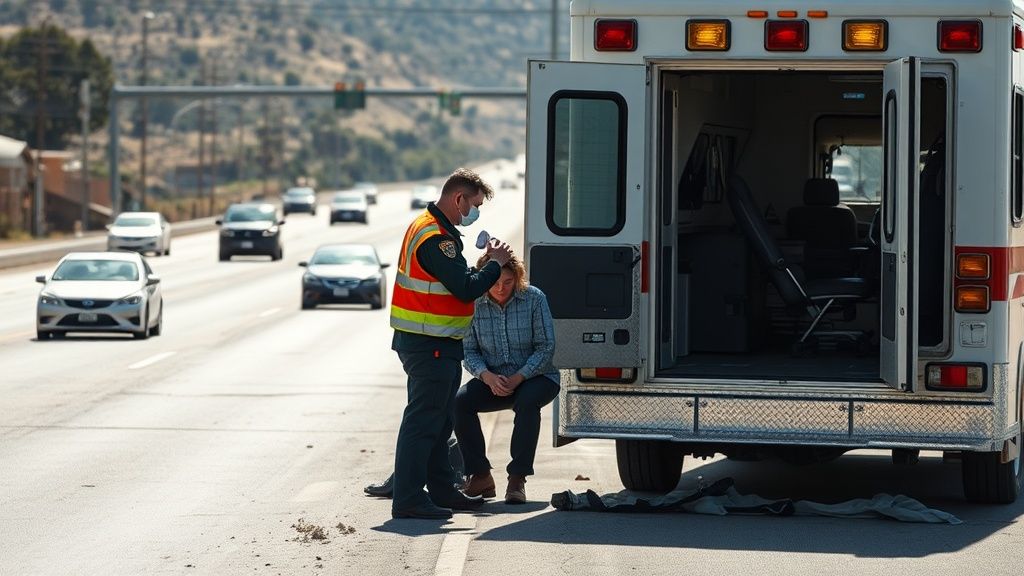
If you were in a car accident in California and your head feels off — even slightly — you may be showing signs of a concussion. The problem is that many of the warning signs are easy to dismiss in the immediate aftermath of a crash. Adrenaline is high, you're shaken, and you might tell yourself it's just stress.
It may not be.
A concussion is classified medically as a mild traumatic brain injury (mTBI). "Mild" refers to the injury's place on the severity spectrum — not to how seriously you should take it. Left undiagnosed or untreated, a concussion can develop into post-concussion syndrome, which causes symptoms that last for months and can affect your ability to work, drive, and function.
Below are the 10 warning signs every California accident victim should know — and what they mean for your health and your legal rights.
Quick-reference list — the 10 warning signs at a glance:
- A headache or pressure in the head that won't go away
- Feeling dazed, foggy, or mentally "off"
- Dizziness or balance problems
- Nausea or vomiting after the crash
- Sensitivity to light or noise
- Blurred or double vision
- Trouble concentrating or remembering things
- Unusual drowsiness or difficulty being woken up
- Mood changes — irritability, anxiety, or sudden sadness
- Sleep disturbances in the days after the accident
1. Headache or Pressure That Won't Go Away
A persistent headache or feeling of pressure inside the skull is the most common concussion symptom after a car accident. It can begin at the moment of impact or develop gradually over the next several hours as inflammation in the brain builds.
Do not chalk this up to general crash-related stress. A tension headache that begins after a car accident — especially one that steadily worsens rather than improving — is a recognized red flag for brain injury. The CDC's clinical criteria for concussion include "headache" as the primary symptom marker.
What you should do: Seek medical evaluation the same day. An emergency room or urgent care physician can assess whether imaging (CT scan) is needed to rule out bleeding or more serious injury. Do not take ibuprofen or other NSAIDs before being evaluated — they can mask symptoms and, in rare cases, increase bleeding risk.
Practical takeaway: If your head hurts after a crash and the pain is not gone within an hour, get checked — do not wait until the next day.
2. Feeling Dazed, Foggy, or 'Not Yourself'
A sense of mental cloudiness, feeling disconnected from your surroundings, or simply not feeling like yourself is a classic sign of mild traumatic brain injury.
Many accident victims describe this symptom as "being in a fog" or "feeling like I'm watching things happen from outside my body." Medically, this is called altered mental status and reflects the brain's disrupted neurochemical environment immediately following the concussive injury.
This symptom is especially important to communicate to first responders at the scene. Emergency personnel are trained to evaluate orientation (name, date, location) and responsiveness — but if you downplay the fogginess, it may not be documented, which can hurt your claim later.
You can have a concussion without ever hitting your head on the steering wheel or window; the violent back-and-forth motion of the crash alone can injure the brain.
Practical takeaway: Tell every treating medical professional exactly how you feel — even if the words are hard to find. "I feel foggy" is clinically significant and should be documented in the medical record.
3. Dizziness or Problems With Balance
Dizziness, unsteadiness on your feet, or difficulty walking in a straight line after a car accident suggests the brain's vestibular pathways — which control balance and spatial orientation — may have been disrupted by the force of the crash.
The vestibular system connects the inner ear and the brain. When the brain is jarred, the signals between these structures can misfire, producing vertigo-like sensations even without any inner-ear trauma. Studies reviewed by the DWC and published in peer-reviewed neurology literature consistently list dizziness as one of the three most frequently reported concussion symptoms alongside headache and cognitive fog.
At an accident scene, some drivers dismiss their dizziness as shock or low blood pressure from the adrenaline drop after the crash. It can be both. But vestibular disruption from a concussion is distinct and requires medical evaluation to identify.
Practical takeaway: If you feel dizzy or stumble when trying to stand after a crash, tell emergency personnel immediately — do not get up quickly or attempt to walk away from the scene.
4. Nausea or Vomiting After the Crash
Nausea or vomiting in the hours following a car accident is a recognized concussion warning sign and, when paired with headache, can indicate elevated intracranial pressure requiring emergency evaluation.
The vagus nerve — which connects the brain to the digestive system — can be disrupted by concussive injury, producing a rapid nausea response. Vomiting is particularly significant: a single episode may be a normal acute stress response, but repeated vomiting or vomiting combined with a worsening headache is a potential sign of a more serious injury such as a subdural hematoma (bleeding between the skull and the brain) and warrants a 911 call or immediate emergency room visit.
Practical takeaway: One bout of nausea at the scene — document it with the first responders and in your medical intake notes. Repeated vomiting after a head injury is a 911 emergency.
5. Sensitivity to Light or Noise
Photophobia (sensitivity to light) and phonophobia (sensitivity to noise) are hallmark symptoms of concussion that often emerge within the first 24 hours after a head injury and can last weeks without proper rest and treatment.
Some concussion symptoms — including dizziness, mood changes, and sleep problems — do not appear until 24 to 72 hours after the accident, which is why a same-day medical visit is critical even when you feel fine at the scene.
If the flashing lights of emergency vehicles at the scene feel unbearably bright, or if the noise of traffic or voices feels physically painful, these are not overreactions. They are neurological symptoms. The brain's sensory-processing centers — primarily the occipital lobe for light and the auditory cortex for sound — become hyperreactive after concussive injury.
Many concussion patients first notice these symptoms when they return home, turn on the television, and find the noise or light unbearable. That delayed recognition is normal — and still medically significant.
Practical takeaway: Document when light or noise sensitivity begins and how long it lasts; your treating physician will use this timeline to assess severity and guide your return-to-activity plan.
6. Blurred or Double Vision
Vision disturbances — including blurring, double vision, or seeing spots — signal that the visual cortex or the nerves controlling eye movement experienced concussive stress.
The oculomotor nerves (cranial nerves III, IV, and VI) are particularly vulnerable to the rotational forces generated in a car crash. When these nerves are affected, the eyes may fail to track together, producing double vision (diplopia). Even brief visual disturbances at the moment of impact — "seeing stars" — are meaningful clinical data.
Any change in vision after a crash is a red flag. It is important to tell your doctor about vision changes even if they resolved quickly, because transient symptoms still support the concussion diagnosis.
Practical takeaway: Do not drive yourself to the hospital if you are experiencing double vision or significant blurring — call someone or wait for an ambulance.
7. Trouble Concentrating or Remembering Things
Difficulty focusing, forgetting conversations, or being unable to recall details of the accident itself are cognitive symptoms of concussion that reflect disruption to the brain's prefrontal cortex and hippocampus.
A persistent headache that starts or worsens after a car accident is the most common sign of a concussion — do not wait to see if it improves on its own.
Memory gaps immediately surrounding the crash — called post-traumatic amnesia — are a key diagnostic marker. If you cannot clearly remember the moments before impact, the impact itself, or the first hour afterward, tell your doctor. This is not a sign of lying or exaggeration. It is a documented neurological symptom.
Cognitive symptoms can also be subtle and delayed. You might notice over the days following the crash that you are slower to finish sentences, losing your train of thought mid-conversation, or struggling to read or concentrate — tasks that were effortless before the accident.
Practical takeaway: Keep a daily symptom journal starting on the day of the crash. Note when you have difficulty concentrating, what triggered it, and how long it lasted — this record becomes valuable evidence in both medical treatment and any insurance or legal proceedings.
8. Unusual Drowsiness or Trouble Waking Up
Excessive sleepiness or difficulty being roused after a head injury is one of the most serious warning signs on this list.
Rest is a normal and necessary part of concussion recovery. But there is a critical difference between needing more sleep than usual and being unable to be kept awake or unable to respond when woken. The latter can signal that swelling or bleeding in the brain is increasing and is a medical emergency.
The standard guidance from neurological emergency protocols — and consistent with recommendations referenced by the DIR in occupational injury contexts — is that a person who has suffered a head injury in a crash should be woken every two hours in the first night following the accident if there is any concern about concussion, specifically to confirm they can be roused and are coherent.
Practical takeaway: If someone who suffered a head injury in a crash cannot be woken, or wakes but is confused and cannot answer basic questions, call 911 immediately.
9. Mood Changes — Irritability, Anxiety, or Sadness
Sudden and uncharacteristic emotional shifts — including unexpected irritability, anxiety, or a feeling of depression — can follow a concussion because the injury disrupts the brain's frontal lobe, which is responsible for emotional regulation.
This is one of the most frequently overlooked concussion symptoms, both by the injured person and by their family. It is easy to attribute post-crash irritability to being upset about the accident, dealing with insurance companies, or worrying about medical bills. Some of it may be. But when mood changes are abrupt, out of character, and cluster with other symptoms on this list, they are neurological in origin.
Anxiety in particular is a documented post-concussion symptom. The autonomic nervous system — which regulates the stress response — can become dysregulated after brain injury, producing a near-constant state of physiological alertness even when there is no immediate stressor.
Practical takeaway: Tell your doctor about mood changes even if they feel embarrassing — they are medical symptoms, not personality flaws, and treating them is part of concussion recovery.
10. Sleep Disturbances in the Days After the Accident
Sleeping significantly more or less than usual, or having trouble falling and staying asleep in the days following a crash, is a recognized post-concussion symptom that indicates ongoing neurological disruption.
In California, you generally have two years from the date of the accident to file a personal injury lawsuit for a concussion or other head injury under Cal. Code Civ. Proc. §335.1.
The brain's sleep-wake cycle is regulated by the reticular activating system and by melatonin production in the pineal gland — both of which can be disrupted by concussive injury. Some people with concussions sleep 12 or more hours a day in the first week. Others develop insomnia, lying awake despite exhaustion, or experiencing frequent awakening throughout the night.
Sleep disturbance matters not only for recovery — adequate sleep is one of the primary mechanisms by which the brain repairs itself — but also because it extends and intensifies other concussion symptoms, including cognitive fog and mood changes.
Practical takeaway: Tell your treating physician about any changes in sleep pattern. They may recommend sleep hygiene modifications, refer you to a specialist, or adjust your recovery timeline based on your sleep symptoms.
When to Call 911 Immediately
Most concussion symptoms are serious but not immediately life-threatening. A subset of symptoms, however, require emergency care without delay. Call 911 or go to an emergency room immediately if you or someone else who was in the crash experiences any of the following:
- Loss of consciousness that lasts more than a few seconds
- A seizure at any point after the crash
- One pupil that is larger than the other
- Repeated vomiting (more than two episodes)
- Slurred speech or inability to recognize familiar people or places
- Weakness or numbness in the arms or legs
- Rapidly worsening headache
If someone who suffered a head injury in a crash cannot be kept awake, has a seizure, or experiences rapidly worsening symptoms, call 911 immediately — these are signs of a serious brain injury beyond a concussion.
These symptoms can indicate a traumatic brain injury more severe than a concussion — including epidural or subdural hematoma — which are life-threatening emergencies.
Why Same-Day Medical Care Matters for Your California Claim
Beyond the obvious health reasons, seeing a doctor on the day of the crash — or within 24 hours — carries direct legal and insurance consequences in California.
Seeing a doctor on the day of the crash creates a medical record directly linking your concussion to the accident, which California insurers and courts rely on when evaluating your claim.
California personal injury claims require proof that your injuries were caused by the accident. A medical record created on the day of the crash is the strongest possible link between the collision and your concussion diagnosis. When injured people wait days or weeks before seeing a doctor, insurance adjusters routinely argue that the symptoms arose from a different cause — and California courts give weight to that argument when the medical record gap is significant.
Under Cal. Code Civ. Proc. §335.1, you generally have two years from the date of a car accident to file a personal injury lawsuit in California. Two years sounds like a long time, but the strength of your claim depends on the medical documentation you build starting on day one — not on the filing deadline.
If the crash involved a work vehicle or happened during the course of your employment, you may also have a parallel workers' compensation claim under Cal. Lab. Code §3600, which carries its own reporting and filing requirements separate from the personal injury statute of limitations.
Your Next Step
A concussion diagnosis — even a "mild" one — can affect your ability to work, earn, think clearly, and function for weeks or months. California law gives you the right to pursue compensation for medical expenses, lost wages, and pain and suffering when another driver's negligence caused your injury.
If you or someone you care about is showing any of the warning signs above after a crash, do two things today:
- See a doctor. Same day if at all possible — even urgent care creates a documented medical record.
- Talk to an attorney before you talk to the insurance company. Adjusters are trained to settle fast and settle low. A free case review costs you nothing and can tell you what your claim is actually worth.
We've recovered over $150,000,000 for injured Californians. We handle every case as if it were going to trial — because that's what moves insurance carriers to pay what you actually deserve.
Call (818) 794-9947 for a free consultation. No fee unless we win. Available in English and Spanish.
Or request a free case evaluation online — one of our attorneys will follow up the same day.
Frequently Asked Questions
What are the signs of a concussion after a car accident?
The 10 most common signs of a concussion after a car accident are: a persistent headache or head pressure; feeling mentally foggy or dazed; dizziness or balance problems; nausea or vomiting; sensitivity to light or noise; blurred or double vision; difficulty concentrating or remembering things; unusual drowsiness or difficulty being woken up; mood changes such as irritability or anxiety; and sleep disturbances in the days following the crash. Any combination of these symptoms after a collision warrants same-day medical evaluation.
How long after a crash can concussion symptoms appear?
Concussion symptoms can appear immediately at the moment of impact, or they can be delayed by 24 to 72 hours — and sometimes longer. The adrenaline response to a crash can temporarily mask pain and neurological symptoms at the scene. This is why physicians recommend evaluation even when you feel relatively fine immediately after the accident; delayed-onset symptoms are well documented and clinically significant.
Can you have a concussion without hitting your head?
Yes. You do not need to strike your head on the steering wheel, window, or headrest to sustain a concussion. The rapid back-and-forth or rotational acceleration-deceleration force of a car crash — the same mechanism that causes whiplash in the neck — can cause the brain to move inside the skull with enough force to produce a concussive injury. This is sometimes called a "coup-contrecoup" injury pattern.
When should you see a doctor for a head injury after a crash?
You should see a doctor on the same day as the crash if you experience any of the 10 warning signs listed above. You should call 911 immediately if you lose consciousness (even briefly), vomit repeatedly, have a seizure, notice unequal pupils, or experience rapidly worsening headache. From a California legal standpoint, same-day or next-day medical documentation is essential for connecting your symptoms to the accident in any insurance or personal injury claim.
Can a concussion from a car accident support a personal injury claim in California?
Yes. A concussion caused by another driver's negligence is a compensable injury under California personal injury law. You may be entitled to compensation for medical expenses (including future treatment such as neurological follow-up), lost wages, and pain and suffering. Under Cal. Code Civ. Proc. §335.1, you generally have two years from the accident date to file suit. Strong medical documentation — starting from the day of the crash — is the foundation of a successful claim.
What is post-concussion syndrome?
Post-concussion syndrome is a condition in which concussion symptoms — including headache, cognitive difficulty, mood changes, and sleep disruption — persist for weeks or months beyond the initial injury rather than resolving within the typical 7-to-14-day recovery window. It is more likely when the initial concussion goes undiagnosed or when the injured person returns to full activity too quickly. If you are still experiencing symptoms more than four weeks after a car accident head injury, seek evaluation from a neurologist or concussion specialist.
Does workers' comp cover a concussion from a car accident in California?
It depends on the circumstances. If the car accident happened while you were performing job duties — for example, driving a delivery route, traveling between work sites, or running a work errand — your concussion may be covered as a work-related injury under Cal. Lab. Code §3600. In that situation, you may have both a workers' compensation claim and a third-party personal injury claim against the at-fault driver. A California attorney can help you pursue both.
Reviewed by Minas Nordanyan, CA Bar #296806. This article is for general informational purposes only and does not constitute legal or medical advice. If you are experiencing a medical emergency, call 911. For legal questions specific to your situation, call (818) 794-9947 for a free consultation.