Negligent Security Claims in California: When a Property Owner Is Liable for an Assault
If you were attacked — mugged, assaulted, or worse — on someone else's property in California, the person who hurt you is not the only one who may owe you something. The property owner might be legally responsible too.
That idea surprises a lot of people. But California law has recognized for decades that businesses and landlords have a duty to keep the people on their property reasonably safe. When they cut corners on security — broken lights, no cameras, unlocked doors, no guards where guards are needed — and someone gets hurt as a result, that is a negligent security claim.
This article explains exactly how those claims work, what you have to prove, and who can be held liable.
Quick-answer summary:
- Negligent security is a branch of California premises liability law.
- A property owner can be liable for a third-party assault if the attack was foreseeable and the owner failed to take reasonable precautions.
- The governing duty of care comes from Cal. Civ. Code §1714.
- Common liable parties: apartment landlords, hotel operators, bar owners, parking garage operators, shopping mall owners.
- You must prove duty, breach, causation, and damages — just as in any negligence claim.
- The statute of limitations is generally two years from the date of the assault under Cal. Code Civ. Proc. §335.1.
- A free case review is available at (818) 794-9947 — no fee unless we win.
How Premises Liability Extends to Third-Party Criminal Acts
Negligent security is a branch of premises liability — the legal doctrine that holds landowners and occupiers responsible for unsafe conditions on their property.
Most people understand that a property owner can be sued if someone slips on a wet floor. Negligent security works the same way — except the "unsafe condition" is not a puddle. It is the absence of adequate security measures that allowed a criminal to harm someone.
Under California Civil Code Section 1714, every property owner has a duty to use ordinary care in managing their property so that others are not injured.
That duty extends — under California case law — to protecting visitors from reasonably foreseeable criminal acts by third parties. The California Supreme Court made this clear in Ann M. v. Pacific Plaza Shopping Center (1993) 6 Cal.4th 666, where it held that a landowner's duty to protect against third-party crime depends on the foreseeability of that crime.
The key word is "reasonably." California does not require property owners to build a fortress. It requires them to do what a reasonable person in their position would have done, given what they knew or should have known about the risk.
If you were assaulted and you believe the property's security was inadequate, the first legal question is: Was the attack foreseeable?
The Foreseeability Test: Prior Incidents, High-Crime Areas, No Measures
Foreseeability is the cornerstone of a negligent security claim. Without it, the property owner owes no duty — and no duty means no liability.
Foreseeability is the cornerstone of every negligent security claim in California — courts look at whether prior criminal incidents or the known character of the area put the owner on notice that an attack could occur.
California courts evaluate foreseeability by looking at the totality of the circumstances. That is a flexible standard, and it works in your favor if any of the following are true:
Prior incidents at the same location
If the property owner — or their management company — had records of prior assaults, robberies, or other violent crimes at or near the property, a future attack becomes foreseeable. Even a pattern of property crimes (car break-ins, theft) can signal that more violent crime is possible.
High-crime neighborhood
A property owner cannot simply say "I didn't know crime happened here" if the DWC — or in this context, law enforcement data — clearly shows the area has elevated violent crime rates. Owners are expected to stay informed about conditions in the area they operate.
Complaints or prior notice
If tenants complained about broken lights in the parking lot, if guests reported they felt unsafe, or if prior incidents were reported to management — all of that creates notice. Notice creates foreseeability.
Nature of the business
Some businesses are inherently higher-risk and carry a heightened duty. A bar that serves alcohol until 2 a.m. in a busy urban neighborhood has a different security obligation than a suburban daycare. Courts take the nature of the business into account.
If foreseeability exists, the next question is whether the owner's response to that foreseeable risk was reasonable.
Common Venues: Apartments, Hotels, Bars, Parking Garages, Malls
Negligent security claims arise across a wide range of property types. The legal analysis is the same — duty, breach, causation, damages — but the specific security measures a court will expect varies by location.
Apartment complexes and residential rental properties
Landlords in California have a clear obligation to maintain secure common areas — lobbies, laundry rooms, stairwells, parking lots. If a tenant or their guest is assaulted because a security gate has been broken for weeks or the lobby door lock does not work, the landlord may be liable. California courts have repeatedly found that residential landlords with notice of prior criminal activity on the premises owe a duty to repair security deficiencies promptly.
Hotels and motels
Hotel operators invite guests — often from out of town, unfamiliar with the area — onto their property. Courts hold them to a meaningful standard. Inadequate room locks, non-functioning card-key systems, or parking lots with no lighting or surveillance cameras are common targets in hotel assault claims.
Bars, nightclubs, and entertainment venues
Establishments that serve alcohol and operate late at night see elevated assault risk. California's Alcoholic Beverage Control Act creates additional duties for licensees. Where a venue knows its clientele can become confrontational, reasonable security may require trained staff, bag checks, or security personnel near exits.
Parking garages and surface lots
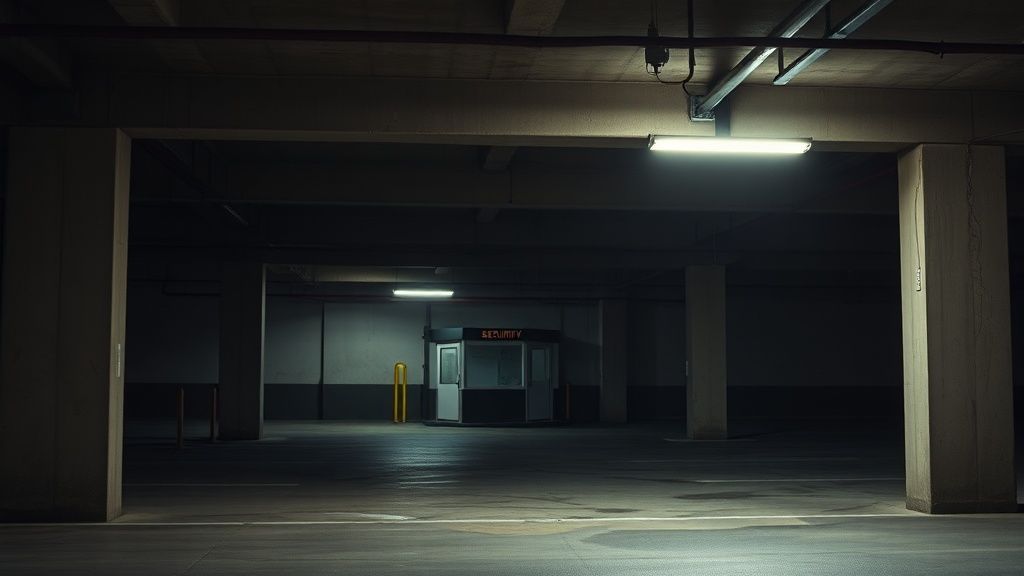
Isolated, low-traffic areas with poor sightlines are well-known assault hotspots. Parking facility operators can be liable for inadequate lighting, non-functioning emergency call stations, broken gate mechanisms, or the absence of security patrols during hours of operation.
Shopping malls and retail centers
A mall that has received prior reports of muggings in its lot but continues to operate with no security presence, no CCTV, and broken lighting is building a foreseeable-harm record case by case. In Ann M., the California Supreme Court addressed a sexual assault at a shopping center and established the modern foreseeability framework still in use today.
What "Reasonable" Security Actually Looks Like
Property owners who knew — or should have known — about a risk of criminal activity and did nothing to address it can be held responsible for the injuries a victim suffers in an attack.
"Reasonable" security is not a fixed checklist — it depends on the type of property, the level of risk, and what was feasible for the owner. But courts and security experts commonly look at:
- Lighting. Adequate illumination of parking areas, walkways, entrances, and exits. A broken light left unrepaired for weeks is a red flag.
- Locks and access control. Functioning door locks, key-card systems, or intercom-controlled entry for residential properties and hotels.
- Security cameras (CCTV). Working surveillance covering high-traffic and isolated areas. Non-functional cameras are often worse than no cameras — they create a false sense of safety.
- Security personnel. Trained guards during hours of elevated risk, particularly for venues serving alcohol or operating in high-crime areas.
- Emergency call stations. Particularly important in parking garages and large retail settings.
- Visible deterrents. Signage, lighting, and the visible presence of security all reduce crime opportunity and create a legal record that measures were in place.
If the property where you were assaulted lacked any of the measures above — and those measures were reasonable to expect given the location and its history — that gap between what existed and what should have existed is the breach in your negligent security claim.
Proving the Connection Between the Lapse and the Harm
Having a foreseeability problem and a security gap is not enough on its own. You must also prove causation — that the inadequate security actually allowed or contributed to your assault, and that you suffered real, compensable damages as a result.
The Four Elements You Must Prove
Every California negligent security claim rests on the same four-part negligence framework:
- Duty. The property owner owed you a duty of care. In California, this extends to invitees, tenants, and in many cases even licensees.
- Breach. The owner failed to take reasonable security measures given the foreseeable risk.
- Causation. That breach — the missing guard, the broken lock, the unlit corridor — was a substantial factor in allowing the assault to occur.
- Damages. You suffered actual harm: physical injuries, medical expenses, lost wages, emotional distress, or other losses.
Building the Evidence
Common evidence in a negligent security case includes police reports of prior crimes at the location, maintenance records for broken lights or locks, surveillance footage gaps, and expert testimony from a security professional.
A strong case is built from multiple evidence streams:
- Crime history records. Police reports, 911 call logs, and incident reports from the property — showing management was on notice.
- Maintenance logs. Did the owner know the parking lot lights were out? Was the broken gate reported but never fixed? Work orders and maintenance records tell that story.
- Surveillance footage. Both existing footage (which must be preserved immediately — it is often overwritten within 30-90 days) and footage that should have existed but does not.
- Witness statements. Neighbors, tenants, employees who knew the area was unsafe.
- Security expert testimony. A qualified security professional can testify about industry standards and whether the measures in place were adequate.
Comparative Fault
California follows a pure comparative negligence system under Cal. Civ. Code §1714. That means even if you were partially at fault — you were in an area you were warned about, or you ignored a visible danger — you can still recover. Your damages are reduced by your percentage of fault, but they are not eliminated.
Damages You Can Recover
Victims of negligent security assaults can seek compensation for:
- Medical treatment — emergency care, surgery, therapy, ongoing treatment
- Lost wages — time missed from work during recovery
- Reduced earning capacity — if the injuries affect your ability to work long-term
- Pain and suffering — physical and emotional
- Psychological trauma — anxiety, PTSD, depression following a violent assault
- Scarring or disfigurement
The Filing Deadline
If you were assaulted on someone else's property in California, you generally have two years from the date of the assault to file a personal injury lawsuit under California Code of Civil Procedure Section 335.1.
If the property is owned by a government entity — a public housing authority, a city-operated parking garage, a transit agency — the deadline is far shorter. You may have as little as six months to file a government claim under Cal. Gov. Code §911.2 before any lawsuit can proceed. Missing that deadline can permanently bar your claim.
Do not wait to find out which rule applies to your case.
Talk to a California Personal Injury Attorney
In California, a property owner can be held liable for an assault that happens on their property if the attack was foreseeable and the owner failed to take reasonable steps to prevent it.
Negligent security cases are won or lost on evidence — and evidence disappears fast. Surveillance footage gets overwritten. Witnesses move. Maintenance records get "lost." The property owner's insurer has investigators working the moment you report the incident.
We've recovered over $150,000,000 for injured clients in Southern California. If you were assaulted on someone else's property and you believe the security was inadequate, call us before more evidence disappears.
Call (818) 794-9947 for a free case review. No fee unless we win.
We'll walk through what happened, what evidence we need to preserve immediately, and whether you have a viable negligent security claim. Available in English and Spanish.
Frequently Asked Questions
Can I sue a property owner if I was assaulted there?
Yes — if the attack was foreseeable and the owner failed to take reasonable security precautions. California premises liability law, rooted in Cal. Civ. Code §1714, imposes a duty of ordinary care on property owners. If they knew or should have known that a criminal attack was possible — because of prior incidents, a high-crime location, or visible security failures — and they did nothing reasonable to prevent it, they can be held liable for your injuries.
What is negligent security?
Negligent security is a type of premises liability claim. It holds a property owner or occupier responsible for failing to provide adequate security measures — lighting, locks, cameras, guards, or other reasonable precautions — when the risk of criminal activity on their property was foreseeable. The theory is that the owner's failure to act was a substantial factor in allowing the assault to occur.
What makes an assault foreseeable?
California courts look at the totality of the circumstances. Key factors include: prior criminal incidents at or near the property, the owner's or manager's actual knowledge of prior complaints or crime, the nature of the business (bars and late-night venues face heightened scrutiny), the character of the surrounding neighborhood, and whether industry security standards called for measures that were not in place. The California Supreme Court addressed this framework in Ann M. v. Pacific Plaza Shopping Center (1993).
Who can be liable for inadequate security?
Potentially liable parties include: the property owner, the property management company, a tenant who controls the relevant space (such as a bar operator leasing a portion of a larger building), a security contractor hired to protect the premises, and in some cases a franchisor or parent company that sets security policies for a chain. Identifying all potentially liable parties is one of the first steps a personal injury attorney takes in these cases.
What if the attacker was never caught or convicted?
It does not matter. Your civil negligent security claim is independent of any criminal prosecution. You do not need a criminal conviction — or even an arrest — to hold a property owner liable. The civil standard of proof (preponderance of the evidence — more likely than not) is lower than the criminal standard, and the claim is against the property owner, not the attacker.
How long do I have to file a negligent security claim in California?
Generally, two years from the date of the assault under Cal. Code Civ. Proc. §335.1. However, if the property is owned or operated by a government entity — a city, transit agency, housing authority — you may have only six months to file a government tort claim under Cal. Gov. Code §911.2. Missing the government deadline typically forfeits your right to sue. Contact an attorney as soon as possible.
What evidence do I need for a negligent security case?
The most valuable evidence includes: police and incident reports from the assault itself, records of prior crimes at the same property, maintenance or work-order logs showing known but unrepaired security deficiencies, surveillance footage (request or preserve it immediately — it is often overwritten within days), witness statements from people familiar with the location, and expert testimony from a security professional who can opine on whether the measures in place met industry standards.
Does it matter if I was partially at fault?
No — not entirely. California uses a pure comparative negligence system. Even if a jury finds you were partially responsible for the situation (for example, you ignored a posted warning or were in a restricted area), your damages are reduced by your percentage of fault rather than eliminated. You can still recover a meaningful portion of your losses. An experienced attorney can help minimize any comparative fault finding against you.
Reviewed by Minas Nordanyan, CA Bar #296806. Last reviewed June 2026. This article is for general informational purposes and does not constitute legal advice. Every case depends on its specific facts. Contact a licensed California attorney to evaluate your situation.