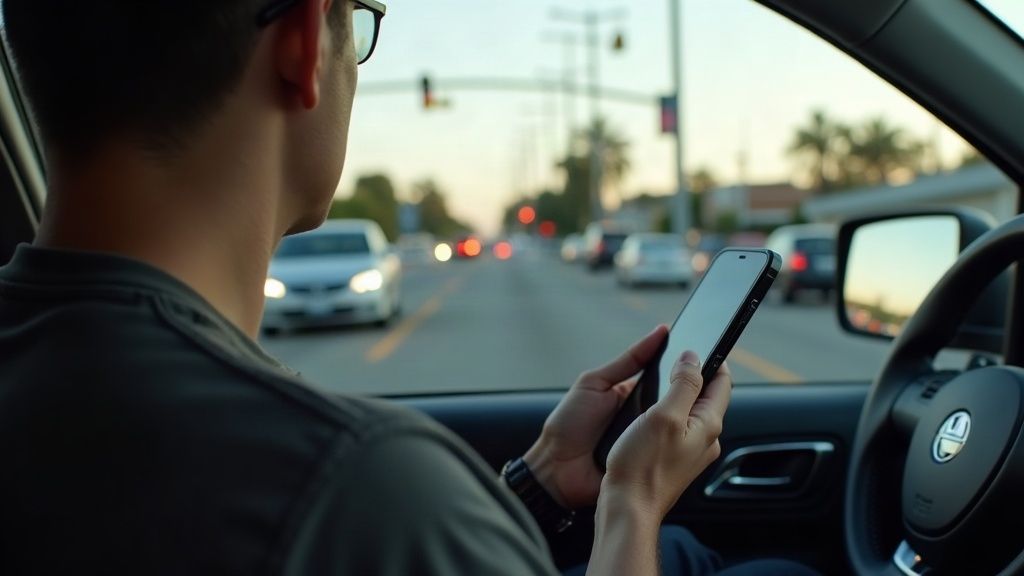
If you were hurt in a car accident in California, one of the most important things you can do for your claim costs nothing and requires zero paperwork: stop posting on social media.
That advice sounds simple. It rarely feels that way. You want to update friends. You want to vent. You want to post the photo from the one afternoon you felt well enough to leave the house. Every one of those impulses is completely understandable, and every one of them can reduce your recovery.
Insurance carriers and their attorneys know this. They count on injured people to keep posting. Below are the eight specific ways social media activity damages injury claims in California, backed by the mechanics insurers actually use.
Quick summary, one line per reason:
- Investigators search public profiles as a routine part of every claim investigation.
- One active-looking photo can reframe your entire injury narrative.
- A casual crash description posted online can contradict your official statements.
- Check-ins and friend tags expose activity you never intended to share.
- Old pre-accident posts can be used to argue your injuries predated the collision.
- Content posted by friends about you carries the same evidentiary weight as your own posts.
- Deleting posts after a claim is filed can be treated as evidence destruction.
- Pausing all activity until your case closes is the only reliable protection.
1. Insurers and Their Investigators Look at Public Profiles
Insurance companies routinely search publicly visible social media profiles when investigating injury claims in California, and anything you post can be collected and used against you.
When you file a personal injury claim, the carrier assigns an adjuster to evaluate it. On more complex cases, they hire outside investigators. One of the first things those investigators do is document your public social media presence: Facebook, Instagram, X (formerly Twitter), TikTok, LinkedIn, YouTube, and any platform where your name appears.
They are looking for anything that creates a gap between what your medical records say and what your life looks like online. Screenshots are taken and preserved. Metadata, including timestamps and location data embedded in photos, is extracted. If a court proceeding follows, this material is turned over to defense attorneys.
None of this requires a subpoena for a public account. Anything visible without logging in is fair game.
Practical takeaway: Set every account to the strictest private setting immediately after an accident, and treat "private" as a floor, not a ceiling. The safest setting is no new posts at all.
2. An Active Photo Can Be Twisted to Say You Are Not Really Hurt
A single photo showing you standing, smiling, or participating in any activity can be used to argue that your injuries are less severe than you reported, even if the photo was taken on a good day.
California personal injury damages include compensation for pain, suffering, and loss of enjoyment of life. These are not visible on an X-ray. They are communicated through your testimony, your treating physician's notes, and the overall picture of how your injury has changed your daily life.
A photo that conflicts with that picture is a gift to the defense. An adjuster does not need a photo of you running a marathon. A photo of you smiling at a birthday party, carrying a bag of groceries, or walking across a parking lot can be enough. The defense frames the argument like this: if you were truly suffering, would you be out doing this?
That argument ignores the reality that pain fluctuates. Many injuries, including soft tissue damage, traumatic brain injury, and nerve injuries, have variable symptom days. Injured people are still people. But once that photo is in the file, you will have to spend time and credibility explaining it rather than spending time proving your case.
Practical takeaway: Even on your best day, a photo posted during a pending claim creates a liability. If someone else takes a photo and you are in it, ask them not to post it until your case is resolved.
3. A Quick Post About the Crash Can Contradict Your Statements
Any description of the accident you post online can be compared against your official statements and deposition testimony, and inconsistencies can damage your credibility with a jury or adjuster.
In the hours after an accident, you may post a version of what happened while the details are fresh and emotions are running high. That post might say the light was yellow, that you were going slow, or that the other driver seemed distracted. Later, in a formal statement to your own insurer or in a deposition, you may say something slightly different, with more precision, based on what you have since learned about the facts.
Any gap between those two accounts becomes a credibility problem. Defense attorneys use that gap to argue that one version is a lie, usually the one that helps your case. The informal social media post, written in the first hour after a traumatic event, is treated with the same evidentiary weight as sworn testimony.
California's rules of evidence allow prior inconsistent statements to be used for impeachment. This means a post you wrote from the side of the road can follow you into a courtroom and undermine everything else you say.
Practical takeaway: Say nothing about the facts of the accident online. Direct all questions from friends to a brief note that says you cannot discuss it while the matter is ongoing.
4. Check-Ins and Tags Reveal Activity You Did Not Mean to Share
You do not have to post anything yourself for social media to damage your claim. Tags, check-ins, and comments posted by friends or family can surface the same harmful information.
A location check-in or a tagged photo posted by someone else can place you at a concert, a sporting event, a gym, a hiking trail, or a theme park while your claim documents describe severe limitations on activity. You may have attended that event during a brief window of improved symptoms. You may have gone to support a family member and sat the entire time. None of that context appears in the photo or the tag.
What appears is your name, a location, and a date. The investigator screenshots it, adds it to the file, and the adjuster uses it to question the extent of your limitations.
Most social media platforms allow you to review and remove tags others apply to you. Use that feature. Ask friends and family directly to refrain from tagging you or posting about your activities until your case is closed.
Practical takeaway: You cannot fully control what others post, but you can monitor tags, remove the ones that appear on your profile, and have a direct conversation with close contacts about why this matters.
5. Even Old Posts Can Be Dredged Up and Taken Out of Context
Investigators are not limited to the period after your accident. Pre-accident posts, especially those showing physical activity such as hiking, cycling, sports, or manual labor, are used to make arguments about your baseline health, your pre-existing conditions, or the activities you engaged in before the injury.
This cuts two ways. If you posted frequently about athletic activity before the accident, the defense may argue your injury predated the collision or is part of a prior condition rather than something caused by the crash. If your pre-accident posts show no such activity, they may argue there is no meaningful loss because you were not active to begin with.
Neither argument is necessarily accurate. But both are made regularly, and old posts give defense attorneys the raw material to make them.
California law recognizes that a defendant must take a plaintiff as they find them. This is sometimes called the eggshell plaintiff rule. A pre-existing condition does not eliminate recovery if the accident aggravated it. But demonstrating aggravation becomes harder when old posts are introduced to reframe the narrative around your health history.
Practical takeaway: Do not delete old posts after a claim is filed. Doing so creates new problems. Instead, flag old posts that could be taken out of context to your attorney before they become an issue in discovery.
6. Friends' Tags and Comments About You Are Visible Too
Beyond check-ins, the broader category of content others create about you is a real and underestimated risk. A friend's comment saying "so glad you were out with us last weekend!" posted on your wall while your claim describes you as largely homebound is exactly the kind of material that surfaces in claim reviews and depositions.
Family members who are proud of your resilience may post updates about your recovery in positive terms that inadvertently minimize your documented injuries. A comment like "he's already back on his feet, such a fighter!" may be meant lovingly and may describe one good morning. In a claim file, it is an admission.
You cannot fully control what others say about you. What you can do is have a specific, frank conversation with the people closest to you about the stakes. Explain that your financial recovery depends in part on the accuracy of the record, and that well-meaning posts can create real harm.
Practical takeaway: Ask family members and close friends to avoid commenting on your health, your activities, or anything related to the accident on any platform until your case is resolved.
7. Deleting Posts After a Claim Can Look Like Hiding Evidence
This item is the one most injured people do not expect. The intuitive response to learning that a post is damaging is to delete it. In the context of an active legal claim, that impulse can make your situation worse.
Destroying or concealing evidence after a legal claim arises is called spoliation of evidence. California courts take spoliation seriously. Under California Evidence Code §413, a court may instruct a jury to draw an inference against the party who destroyed evidence, meaning the jury can be told to assume the deleted content was harmful to your case. Beyond an adverse inference, courts have discretion to impose discovery sanctions, strike portions of your pleading, or in severe cases, enter judgment against you.
The standard for when the duty to preserve evidence attaches is not limited to the moment a lawsuit is filed. It applies when litigation is reasonably anticipated. That includes the period after an accident when a claim has been reported and negotiations have begun.
This is not a reason to leave damaging posts up. It is a reason to consult with your attorney before touching anything. Your attorney can advise you on whether a specific post needs to be preserved, whether a litigation hold should be placed on your accounts, and whether anything can be removed without triggering spoliation concerns.
Practical takeaway: Do not delete, alter, or hide any social media content after an accident without first speaking with your attorney. The decision of what stays and what goes belongs to your legal team, not to you acting alone.
8. The Safest Move Is to Pause Posting Until Your Case Resolves
Personal injury attorneys consistently advise clients to pause all social media activity from the date of the accident through the final resolution of the case, because the risk of a reduced recovery is never worth a single post.
Each of the seven risks above can be neutralized with one straightforward action: stop posting. Not forever. For the duration of your claim.
The average California personal injury case, depending on injury complexity and whether litigation is required, can take several months to a few years to resolve. During that period, every post is a potential exhibit. Every check-in is a potential contradiction. Every photo is a potential argument that you are not as injured as your medical records reflect.
The value of what you might post is close to zero. The cost of a post that damages your claim is real and potentially large. A settlement reduction measured in tens of thousands of dollars because an adjuster pointed to a photo is not a hypothetical. It happens.
If going entirely dark feels unrealistic, discuss a more limited version of the pause with your attorney: no new posts, no photos, no check-ins, no tags, no comments about the accident or your health, and a review of all existing content for anything that needs to be flagged before discovery.
Practical takeaway: The safest and most consistent advice from California personal injury attorneys is to treat your social media accounts as inactive for the life of the claim. Log in to remove tags if needed, but do not post.
What to Do Right Now If Your Claim Is Already Active
If you have already posted since your accident, do not panic and do not start deleting. Take these steps:
- Stop posting immediately. No new content from this point forward until your case closes.
- Screenshot and preserve everything currently on your accounts, including any post that might be relevant, good or bad.
- Call your attorney before removing anything. Explain specifically what is there and ask for guidance. Your attorney can assess spoliation risk and advise accordingly.
- Ask friends and family to pause activity related to you or your accident on any platform.
- Tighten your privacy settings on every account, understanding this protects future content only, not what is already public and already screenshotted.
If you do not yet have an attorney and your claim is being handled directly with the insurance carrier, this is a good moment to change that. The DWC and the DIR publish resources on California injury claims, and the WCAB handles disputes involving workers injured on the job. For motor vehicle and general personal injury claims, the California Courts website and official insurer dispute processes apply.
We've recovered over $150,000,000 for injured workers and accident victims across Southern California. We handle every case as if it were going to trial, because that preparation is exactly what makes insurance carriers take settlements seriously. If you have questions about your claim and your social media, call (818) 794-9947 for a free case review. No fee unless we win.
Frequently Asked Questions
Can insurance companies use my social media against me?
Yes. Insurance companies and their investigators are legally permitted to collect and use any content from publicly visible social media accounts as evidence in a California injury claim. This includes posts, photos, videos, check-ins, and comments. No subpoena is required for content that is already publicly accessible without logging in.
Should I post about my car accident online?
No. You should not post any description of the accident, photos from the scene, updates about your injuries, or anything that could be characterized as commentary on your physical condition or activities while a claim is active. Even a post that seems neutral can be used to contradict your official statements or your medical records.
Can a photo hurt my injury claim?
Yes. A single photo showing you engaged in any physical activity, appearing to be in good health, or present at a social event can be used by an insurance adjuster or defense attorney to argue that your injuries are less severe than reported. The fact that the photo was taken on a good day, or that context is missing, does not prevent it from being introduced as evidence.
What should I avoid posting after an accident?
Avoid posting any photos of yourself, any descriptions of the accident or your injuries, any check-ins at locations, any commentary about your physical condition or activities, and any opinions about the other party or the insurance company. Ask friends and family not to tag you, check you in, or comment publicly about your health or activities during the claim period.
What happens if I delete posts after filing a claim?
Deleting posts after a claim is filed, or once litigation is reasonably anticipated, can be characterized as spoliation of evidence. Under California Evidence Code §413, a court may instruct the jury to draw a negative inference against you, assuming the deleted content was harmful to your case. Courts may also impose sanctions. Do not delete anything without first consulting your attorney.
Do I need to worry about what my friends post about me?
Yes. Content posted by others, including tags, check-ins, and comments that reference your activities or health, is visible to investigators and carries the same evidentiary risk as your own posts. Ask friends and family to avoid posting anything about you during the claim period, and use your platform's tag-review settings to remove tags before they appear on your profile.
How long should I stay off social media after an accident?
The standard advice from California personal injury attorneys is to pause posting from the date of the accident through the final resolution of your case, whether that resolution comes through settlement or a court judgment. The duration depends on the complexity of your case, but the guidance does not change until the matter is fully closed.
If I set my account to private, am I protected?
Setting your account to private limits what new investigators can see going forward, but it does not protect content that was already public and already captured. Privacy settings are a useful precaution, but they are not a substitute for stopping new posts entirely.
Reviewed by Minas Nordanyan, CA Bar #296806. Last reviewed August 2026. This article is general legal information for California residents and does not constitute legal advice. Every case depends on its specific facts. Call (818) 794-9947 to discuss your individual situation.