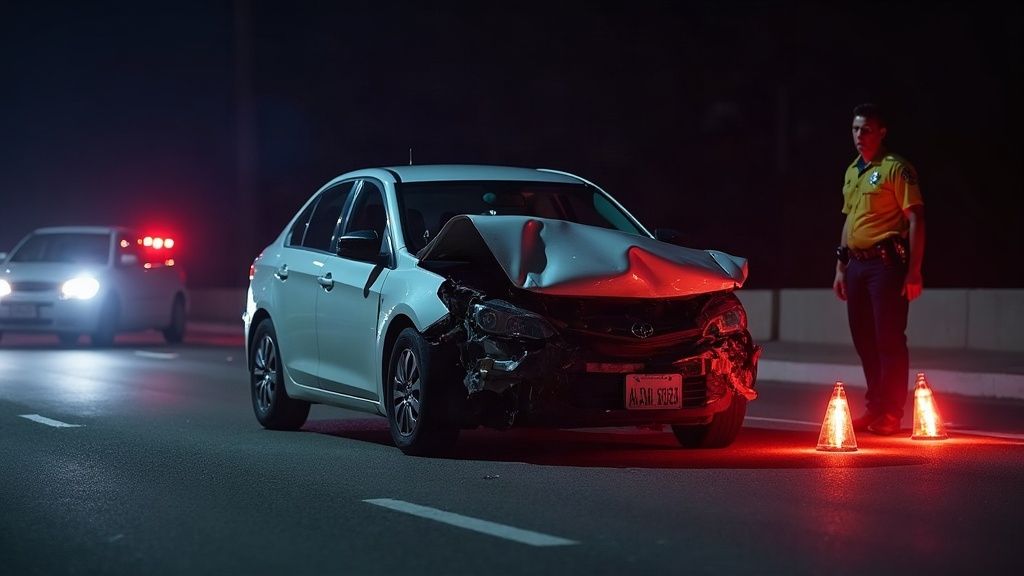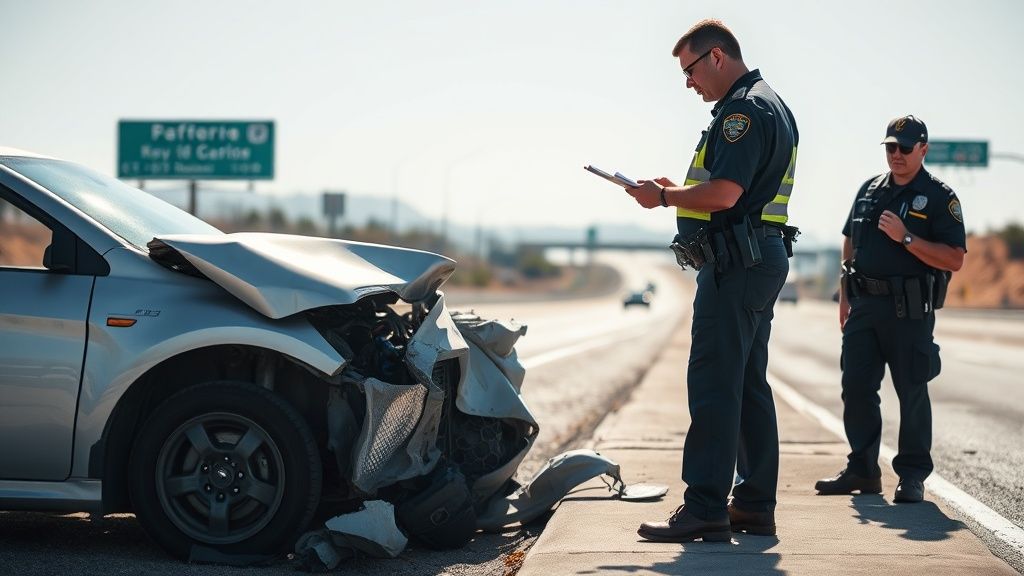
If you've been hit by a driver who has no insurance in California, the situation can feel impossible. Your car is damaged, you may be hurt, and the person responsible can't pay. But you are not out of options — and the steps you take in the next few hours and days will shape everything that follows.
California requires every insurer to offer uninsured motorist (UM) coverage precisely for this scenario. The law also preserves your right to go after the at-fault driver directly. What you do right now determines whether you recover the maximum compensation you deserve or leave money on the table.
Here's what to do — in order:
- Call the police and get a written report confirming fault and the coverage gap.
- Collect the driver's details and photograph the scene completely.
- See a doctor within 24–72 hours and keep every record.
- Check your own policy for UM coverage — you likely have it.
- Notify your insurer, but do not give a recorded statement yet.
- Log every expense: medical bills, lost wages, and out-of-pocket costs.
- Know that you can still sue the uninsured driver directly.
- Speak with a lawyer before accepting any settlement offer.
1. Call the Police and Get a Report
A police report is the single most important document in an uninsured motorist claim — it records who was at fault and confirms the other driver carried no insurance.
Call 911 immediately after the crash, even if injuries seem minor. When the officer arrives, make sure the report captures three things: (1) the other driver's lack of insurance, (2) the facts that establish fault, and (3) your account of the incident. Under California Vehicle Code §16029, driving without insurance is itself a violation — the officer can document it on the spot.
Request a copy of the report number before you leave the scene, then order the full written report from the responding agency within a few days. Your own insurer will ask for it when you file a UM claim. Without it, the coverage gap becomes a word-versus-word dispute.
Takeaway: Never skip the police report. It is the documentary foundation for every recovery option available to you.
2. Gather the Driver's Details and Photograph Everything
Photograph and document while you are still at the scene — once you leave, your chance to capture crucial evidence is gone.
What to collect from the other driver:
- Full legal name and date of birth
- Driver's license number and state
- License plate number
- Phone number and home address
- Name of any passengers in their vehicle
What to photograph:
- Both vehicles from every angle, including close-ups of damage
- The other driver's license plate
- Skid marks, debris, and road conditions
- Traffic signals, stop signs, or lane markings near the crash
- Your visible injuries (cuts, bruising, swelling)
- The surrounding area — cross streets, lighting, weather conditions
If there are witnesses, get their names and phone numbers. Witness statements can be decisive when fault is disputed and the other driver has no insurer to investigate on their behalf.
Takeaway: Your phone camera is your best evidence tool. Use it before cars are moved, injuries are bandaged, or witnesses walk away.
3. See a Doctor Promptly and Keep All Records
Gaps in medical treatment after a crash give an insurer grounds to argue your injuries were not caused by the collision, which can reduce or eliminate your payout.
Go to an emergency room, urgent care center, or your primary care physician within 24 to 72 hours of the crash — even if you feel fine. Adrenaline masks pain. Whiplash, soft tissue injuries, and concussions often surface hours or days later. The longer you wait, the easier it is for an insurer to argue that your injuries came from something else.
Once you start treatment, stay consistent. Keep every document your care generates:
- Emergency room records and discharge instructions
- Imaging results (X-rays, MRI, CT scans)
- Physical therapy attendance records
- Prescription receipts
- Every bill — paid or unpaid
Under California law, the reasonable cost of past and future medical treatment is a recoverable element of damages in a personal injury claim. You cannot claim what you cannot prove, so every piece of paper matters.
Takeaway: Same-day or next-day medical care creates an unbroken causal link between the crash and your injuries — protect that link.
4. Check Your Own Policy for Uninsured Motorist Coverage
California insurers are required to offer uninsured motorist bodily injury coverage to every policyholder, and a valid rejection must be made in writing under California Insurance Code Section 11580.2.
Pull out your auto insurance policy and look for "UM" or "uninsured motorist bodily injury" coverage. Under California Insurance Code §11580.2, every California auto insurer is required to include UM bodily injury coverage in each policy unless the named insured rejects it in a written, signed waiver. If you did not sign a specific rejection form, you almost certainly have it.
UM coverage steps into the shoes of the at-fault driver's absent liability policy. It can pay for:
- Medical expenses (past and future)
- Lost wages
- Pain and suffering
- Other out-of-pocket losses caused by the crash
Also check whether you carry uninsured motorist property damage (UMPD) coverage, which separately covers vehicle repair or replacement. UMPD has its own limits and conditions.
If you have underinsured motorist (UIM) coverage as well, note that UIM applies when the at-fault driver has some insurance but not enough to cover your losses. UM and UIM are distinct coverages; confirm which applies to your situation.
Takeaway: UM coverage exists precisely for this scenario — check your declarations page today, because you may have more protection than you realize.
5. Notify Your Insurer — But Watch What You Say
You have a contractual duty under your policy to report the accident promptly. Failing to do so can give your insurer a basis to deny your UM claim. Call your insurer's claims line as soon as possible after the crash to open a claim.
But here is the important nuance: your own insurer is also a business with an incentive to limit what it pays out on your UM claim. Recorded statements, casual comments about how you "feel fine," or agreeing to a fast settlement before you know your full injury picture can all reduce your recovery.
When you call:
- Report the date, time, and location of the crash.
- Confirm you were hit by an uninsured driver.
- Provide the police report number.
- Decline to give a recorded statement until you have spoken with an attorney.
You are not required to give a recorded statement to your own insurer as a condition of coverage under most California UM policies. An attorney can advise you on what your specific policy requires before you say anything on the record.
Takeaway: Report the claim immediately — then pause before saying anything more until you understand your rights.
6. Track Every Expense — Medical, Lost Wages, and Out-of-Pocket Costs
California personal injury law allows you to recover economic damages — meaning actual, calculable losses — and non-economic damages like pain and suffering. Your ability to recover the full amount depends entirely on your documentation.
Build a running log from day one. Organize it by category:
Medical costs
- Emergency room and hospital bills
- Surgery, imaging, and specialist fees
- Prescription medications
- Physical therapy and rehabilitation
- Future care estimated by your treating physician
Lost income
- Pay stubs showing your pre-crash earnings
- Documentation of hours or days missed from work
- If you are self-employed, tax returns and client invoices showing the income gap
Out-of-pocket expenses
- Rideshare or transportation costs while your car is repaired
- Home care or childcare you needed during recovery
- Medical equipment (crutches, braces, etc.)
Keep every receipt and save digital copies of every bill. If your insurer makes a UM offer before you have reached maximum medical improvement — the point where your treating physician says you have recovered as much as you will — that offer is almost always premature.
Takeaway: A complete expense log is the single most effective tool for countering a low UM offer — build it from the day of the crash.
7. Understand That You Can Still Sue the At-Fault Driver Directly
California law does not prevent you from suing an uninsured at-fault driver just because you have UM coverage; both the UM claim and a direct lawsuit against the driver can proceed at the same time.
Having UM coverage does not take away your right to file a civil lawsuit against the uninsured driver personally. Both remedies exist at the same time under California law. You can pursue your UM claim with your own insurer AND pursue the at-fault driver in court for the same collision.
If you obtain a judgment against the uninsured driver, your UM insurer may exercise subrogation rights — meaning it may seek reimbursement from the driver for amounts it already paid you. This is a separate process between your insurer and the driver; it does not reduce your recovery.
The practical question is whether a direct lawsuit is worth pursuing. A driver who carries no insurance often has limited assets to collect against. Before investing time and money in litigation against an individual defendant, an attorney can help you evaluate:
- Whether the driver has wages, a bank account, or property that could satisfy a judgment
- Whether the driver might acquire assets in the future (judgments can be enforced for years)
- Whether the UM claim alone fully compensates you, or whether a gap remains
In some cases, a direct lawsuit — even if the driver appears judgment-proof today — makes strategic sense. California judgments are enforceable for up to 10 years and can be renewed.
Takeaway: Do not assume your only option is your own UM coverage — an attorney can assess whether a direct lawsuit against the driver also makes financial sense for your situation.
8. Talk to a Lawyer Before Accepting Any UM Settlement Offer
If your own insurer and you cannot agree on the UM settlement amount, either side may demand binding arbitration under California Insurance Code Section 11580.2.
Your own insurer's first UM settlement offer is rarely its best one. The same dynamics that push liability insurers to settle low apply to UM claims: the insurer's goal is to resolve the claim for as little as possible. You may not know what your case is worth — especially if you haven't finished treatment — and a quick acceptance forecloses future recovery.
California Insurance Code §11580.2(f) gives both you and your insurer the right to demand binding arbitration if you cannot agree on the amount owed. This is a powerful right that most unrepresented claimants do not know they have. An experienced attorney can calculate the full value of your claim — including future medical costs and pain and suffering — and pursue arbitration if the insurer's offer falls short.
An attorney working a UM claim on contingency costs you nothing unless there is a recovery. The consultation is free. The firm's attorneys have recovered over $150,000,000 for injured Californians and can evaluate your UM claim at no cost to you.
What an attorney does for your UM claim:
- Calculates the full value of your economic and non-economic damages
- Handles all communication with your insurer's claims adjusters
- Negotiates a settlement that reflects your actual losses
- Demands arbitration under §11580.2 if the insurer refuses a fair offer
- Advises whether a direct lawsuit against the driver also makes sense
Takeaway: Before you sign anything or accept a check, call (818) 794-9947 for a free case review — no fee unless we win.
Frequently Asked Questions
What happens if the person who hit me has no insurance?
If the at-fault driver has no insurance, your primary recovery options in California are: (1) a uninsured motorist (UM) claim under your own auto policy, if you have UM coverage; and (2) a direct civil lawsuit against the at-fault driver personally. California Insurance Code §11580.2 requires insurers to offer UM coverage, so many drivers have it without realizing it. If you have neither UM coverage nor assets to collect from the driver, options become limited — which is why acting quickly and getting a complete picture of your coverage is critical.
Does my insurance cover an uninsured driver?
It can. If you purchased — or did not reject in writing — uninsured motorist bodily injury (UMBI) coverage, your own insurer steps in to cover your medical bills, lost wages, and pain and suffering up to your policy's UM limit. Under California Insurance Code §11580.2, every California auto policy must include UM coverage unless the insured signed a written rejection. Check your declarations page for "UM BI" and the dollar limit next to it.
What is uninsured motorist coverage in California?
Uninsured motorist (UM) coverage is a component of California auto insurance policies that pays your damages when a driver who caused the crash has no liability insurance. California Insurance Code §11580.2 requires insurers to offer it; rejection requires a written, signed waiver from the named insured. UM bodily injury coverage compensates for medical expenses, lost income, and pain and suffering. A separate coverage — uninsured motorist property damage (UMPD) — covers vehicle damage caused by an uninsured driver.
Can I sue an uninsured driver in California?
Yes. California law does not prevent you from filing a civil lawsuit against an uninsured at-fault driver. Having UM coverage available does not take away your right to sue the driver directly. Both the UM claim and the lawsuit can proceed at the same time. If your UM insurer pays your claim, it may then seek reimbursement from the driver through subrogation — but that process does not reduce your recovery. The practical challenge is collecting on a judgment if the driver has limited assets; an attorney can evaluate whether a lawsuit makes financial sense in your specific case.
What if my insurer's UM offer seems too low?
Do not accept a settlement that doesn't cover your actual losses. Under California Insurance Code §11580.2(f), either you or your insurer can demand binding arbitration if you cannot agree on the UM payment amount. An attorney can calculate the full value of your claim — including future medical costs and non-economic damages — and pursue arbitration if necessary. A low first offer is not the end of the negotiation.
Do I have to give a recorded statement to my own insurer?
California law imposes a duty to cooperate with your own insurer, but that obligation generally does not require you to submit to a recorded statement as a precondition of coverage. Review your policy's cooperation clause carefully, and speak with an attorney before agreeing to any recorded interview. Statements made without legal guidance can be used to limit what the insurer pays on your UM claim.
How long do I have to file a UM claim or sue the at-fault driver in California?
California's general statute of limitations for personal injury claims is two years from the date of injury under Cal. Code Civ. Proc. §335.1. Your insurance policy's UM provisions may have their own notice and claim deadlines that are shorter — check your policy language and speak with an attorney promptly. Missing a deadline can eliminate your right to recover.
If you've been hit by an uninsured driver in California, every day that passes without documentation, medical care, and legal guidance makes recovery harder. We've recovered over $150,000,000 for injured Californians, and we handle personal injury cases on a contingency basis — you pay nothing unless we win.
Call (818) 794-9947 for a free consultation. Available in English and Spanish. No fee unless we win.